

The 9 Listings That Wiped 43,000 Homes Off Zillow Overnight
Buyers woke up to a half empty Zillow. Behind it sits a brokerage, an MLS, and a deal that could rewrite who decides what homes you get to see.
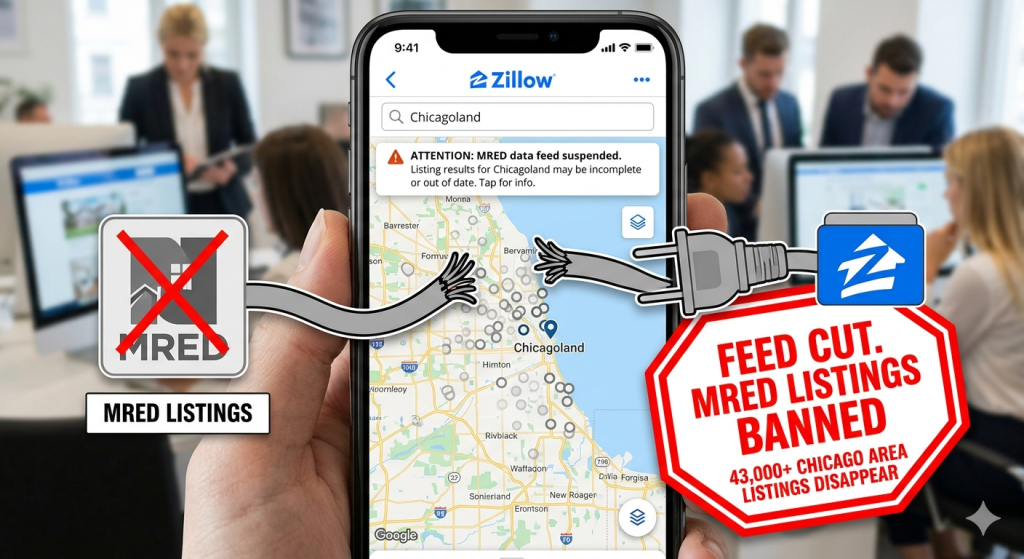
It all started with 9 listings in California, Florida, and Georgia. It blew up into 43,000 Chicago homes wiped off Zillow. Welcome to the messiest fight in real estate right now. Here’s exactly how it got this bad.
It was a fine, sunny Wednesday morning in the Midwest when the most-visited home search site in the country went dark across a major metro area. People browsing Zillow found thousands of outdated and incomplete listings. The cause was not a glitch. Rather, a cutoff.
And behind that cutoff sits MRED, or Midwest Real Estate Data, the multiple listing service that feeds Chicago and its surrounding markets. Here is the twist. This feud is not really about Chicago at all. It began with just 9 listings, all Compass private listings in California, Florida, and Georgia. Zillow refused to show them. MRED said that this broke its rules and handed Zillow an ultimatum to put the 9 back by midnight, or lose the whole feed.
Zillow did not comply. The deadline passed. By the next morning, MRED had cut the data feed. About 43,000 active listings vanished. According to MRED, Zillow chose not to show 0.02% of its listings, and so ended up not displaying the other 99.98%. In the city of Chicago alone, Zillow listings dropped from nearly 5,000 to just over 2,000 in a single afternoon, according to data shared by Compass. But rival sites like Redfin, Houzeo, and Realtor.com still showed around 5,000. The gap was hard to miss. By that afternoon, Zillow’s count had reportedly slipped further, to around 700, with some listings missing prices or days on market.
The same day the feed went dark, Zillow hit back in writing with a point-by-point fact check of MRED’s claims. MRED pointed to the months of notice it gave. Zillow called that a threat, not a warning. MRED insisted its rules applied to everyone equally. Zillow countered that MRED rewrote those rules in October 2025 just to block its standards. MRED noted that buyers can still find homes on other sites. Zillow’s answer to it was simple. It reaches hundreds of millions of people a month, more than any rival, so a smaller audience means fewer offers and less money for sellers.
But why does a Chicago MLS care about homes 2,000 miles away? It started back in April 2026, when MRED and Compass made a deal. It involved building a private listing network across the country. Compass acquired Anywhere Real Estate for approximately $1.6 billion in January 2026 to become the largest brokerage in the country. It also holds 23% of MRED’s board seats and controls 35% of the sales in the Chicago market. According to Zillow, that is not just a mere coincidence.
Zillow and Compass have been at odds for over a year. Zillow rolled out its listing rule in April 2025. The rule was simple. Market a home to any buyer, and it has to appear on Zillow within 1 day. Miss that window, and the listing gets banned. Compass sued Zillow for this in June. A federal judge denied Compass an injunction in February 2026. Compass dropped the case in March. The real fight is about visibility.
In May 2026, the fight escalated fast. Zillow took it to court on May 12, suing under the Sherman Act, the main US antitrust law that bars companies from conspiring to choke out a competitor. According to Zillow, Compass CEO Robert Reffkin emailed 8 MLS leaders, urging them to drop the platform. MRED tells it differently. It says it simply enforced its own rules. That standoff is what triggered the sudden cutoff.
No judge has ruled yet. MRED wants the case in arbitration. Zillow wants an injunction. Meanwhile, more than 100 brokerages have asked Zillow to set up direct feeds. MRED handles about 250,000 listings a year. Right now, most are hidden from the biggest audience in real estate.
Caught in the middle are sellers and buyers. Sellers who just want to be seen & attract offers. Buyers who want to look at all the options before making any offers. If you’re a buyer who wants to see the full Windy City inventory without any hassle, Houzeo’s Chicago listings page has more than 4,500 homes.
Where this lands now sits with a federal judge. An injunction could switch the Chicago feed back on within days. Arbitration could drag it out of public view for months. Either way, the bigger question is already loose. If one MLS can pull 43,000 homes off the country’s largest home search site over 9 listings far away, every other MLS is watching to see if it works. The outcome will not just decide Chicago. It will set the rules for who controls what buyers get to see.