Now! Fall and early winter add thousands of homes to the market. This is also the season that’s got the most competition. A single-family home in Phoenix could cost $525,000 in May but $494,997 in October.
Late winter provides room for negotiation, but there will be limited homes for sale in Phoenix’s real estate market.
If you want to shop around before experiencing the Valley of the Sun, now is the best time to look at chic condos for sale in Tempe or charming 3-bed single-family homes in Deer Valley.
Houzeo is America’s best home buying and selling platform.
For Home Sellers: List your home for a Flat Fee, and save 2.5% to 5.5% on the listing agent commission! That’s thousands of dollars extra in your pocket.
For Home Buyers: Houzeo has the most number of houses for sale in Phoenix. Start your dream home search now!
Yes! You can list your home for sale or search millions of homes on the Houzeo mobile app!
Download now on the Apple App Store or the Google Play Store.



Key Takeaways
- Competition peaks from March through May: Buyer activity typically strengthens during Phoenix’s spring selling season as more buyers enter the market.
- Inventory builds from spring through summer: More homes remain available as spring listings carry into the summer slowdown, giving buyers more choices.
- Price cuts increase from July through October: As the summer market slows and unsold spring listings remain active, sellers may become more flexible on price.
- Buyers gain more leverage from July through October: Phoenix’s summer slowdown and early fall transition can give buyers more room to negotiate on price, repairs, and seller concessions.
Which Is the Best Season to Buy a House in Phoenix?
Fall is one of the best seasons to buy a house in Phoenix, based on past real estate seasonality. While spring brings more buyer activity and selection, fall offers better pricing and reduced competition. Here’s a season-wise breakdown of the best time to buy a house in Phoenix:
Fall (September to November) 🍂
Fall offers some of the most buyer-friendly conditions in Phoenix. With 4 months of inventory and closed sales down 13.13%, buyers have more room to negotiate. In South Phoenix, the median price is already 4.1% below last year at $450,000, creating more opportunities as demand slows.
Some sellers temporarily remove listings around Thanksgiving, while escrow companies may operate with reduced staffing in late November. If you plan to buy in the fall, aiming to close before the Thanksgiving holiday can help avoid potential delays.
- Offer Strategy: Target homes with 60+ days on market. Request a full inspection through the BINSR process, with particular attention to HVAC condition after the Phoenix summer.
- Pricing Approach: Focus on recently reduced listings in Maricopa, Chandler, and South Phoenix, where buyers have more room to negotiate.
- Timeline: Schedule inspections in October and aim to close before Thanksgiving to avoid holiday processing delays.
- Affordable Places to Buy a House: Maricopa, Avondale, South Phoenix, Tolleson, Glendale.
- Expensive Places to Buy a House: Scottsdale, Paradise Valley, Arcadia, and North Phoenix’s premium Moon Valley corridor.
Winter (December to February) ☃️
Winter is mild and sunny in Phoenix, making it a comfortable time for house hunting. Fall’s balanced-market conditions can persist into early winter before seasonal buyer demand builds toward the February and March peak. Buyers who act in December and January can catch a quieter market before competition increases.
Holiday schedules can limit open houses and showings in late December, but motivated sellers may still want to close before year-end. Investors may also be active as they seek to capture annual tax deductions.
- Offer Strategy: Target homes that have remained on the market for several weeks. Request seller concessions or repairs based on inspection findings, particularly for HVAC and pool equipment.
- Pricing Approach: Focus on recently reduced listings and homes that have remained unsold into December and January.
- Timeline: Schedule inspections early and allow extra time for holiday-related delays. Avoid leaving inspections or closing arrangements until the final weeks of December.
- Affordable Places to Buy a House: Maricopa, Avondale, Tolleson, Glendale.
- Expensive Places to Buy a House: Scottsdale, Paradise Valley, Carefree, Cave Creek.
Spring (February to April) 🦋
Spring is Phoenix’s most competitive home-buying season as snowbirds finalize moves and families plan around the school year. North Phoenix homes averaged two offers and sold in about 52 days during the spring peak, with the median sale price reaching $527,000, up 1.4% year over year.
Higher competition gives sellers more pricing power and limits negotiation on price and contingencies. Price reductions are also less common, with multiple-offer situations frequent in Arcadia, Moon Valley, Deer Valley, Old Town, and McCormick Ranch.
- Offer Strategy: Keep offers competitive in Arcadia and North Phoenix while protecting key inspection and financing terms. Arizona uses the Arizona Association of REALTORS contract, with escrow companies handling closings.
- Pricing Approach: Price competition varies by area. Scottsdale was near $1.0 million, while Phoenix was around $455,000, giving buyers more room to negotiate in some neighborhoods.
- Timeline: Plan 30 to 45 days from offer to close. Engage your escrow company within 48 hours of acceptance and allow extra time for HOA document review in planned communities.
- Affordable Places to Buy a House: Maricopa, Avondale, Tolleson, South Phoenix, and Glendale are some of the cheapest places to live in Arizona.
- Expensive Places to Buy a House: Scottsdale, Paradise Valley, Arcadia, North Phoenix, and Fountain Hills.
Summer (May to August) 🌞
Extreme heat slows buyer traffic, giving buyers more room to negotiate. ASU demand in Tempe and healthcare relocations around Banner Health and Mayo Clinic keep some activity going, but activity generally slows as buyers and sellers wait. By August, Greater Phoenix had 4 months of supply, entering a balanced market.
July through September can bring haboobs and flash flooding, which may delay inspections and scheduling. Extreme heat can also accelerate wear on roofs, HVAC systems, and pool equipment, so buyers should factor these into inspections and ownership costs.
- Offer Strategy: On homes listed for 60+ days, submit below-asking offers and request seller credits for closing costs or HVAC servicing. Sellers in Maricopa, Buckeye, and Queen Creek may be more open to concessions as inventory builds.
- Pricing Approach: Target stale listings where sellers may accept 3% to 7% below asking. Chandler and Maricopa showed year-over-year price declines, creating more room to negotiate.
- Timeline: Allow extra time for inspections during the July through September monsoon season. Use the BINSR process to verify HVAC, roofing, and pool equipment condition.
- Affordable Places to Buy a House: Maricopa, Avondale, San Tan Valley, and Buckeye.
- Expensive Places to Buy a House: Encanto Village, Desert Ridge, Maryvale, and Ahwatukee Foothills Village are also some of the best places to live in Arizona.
Yes, Phoenix offers a homestead protection by operation of state law, though it protects equity from creditors rather than reducing property taxes. The Arizona Homestead Exemption applies directly to Phoenix residents, automatically shielding up to $400,000 of equity in a primary residence from creditors, judgments, and forced sale.
Yes, Phoenix builders commonly offer year-end seasonal incentives. Common incentives include:
- Mortgage Rate Buydowns: Temporary reductions in mortgage rates for the first few years.
- Closing Cost Assistance: Credits toward closing costs, lowering upfront cash needed.
- Price reductions: Discounts on homes ready to move in, or funds for upgrades.
- Upgrade Allowances: Builders may include interior upgrades at no extra cost.
Why do these incentives exist?
- Seasonal slowdown: Winter months see fewer buyers, prompting builders to sweeten deals.
- Sales targets: Year-end pushes help builders meet annual goals.
- High inventory: More homes on the market create competition, increasing buyer benefits.
When is the Best Time of Year to Buy a House in Phoenix?
If you’re wondering when to buy a home, October and November are the best months in 2026 for pricing leverage and seller flexibility. But the best window really depends on what you’re optimizing for. Let’s look at Phoenix home sale price trends:
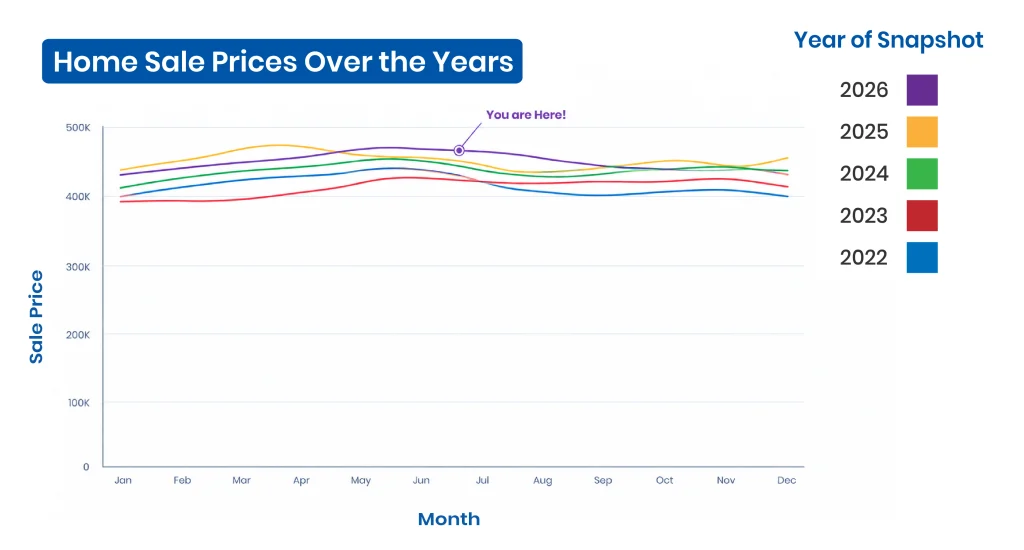
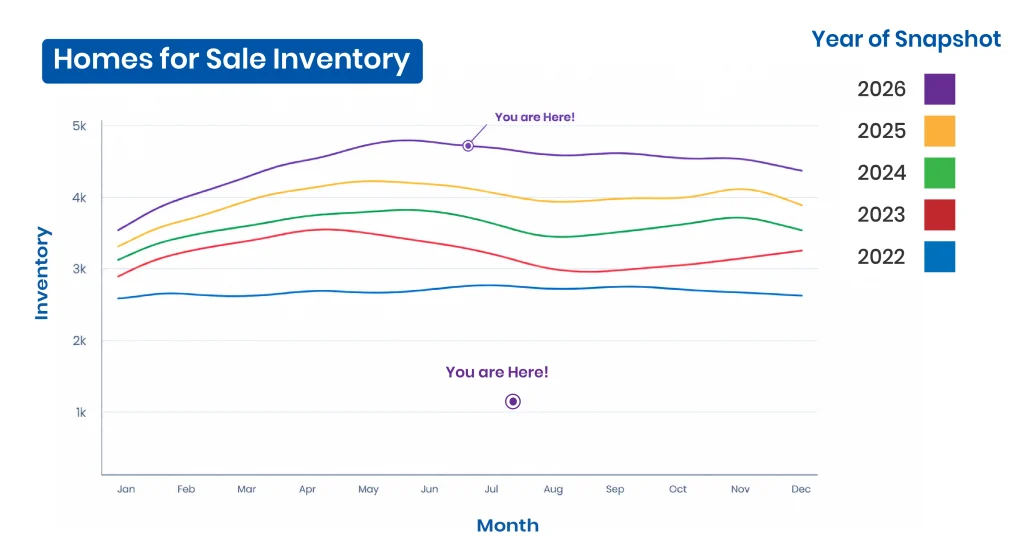
The data shows Phoenix home prices have remained relatively steady in recent years, with 2025 and 2026 figures staying close rather than following a sharp upward trend. Here’s how to time your purchase based on inventory:
Best Time to Buy a House in Phoenix Based on Buyer Type
Every buyer’s situation is different. Whether you’re buying your first home, investing, or planning to spend winters in Phoenix, the best time to buy can vary. Here’s a quick look at what tends to work best for each type of buyer.
First-Time Homebuyers
If you are buying a home in Phoenix for the first time, October is one of your best windows. By fall, summer demand has cooled, giving you more negotiating room before the holiday slowdown.
- Phoenix’s median sale price was $450,000 in July 2026, up just 1.1% year over year. The median listing price was down 4.6% year over year, giving buyers more room to negotiate.
- In October, you face less competition than at the spring peak, when North Phoenix homes averaged 2 offers and sold in 52 days. Greater Phoenix also reached 4.28 months of supply by August, moving into balanced-market territory.
- The post-summer market means you are competing with fewer buyers, while sellers with homes that linger into fall may be more open to negotiating on price and terms.
- Sellers who did not close before the holidays may be more motivated. You can request HVAC servicing, repairs identified through the BINSR process, and closing cost assistance without weakening your offer.
Buyer closing costs in Arizona can range from 8,564 to 21,411, with the final amount heavily dependent on loan type and location.


Real Estate Investors
Investors can target October through December in Tempe and Downtown Phoenix, when seasonal demand eases, and year-end tax planning becomes relevant.
- Chandler and Maricopa were both down 7% year over year, giving investors more room to negotiate as supply moved above the balanced-market threshold.
- Phoenix rents average $1,494 per month, down 1.88% year over year, while Scottsdale averages $2,093, up 0.6%. Demand is supported by ASU, Banner Health, Mayo Clinic, and continued relocation from California and the Midwest.
- Fall and winter bring fewer competing buyers, while 4.28 months of supply can push sellers to close before year-end.
- December closings may allow eligible rental property deductions for the year. Consult your tax advisor.

New to Real Estate Investing? Understand what is an investment property and the steps involved in buying one before timing the market.
Retirees and Snowbirds
For retirees and snowbirds, September through November is your window. This period gives you time to shop and settle in before seasonal demand starts building across Phoenix’s retirement communities in late fall.
- Buying in October or November puts you ahead of the snowbird wave that builds toward February, when buyer traffic and pricing pressure typically increase.
- Fewer fall buyers can mean more negotiating power with motivated sellers in Sun City, Sun City West, Sun Lakes, Scottsdale, and Fountain Hills.
- You can get settled before winter and enjoy Arizona’s mild weather, access to more than 200 golf courses across the Valley, and, for qualifying veterans with a 100% VA disability rating, a full property tax exemption on their primary residence with no dollar cap.
- Snowbirds can also avoid the heavier winter competition, when Scottsdale’s median price is near $1.0 million and up 15% year over year.
Mortgage rates are expected to gradually decline in 2026 as inflation cools. Freddie Mac and NAR forecast that mortgage rates will stabilize near 6%, which will increase affordability and buyer confidence.
Know How Much Home Can You Afford in Phoenix, Arizona Get an instant monthly payment estimate with Houzeo’s free Arizona mortgage calculator.
Best Time to Buy a Home by Phoenix Neighborhood: Quick Snapshot
Phoenix doesn’t move as one housing market. If you’re buying in Scottsdale, Chandler, or Maricopa, the best time to make a move depends on local demand cycles. Here’s a look at the best real estate markets in the Phoenix metro and how to time your offer accordingly.
| Area | Best Months to Buy | Why It’s the Best | Buyer Advantage |
|---|---|---|---|
| 1. Central Phoenix | September to November | Fall brings more balanced conditions across Central and South Phoenix. | Less competition and more room to negotiate. |
| 2. Tempe | August to October | ASU move-in demand eases after the fall enrollment rush. | Strong rental demand near ASU supports investors. |
| 3. Scottsdale | September to January | Fall comes before the February snowbird surge. | Luxury homes for sale in Scottsdale offer more negotiating room before winter demand rises. |
| 4. Chandler | September to December | Fall brings softer demand and more buyer-friendly conditions. | Sellers may be more flexible on price and terms. |
| 5. Maricopa | October to January | Activity slows in the outer growth corridor during fall and early winter. | More choice and negotiating room for first-time buyers. |
When Is the Best Time to Buy a House in the US?
The best time to buy a house in the US depends on what matters most to you, from finding more choices to getting a better price. Spring typically brings more listings and buyer activity, while fall and winter often offer less competition and more negotiating room.
No single month works equally well across the country, as housing markets vary by state and even by city within the same state. Tracking local inventory, days on market, and price cuts offers a more reliable basis for timing an offer.
Is the Phoenix Housing Market Crashing in 2026?
No, the Phoenix housing market seasonality in 2026 presents a strong opportunity for buyers looking for the best time to buy a house in Phoenix. Prices are stabilizing, inventory is improving, and buyers have more room to negotiate as seasonal demand cools.
- Stabilized Home Prices: Homes are selling at a median price of around $454,699, with prices remaining relatively stable across Phoenix.
- Higher Housing Supply: Buyers have more options across Phoenix, Scottsdale, Maricopa, and surrounding Valley communities as inventory builds.
- Steady Buyer Demand: Homes are spending about 57 days on the market, giving buyers more time to compare properties and negotiate.
- Buyers Hold Negotiating Power: Around 37.9% of listings had price cuts, giving buyers more room to negotiate with motivated sellers.
7 Phoenix Home Buying Tips
Navigating the Phoenix real estate market requires smart planning and local insight. These top 7 home buying tips will help you navigate buying property in Phoenix confidently and secure the best possible deal.
- Research Local Markets: Phoenix neighborhoods vary significantly, from Scottsdale and Phoenix to Maricopa, Buckeye, and Queen Creek. Compare neighborhood-level home prices, inventory, and days on market.
- Property Taxes: Arizona property taxes generally range from 0.52% to 0.62% of a home’s value. Limited Property Value increases are generally capped at 5% annually. Review the property’s current tax bill and any applicable exemptions before buying.
- Get Pre-Approved for a Mortgage: Mortgage rates are projected to remain high but stable in 2026. Get a mortgage pre-approval to determine your budget and monthly payments.
- Work with a Local Real Estate Agent: A local agent can guide you through Phoenix’s market, including the Arizona BINSR inspection process, HOA costs, and monsoon and extreme-heat considerations.
- Inspect the Property Thoroughly: Phoenix’s climate, including triple-digit summer heat, monsoon dust storms, and flash flooding, can accelerate wear on roofing, HVAC, and pool equipment. Hire a Phoenix home inspector who is familiar with the region’s specific conditions.
- Factor in Living Expenses: Don’t forget to account for the cost of living in Phoenix, such as utilities, insurance, and transportation. These costs vary by area.
- Leverage First-Time Buyer Programs: Explore Phoenix first time homebuyer programs, which offer financial assistance for down payments or closing costs.
Ready to learn how to buy a home in Phoenix? Access our Phoenix First Time Home Buyer Guide and avoid costly mistakes.
Is Now a Good Time to Buy a House in Phoenix?
So, is now a good time to buy a home in Phoenix? If you’re asking us, the answer is pretty clear: yes, right now, or at least very soon. The market has finally found its balance after the 2025–2026 price trends, making now an ideal time to buy a house. Phoenix isn’t getting any less popular, and homes aren’t getting cheaper long-term.
| Year | Est. Median Home Price | Annual Change vs. 2026 |
|---|---|---|
| 20261 | $452,000 | – |
| 2027 | $462,000 | +$10,000 |
| 2030 | $506,000 | +$54,000 |
Whether you’re a first-timer targeting October deals in Maricopa or South Phoenix, an investor hunting December concessions near Tempe’s ASU corridor, or a snowbird moving to Arizona, each season brings unique advantages. You can browse listings, compare prices, and make offers online with ease.