


Imagine owning a home without the hassle of mowing lawns, fixing roofs, or shoveling snow, and paying less for it, too. Condos typically cost 13.5% less than a single-family home, making them one of the most accessible paths to homeownership.
The national median condo sale price is $364,600. In many markets, that’s a price where buying a comparable single-family house isn’t even an option.
That price advantage is real. So are the trade-offs, which include HOA fees, building rules, and financing requirements that go beyond your personal credit history. This guide covers what condos cost, how ownership works, and what to check before buying.
Houzeo is America’s best home buying and selling platform.
For Home Sellers: List your home for a Flat Fee, and save 2.5% to 5.5% on the listing agent commission! That’s thousands of dollars extra in your pocket.
For Home Buyers: Houzeo has the largest number of condos for sale in the US. Start your dream home search now!
Yes! You can list your home for sale or search millions of homes on the Houzeo mobile app!
Download now on the Apple App Store or the Google Play Store.


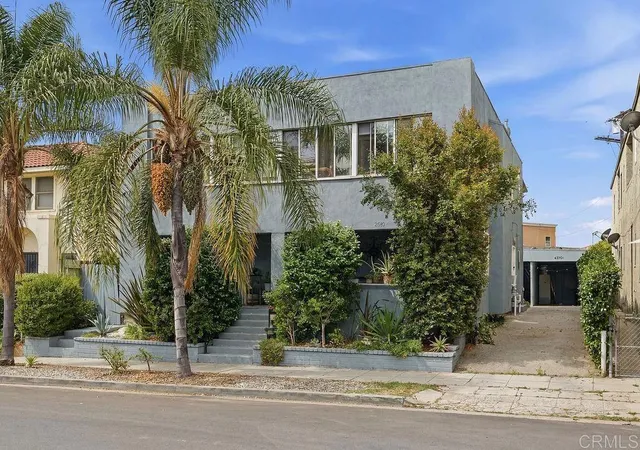


What is a Condominium?
A condo, short for “condominium,” is a privately owned residential unit within a building or complex. You share common areas such as lobbies, hallways, gyms, elevators, and pools with other residents.
Moreover, when you buy a condo, you get a legal deed, pay a mortgage, and build equity over time, just like any other homeowner. You’ll also usually pay a monthly homeowner’s association (HOA) fee, which helps take care of shared spaces and services.
It is also important to note that as a condo owner, you do not own the land the building sits on. It is collectively owned and managed by the HOA, the governing body.
You own the insides of your residential unit, which includes walls, floors, ceilings, and fixtures. Meanwhile, depending on your building and purchase agreement, your condo ownership will also include some appliances or systems like water heaters and boilers.
Besides that, parking lots or garages/storage spaces are limited common elements (LCEs), which means you have rights of use for these in your deed, but you do not own the title. Condo owners jointly own common areas and amenities. HOA manages and enforces community rules for these shared spaces, which include:
- Hallways and stairwells
- Elevators
- Lobbies and entranceways
- Parks or landscaped grounds
- Pools, gyms, and recreational facilities
- Roof decks
- Laundry rooms
How Much Do Condos Cost?
Condo prices vary significantly by location, but the national picture gives you a useful baseline. Currently, the median sale price of a condo/co-op across the US is $364,600, a 3.8% increase compared to January 2025, when the median stood at $363,900.
Location sets the baseline, but two units in the same building can carry very different price tags. What you pay depends on a combination of physical, financial, and structural factors that vary unit to unit and building to building:
- Building age and condition
- Floor level and views
- HOA fees
- Building amenities
- Renovation status
True Monthly Cost of Owning a Condo
The purchase price is only part of what you will pay for the condo. Your actual monthly housing cost includes all of the following:
1. Mortgage payment
Principal and interest are based on your loan amount and rate. Typical condo mortgage rates today are around 6% for a 30-year fixed and about 5.5% for a 15-year fixed. This puts your monthly mortgage payment somewhere between $1,700 and $2,400.
2. HOA Fees
As a condo owner, you are expected to pay $200 to $1000 per month in HOA fees. The amount depends on your building’s size, age, and amenities.
3. Property Taxes
Property taxes depend on your local market and the assessed value of the condo. They can be lower than a comparable single-family home because you don’t own the land or shared areas.
4. Condo interior insurance (HO-6 policy)
An HO-6 policy is the type of insurance designed specifically for condo owners. Unlike a standard homeowners policy for a house, it focuses on what you actually own inside your unit. This covers your unit’s walls, fixtures, and contents and typically costs $450–$650 per year. However, the insurance cost will change based on location and coverage.
5. Potential One-Time Building Repair Charges
These are extra fees for major repairs or upgrades when reserves fall short. Many run from a few hundred dollars up to several thousand per unit. For coastal/waterfront homes or luxury buildings, assessments of $5,000–$10,000+ per unit are not unusual.
A special assessment is a one-time fee that all condo owners may be charged. It is triggered when the HOA needs funds for major repairs or capital projects that the reserve fund cannot cover. You will likely be asked for a special assessment for things like roof or exterior repairs, elevator upgrades, and structural safety work required by state law.
How to Protect Yourself From Special Assessment?
Avoiding special assessments is difficult. In most cases, you must pay. However, you can reduce the risk by reviewing the HOA’s reserve fund. If funds are 70% or more, you will likely be charged less. You can also ask direct questions in HOA meetings and request inspection or safety reports. For more, consider a professional review from a real estate attorney or HOA specialist.
6. Parking Fees
In some urban condos, parking may be a separate deeded purchase or monthly rental. In a deeded spot purchase, it can cost you $10,000–$25,000 in small to mid-size cities. At the same time, in major metro areas, you will be paying around $50,000–$100,000. For rental parking, you can expect to pay $100–$500 or $600–$1,000 in luxury buildings each month.
7. Move-in Fees
Some HOAs charge a one-time move-in fee of $200–$1,000 to cover administrative costs, elevator or hallway use, and wear and tear on common areas.
Are Condos a Good Investment
Condos can be a smart way to enter real estate ownership, but like any investment, their value depends heavily on location, building quality, and market conditions.
Do Condos Appreciate in Value?
Historically, single-family homes have appreciated faster than condos because houses include land. Since the land is typically the most valuable and appreciating component of real estate.
In supply-constrained urban housing markets, where demand exceeds new construction, condos have sometimes delivered returns comparable to or even better than houses. However, the appreciation also depends on the location. That said, from 2014 to 2024, condos appreciated about 82.7% compared with roughly 87.3% for single‑family homes.
Rental Income Potential
Condos in many urban markets can generate rental income. Long-term leases (12 months) bring in gross rental yields from 3–22% annually, before expenses like HOA fees, taxes, and maintenance.
Short-term rental potential depends entirely on building rules. Always calculate net yield (annual rental income – annual expenses ÷ property value) after all costs before considering a condo as an income property. Net yield is between 2-15% depending on the location.
1. Gross Rental Yields = annual rental income ÷ property value
2. Net Yield = (annual rental income – annual expenses) ÷ property value
Condo Investment: Strong vs Risky Factors
| Factors | Strong Investment | Risky Investment |
|---|---|---|
| Market Demand | High-demand area with job or tourism growth | Oversupplied market or declining demand |
| HOA Financials | Well-funded reserves, stable management | Low reserves, risk of special assessments |
| Occupancy Mix | High owner-occupancy supports value | <50% owner-occupied, weaker upkeep |
| Location | Near transit, jobs, universities | Poor connectivity, limited amenities |
| Building Condition | New or recently renovated (<20 yrs) | Aging building, deferred maintenance |
| Competition | Limited new supply | New inventory reducing rental/pricing power |
| Legal/Regulatory | No active disputes | Ongoing HOA/developer litigation |
| Costs | HOA fees aligned with rental income | Rising HOA dues and insurance costs |
How Do You Buy a Condo: Step-by-Step Process
Buying a condo can get more complex than a standard home. Therefore, you can follow these to buy a condo to avoid wasting money.
Step 1: Get Pre-Approved
You should work with a lender specializing in condo financing if possible. Ask whether they handle non-warrantable loans and have experience with condo project approvals. You need to first get a pre-approval letter before touring units. This will ensure your budget is realistic and protects you from wasted inspection costs.
Step 2: How to Finance a Condo?
Since lenders also review the building or complex, condo financing becomes stricter. Furthermore, current mortgage rates will affect your monthly costs, so check rates before running numbers. That said, you can finance your condo through the following loan options.
1. Conventional Loans
The most common option to finance a condo is a conventional loan. Minimum down payments are 3% for primary residences, 10–15% for second homes, and 15–25% for investment properties. Furthermore, to qualify, your building must meet Fannie Mae or Freddie Mac guidelines, which include:
- At least 50% owner-occupancy
- No single owner holds more than 10% of units
- HOA fund reserve meets minimum Fannie Mae thresholds
- No ongoing litigation
2. FHA Loans
For first-time buyers or those with smaller savings, FHA loans allow a 3.5% down payment. You also need to check if the building is on HUD’s FHA-approved condo list or not. If it isn’t, ask your lender about the FHA single-unit approval process.
3. VA Loans
These are a special type of loan for Veterans and active-duty military personnel. They can buy a condo with a one-time VA funding fee with zero down payment, which can be rolled into the loan.
4. USDA Loans
Most condos don’t qualify because USDA loans are restricted to rural locations. If you’re considering a rural condo, you need to check eligibility criteria like credit, score, debt-to-income ratio, and down payment.
5. Non-Warrantable Loans
Due to high investor concentration, litigation, or a hotel component, a building can’t qualify for conventional loans and becomes non-warrantable. Portfolio lenders hold these loans directly and typically require 20–25% down and slightly higher interest rates. Furthermore, resale may be limited because future buyers face the same constraints.
Step 3: Research the Building, HOA, and CC&Rs
Even a well-priced unit in a poorly managed building can be a bad deal. Hence, before making an offer, you should request the following from the Homeowners’ Association or property management company:
- Two years of HOA meeting minutes
- Reserve fund study and budget
- Any pending or past litigation
- Master insurance certificate
- Full CC&Rs
Condominium communities operate under a set of legally binding governing documents and state laws that establish how the property is managed and what rules owners must follow. Some of the most important of these documents are as follows.
- Declaration of Condominium (Master Deed) – establishes the condo and unit boundaries.
- Covenants, Conditions, and Restrictions (CC&Rs) – the community rulebook covering rentals, pets, renovations, and noise.
- Bylaws – detail HOA governance, voting, and meetings.
- Rules and Regulations – day-to-day policies such as parking, move-in procedures, and amenity use.
These documents are supported by state laws such as Florida’s Chapter 718, California’s Davis-Stirling Act, and Illinois’ Condominium Property Act.
Step 4: Make an Offer
Submit a competitive offer through your agent or platform, including earnest money (1–3%), an inspection contingency, and a financing contingency to protect your deposit if the building fails lender approval.
Step 5: Order an Inspection
Since you will be sharing numerous common areas and amenities, you need to have a thorough inspection of the following, as they will become your financial responsibility as well.
- Water intrusion from shared plumbing or units above
- HVAC system ownership
- Shared walls and ceilings
- Electrical panel, windows, plumbing
Step 6: Final Financing and Building Approval
Your mortgage lender will review both your personal qualifications and the condo building itself. To do this, the lender requests documents from the HOA or management company. This condo project approval process typically takes 2–4 weeks.
If the building does not meet the lender’s eligibility requirements, you may need to switch lenders or cancel the purchase.
Step 7: Close and Move In
You need to check your closing disclosure against the original loan estimate. Closing costs are usually around 2–5% of the purchase price. You should also confirm that your HO-6 insurance is in place, notify the HOA of your move-in date, and reserve elevators if required.
Which Type of Condo Is Right for You?
You should decide the type of condo based on your financing options, lifestyle, privacy level, and resale market.
1. High-Rise Condo
The high-rise condos are found in residential buildings, typically with 10+ floors, along with elevators and centralized building systems. These are most common in dense urban centers.
- Best For: Buyers who want walkability, skyline views, and full-service amenities.
- Trade-offs: Highest HOA fees due to elevators, building staff, and extensive shared services.
2. Mid-Rise Condo
These are in 5 to 10-story buildings, common in suburban markets and secondary cities. More affordable than high-rises but has modest shared amenities.
- Best For: Buyers who want urban or suburban convenience without luxury high-rise costs.
- Trade-offs: Fewer amenities and simpler building management.
3. Low-Rise / Garden-Style Condo
Usually present in 1–3 story buildings, often with exterior entrances and no elevators. Common in suburban communities.
- Best For: Buyers seeking lower HOA fees and easier ground-level access.
- Trade-offs: Limited amenities and security features compared with larger buildings.
4. Townhouse-Style Condo
Multi-floor units sharing one or two walls with adjacent units, with private ground-level entrances and sometimes a small patio or yard. You own the interior across multiple floors, but the land beneath is governed by an HOA.
- Best For: Buyers looking for more living space and a house-like layout.
- Trade-offs: Shared walls mean noise and privacy can still be a factor.
Note: Legally, a townhouse-style condo and a standalone townhouse are two different things. With a condo, the HOA governs the land beneath your unit. With a standalone townhouse, you typically own it outright.
5. Detached Condo
This is a freestanding structure with no shared walls, located in an HOA community where land and common areas are collectively owned.
- Best For: Buyers wanting a single-family-home feel with HOA maintenance.
- Trade-off: HOA rules and fees still apply even though it looks like a house.
6. Condo-Hotel (Condotel)
A hybrid property where individual units are sold to private owners, but the building operates as a hotel. When you are not using your unit, you can place it into a hotel rental pool.
- Best For: Buyers seeking a vacation property that can generate rental income.
- Trade-off: Specialized financing required; often not eligible for standard mortgages.
7. Mixed-Use Condo
Residential units in buildings or complexes that also contain retail stores, restaurants, or office space on lower floors. These are usually found in walkable urban neighborhoods and transit-oriented development areas.
- Best For: Buyers who want shops and services in the same building or block.
- Trade-off: More complex HOA management and additional lender requirements may apply.
Condo vs. House vs. Townhouse vs. Apartment
Condos aren’t the only option in the market. Depending on your budget, lifestyle, and ownership goals, a house, townhouse, or even apartment can be a better fit. Here’s how each stacks up against a condo.
| Feature | Condo | House | Townhouse | Apartment |
|---|---|---|---|---|
| Ownership | Own unit + HOA share | Own unit and land | Own unit (sometimes land) | Rented, no equity |
| Maintenance | HOA handles exterior | The owner handles all | HOA handles some | Landlord handles all |
| HOA Fees | Yes, required | Sometimes, varies by community | Often, varies by community | None |
| Privacy | Moderate | High | Moderate to high | Low to moderate |
| Outdoor Space | Shared | Private Yard | Sometimes a Patio | Rarely |
| Location | Urban or suburban | Suburban, rural, or urban | Suburban or urban | Primarily urban |
| Investment Potential | Strong in urban markets | Strong long-term | Good, especially in urban markets | None, no equity built |
| Best For | First-timers, travelers, downsizers | Families, space seekers | Space seekers in urban or suburban markets | Short-term flexibility |
Pros and Cons of Buying a Condo
For many first-time buyers, especially in cities, a house can feel out of reach. A condo offers ownership in prime locations at a lower cost but with trade-offs.
PROS✅
- Lower purchase price than comparable single-family homes in the same area
- HOA handles exterior maintenance, no yard work or roof calls
- Amenities like a gym, pool, concierge, and rooftop access are included
- Strong security in managed buildings
- Prime urban locations at more accessible prices
- Build equity over time, just like a house
CONS❌
- Monthly HOA fees can rise over time, adding to your costs
- Less privacy due to shared walls and common areas
- Rules may restrict renovations, pets, or rentals
- Potential for unexpected one-time building repair charges (special assessments)
- Outdoor space is often limited or nonexistent
How Does Condo Ownership Work?
Before making an offer, as a buyer, you should understand how the HOA operates, what monthly fees you will be paying, and how building repairs are funded.
The Role of the HOA
The HOA is the governing body responsible for managing the property’s shared spaces, enforcing community rules, and collecting monthly fees from unit owners. When you buy a condo, you automatically become a member of the building’s HOA.
Most HOAs are run by a board of directors elected from the pool of unit owners. The board typically makes decisions about building maintenance, vendor contracts, and budgeting. In many buildings, each unit receives one vote, although some associations allocate voting power based on ownership share.
What Do HOA Fees Cover?
Every condo owner pays monthly HOA fees regardless of whether they are personally using the building’s amenities. These fees fund the operation and maintenance of the entire property.
The national median monthly fee is $135, although it can vary depending on location, property type, and available amenities. For luxury condos, monthly HOA fees can even go over $1,000. The important thing to remember is that the HOA fees are a permanent cost of condo ownership and typically rise over time as buildings age.
Typical HOA expenses include:
- Maintenance and cleaning of common areas like lobbies and elevators
- Master building insurance
- Trash removal, landscaping, pest control
- Contributions to the reserve fund for future major repairs
- Building amenities such as pools, gyms, and maintenance staff
- Utilities serving shared areas, including water and electricity for common spaces
Cheapest Condos For Sale Near You
| Region | Cheapest Condos For Sale Near Me |
|---|---|
| Northeast | Connecticut | Maine | Massachusetts | New Hampshire | New Jersey | New York | Pennsylvania | Rhode Island | Vermont |
| Midwest | Illinois | Indiana | Iowa | Kansas | Michigan | Minnesota | Missouri | Nebraska | North Carolina | Ohio | South Dakota | Wisconsin |
| South | Alabama | Arkansas | Delaware | Florida | Georgia | Kentucky | Louisiana | Maryland | North Carolina | Oklahoma | South Carolina | Tennessee | Texas | Virginia | District of Columbia | West Virginia |
| West | Alaska | Arizona | California | Colorado | Hawaii | Idaho | Montana | Nevada | New Mexico | Oregon | Utah | Washington State | Wyoming |
Is Buying a Condo Worth It?
For the right buyer in the right building, yes! Condos give you ownership and equity in locations where a house at the same price simply doesn’t exist. If you can live with that and the building’s financials are solid, a condo is a sound purchase.
» Houzeo Reviews: Read what customers have to say about Houzeo, America’s best home buying website.


