


Picture this: An old 900-square-foot bungalow sits on a quiet street in East Austin. Peeling paint, rusted fence, and a porch that looks one strong wind away from collapse. The listing price? $1,000,000.
Welcome to East Austin, where the American Dream dies, and becomes a meme that goes viral.
Scroll TikTok and you’ll find agents touring these East Austin Shacks; comment sections exploding with rage, videos hitting six-figure views. But the reality is worse than the memes. Take East Cesar Chavez where prices jumped 75% in one year from 2024 to 2025. Homes got more expensive, days on the market doubled and the housing market went wild.
But behind every listing sits a family displaced, a community erased and a neighborhood unrecognizable to those who built it.
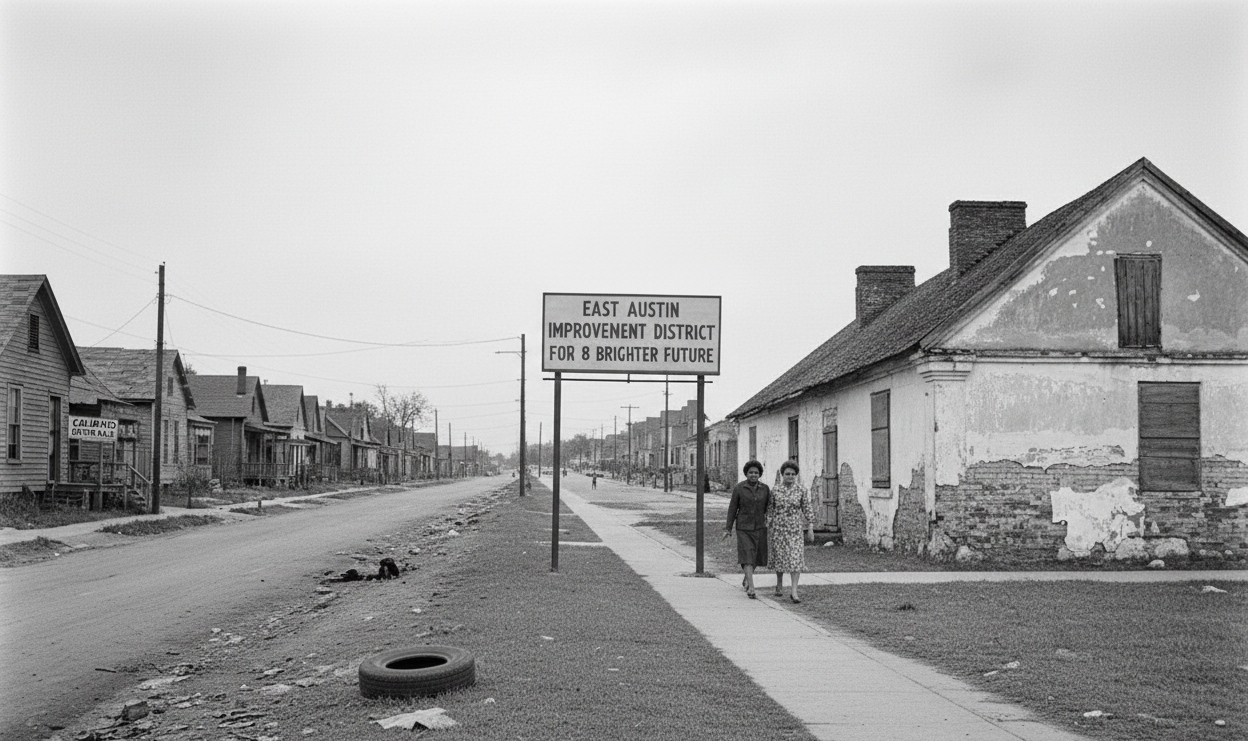
The Viral Sensation: When Austin Became a Hate-Watch Destination
Social media has turned East Austin’s housing crisis into entertainment. TikTok and Instagram are filled with videos of agents touring Holly Street bungalows and East Cesar Chavez homes. These homes look like they should cost $200,000, but carry million-dollar price tags. Real estate agents like Austin’s Amir Lancaster have built entire brands around these properties.
His videos don’t go viral because of the homes’ beauty, but because of the shock, and the outrage that follows.
“The reason it went viral is because a lot of people thought I hit the front door as I was turning around” said Lancaster about one of his most viral moments. The accidental indication of East Austin’s absurd housing market brought thousands of enraged viewers.
But behind these viral pieces of content, lies a brutal truth. These listings are symptoms of systemic failures, playing out in real-time across Holly, Govalle, Chestnut and East Cesar Chavez. But to understand how these small, entry-level bungalows became worth a million dollars, you have to go back to when the city deliberately made it worthless.

Did You Know? The most viral “million-dollar shack” listing in Austin history was a
756 sq ft home on East 6th Street that sold for $1.1 million in 2023.
The buyer demolished it within 60 days. The lot now features a
3,200 sq ft modern home listed at $2.8 million.
How Segregation Shaped East Austin’s Housing Market
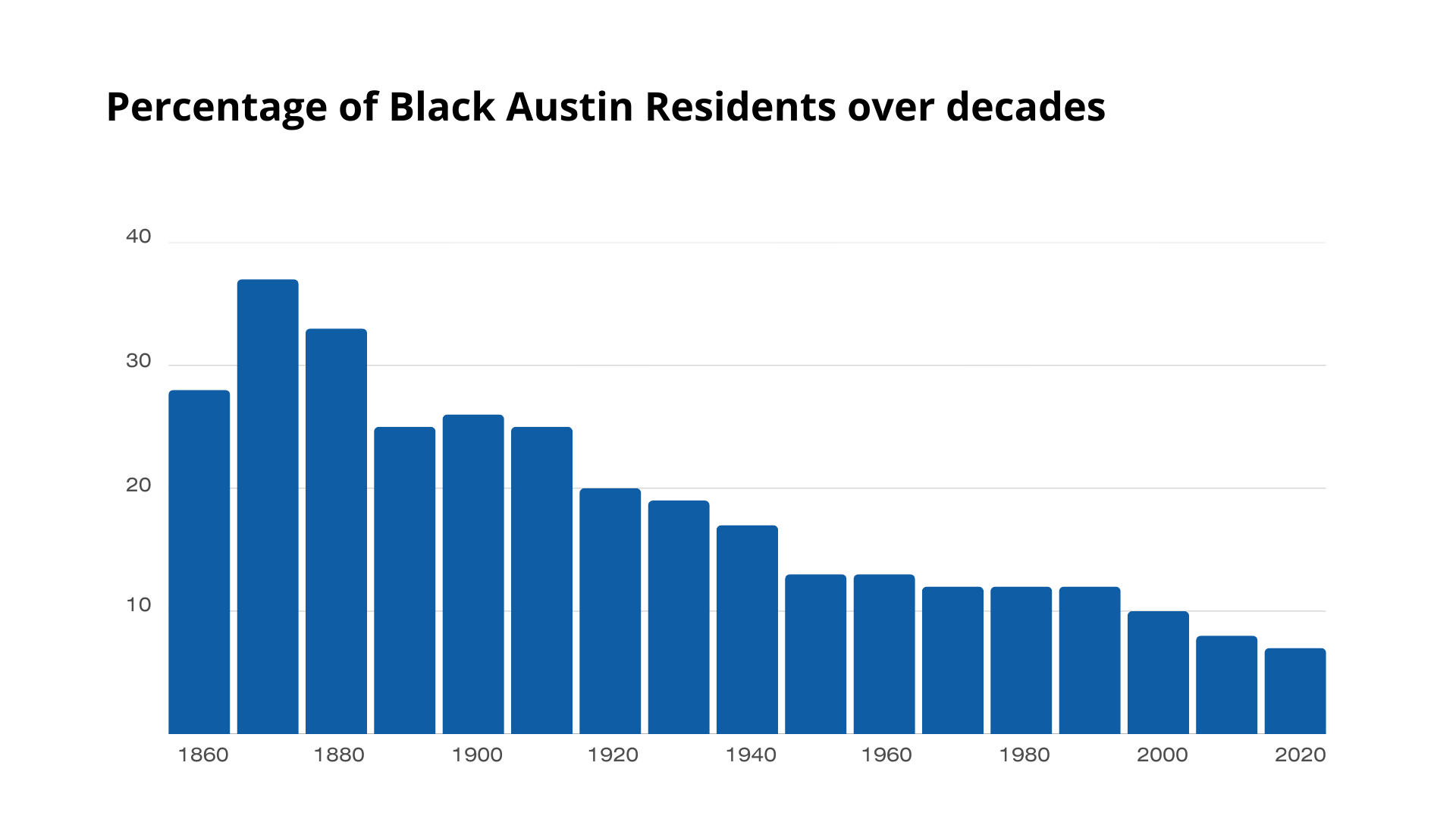
In 1870, Black residents made up 36.5% of Austin’s population. They lived everywhere from Wheatville near UT to Clarksville west of downtown, a total of fifteen separate communities across the city. They owned businesses, built churches, voted.
Then white city leaders decided that was a problem.
On March 22, 1928, Austin’s White City Council adopted a plan to force every Black resident east of East Avenue, now Interstate-35. They called it the “Negro District.” Six square miles for all Black people. The method was simple. Austin cut off city services to Black communities. No sewage. No paved roads. No garbage collection. Move east or live in filth.
By 1932, in just four years, almost every Black resident had relocated. East Austin became the dumping ground next to the city’s slaughterhouse. Schools were segregated and under-invested. Roads stayed unpaved for decades to come.
From the 1960s through 1980s, urban renewal demolished large portions of East Austin. I-35 was built on the very dividing line the 1928 plan had drawn. Black homes were bulldozed without fair compensation. The homes that survived were small bungalows passed down through generations, with their value intentionally suppressed.
This deliberately planned poverty kept East Austin “affordable” for decades. Then someone realized proximity to downtown was worth millions.
The Gentrification Shift That Transformed East Austin
The 1990s changed everything, with the Tech boom.
Dell Technologies exploded to $25 billion in revenue by 2000. IBM’s Austin lab grew from 1,000 workers to over 6,000. Motorola employed 11,000. Austin’s population jumped 200,000 in a single decade. The city was booming, and it needed space – fast.
Austin launched a massive downtown resurgence in the 90s. The target? East Austin – previously dismissed for decades as “empty lots and abandoned homes,” courtesy of their own policies. Tech companies got generous tax breaks and flexibility. And as Austin’s housing market heated up with the tech boom, East Austin sat 1.5 miles from downtown with artificially cheap land.
East Austin had everything the tech crowd wanted: proximity to jobs, bars and restaurants, and real estate that racist policies had kept dirt cheap for decades.
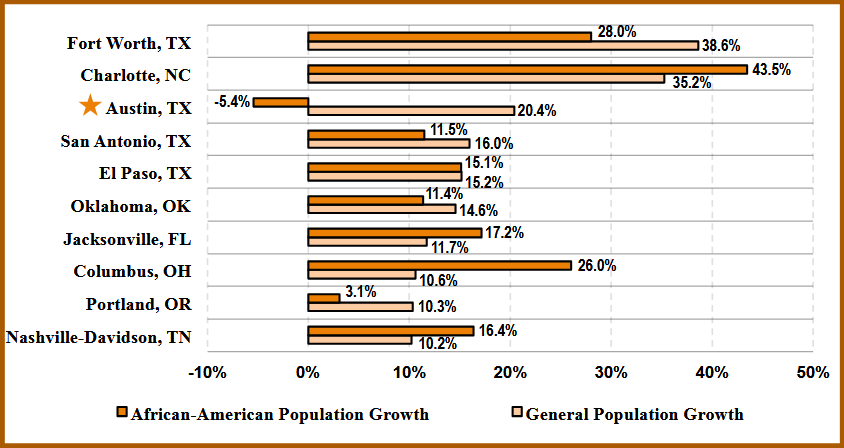
Between 2000 and 2010, Austin became America’s third-fastest-growing major city. But here’s the dark side of that boom: Austin was the only fast-growing major city where the Black population declined.
East Austin’s Black population dropped 66% between 2000 and 2010. Research from UT’s Institute for Urban Policy Research found the Latino population also declined by 33% during the same period. All while the white population surged.
This wasn’t market forces. This was erasure disguised as economic growth.
Sion Tasby, an East Austin resident, remembers when businesses there were Black-owned. Doctor’s offices, pharmacies, barbershops where everyone knew your name. Then around 2010, everything shifted. A stranger at a bank told her: “Don’t ever sell your house if you live in East Austin, because the market is going to be crazy.”
He was right. But being right didn’t help her neighbors stay. It didn’t stop the for-sale signs from multiplying.
A 2014 study found 56% of former East Austin residents moved because of a general absence of affordable housing. They didn’t leave voluntarily. They were financially evicted from their own neighborhood.
The tech boom brought prosperity to Austin. Just not to the people of East Austin, who’d always been there.
The Price Explosion: And Why It Won’t Stop
Here’s where it gets insane.
East Cesar Chavez home prices didn’t just rise. They exploded. From $480,000 to $840,000 in a single year, a 75% jump that defies logic. Days on market doubled from 62 to 127. Homes got more expensive and sat empty longer. Sellers refused to drop prices. Buyers refused to pay. And locals? They just watched from the sidelines, priced out of their own neighborhoods.
Holly tells the same story. Prices up more than 200% since 2011. The median income in East Austin jumped from $23,227 in 2009 to $101,304 by 2020. You think that’s economic mobility? It’s not. The original residents didn’t suddenly start earning six figures. They were replaced by people who already had money.
Looking for homes for sale in East Austin today? You need to earn $224,000 a year. How many East Austin locals make that? Less than 1/10th of the population. The other 90%? They’re gone, priced out, displaced to suburbs an hour away.
So why won’t this stop? Three brutal reasons:
You’re Paying for Geography, Not Housing
East Cesar Chavez sits 1.5 miles from downtown Austin. That’s it. That’s the whole value proposition. Homes here command a 77% premium over identical properties in North Austin. You’re not buying a house. You’re buying 10 fewer minutes in traffic. You’re buying walkability to bars and tech jobs. The structure is irrelevant. The land is everything.
Developers See Dollar Signs Where Families Saw Home
Here’s the math that’s destroying East Austin: Buy a falling-apart bungalow for $840,000. Pay $15,000 to bulldoze it. Spend $500,000 building a luxury house. Sell it for $2.3 million. Walk away with $945,000 in profit.
Every sagging porch, every cracked foundation is just a placeholder waiting to become a luxury flip. Developers aren’t buying homes. They’re buying opportunities. And every sale accelerates the next one. Meanwhile, homes for sale in Texas at similar price points offer move-in ready conditions, but not the location premium.
There’s Nothing Left to Buy
Decades of teardowns gutted East Austin’s affordable housing stock. The small bungalows that working families could afford? Most are gone. What’s left is scarce, and scarcity drives prices. It’s basic economics weaponized against the people who built the neighborhood.
The Human Cost: Displacement and Cultural Loss
Bettye Washington is 85 years old. She’s lived in East Austin for eight decades. One day, she found a letter in her mailbox: “Move out, move on.” As if leaving would be that simple. As if 80 years of memories could be packed in a box and driven away.
Then the phone calls started. Realtors. Developers. Vultures circling. All wanting her house. She declines every offer, but the pressure never stops.
“Every time they buy one of my neighbor’s houses, they put up one of those mansions and the taxes go up,” Washington said. “It’s pushed so many of us out.” She watched her neighborhood disappear, house by house, neighbor by neighbor. The people she knew for decades? Gone. Replaced by strangers who don’t wave, don’t know her name, don’t care about the history beneath their luxury homes.
Tomas Garza built his 649-square-foot bungalow with his bare hands alongside his father after World War II. That house wasn’t just shelter. It was proof he’d made it home. Proof that he survived. “A lot of my friends don’t sell out,” Tomas said. “They are forced out because they don’t keep up with their taxes.”
Property taxes in East Austin jumped 100% between 2006 and 2015. Seniors on fixed incomes, who paid off their mortgages decades ago suddenly couldn’t afford to stay in homes they owned. The American Dream turned into bills they couldn’t pay.
Long-term East Austin residents say developers contact them at least once a week. The offers are aggressive. Insultingly low. The message is always the same: Sell now, or we’ll wait until the taxes crush you.
This is what “revamp” looks like on the ground. Not opportunity but displacement with a smile and a business card. Between 2000 and 2010, Black families left East Austin in waves. By 2020, the neighborhood looked nothing like the place they’d built.
What disappeared:
- Black-owned pharmacies where the pharmacist knew your name and your medications.
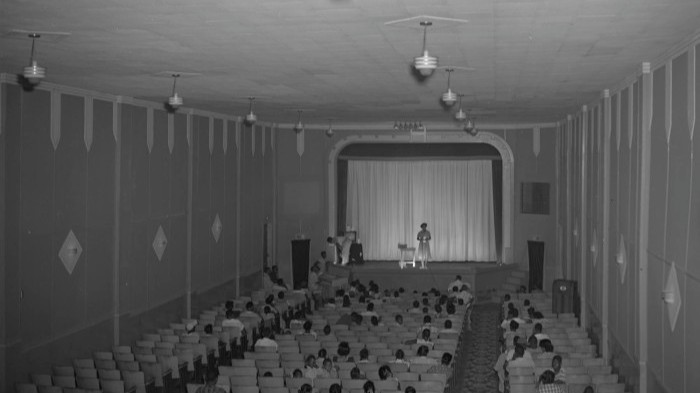
- Popular Black-owned buildings like the Harlem Theater.
- Barbershops where three generations got their haircuts from the same chair.
- Churches where entire families gathered every Sunday for decades.
- Restaurants where recipes were guarded secrets passed from grandmother to grand-daughter.
- The certainty that your neighbors were family, because they literally were.
Some buildings are still there. But the soul? That’s gone. Erased. Replaced by artisan coffee shops and cocktail bars that the original residents can’t afford to enter.
What the Million-Dollar Shack Reveals About Austin’s Housing Market
East Austin’s story isn’t unique. It’s a miniature model of America’s housing crisis, playing out in real-time.
A neighborhood deliberately impoverished by racist policies for decades suddenly becomes “desirable” when proximity to downtown matters. The people who survived segregation, urban renewal, and systemic neglect? They don’t get to enjoy the revival of East Austin. They get priced out of it.
The million-dollar shack isn’t absurd. It’s inevitable. When housing becomes an investment vehicle instead of shelter, when land value matters more than the lives lived on it, when developers see profit where families see home – this is the result.
The viral TikToks will keep coming. Comment sections will explode with rage. And the displacement will continue, house by house, family by family.
And here’s the uncomfortable truth: the system is working exactly as designed. East Austin isn’t broken; it’s functioning perfectly for investors and developers. For Bettye Washington getting “move out, move on” letters at 85? For families who built East Austin and can’t afford to stay? The system is working against them.
Until policy prioritizes people over profit, East Austin’s story will repeat in every city where gentrification can turn poverty into wealth.
For most East Austin locals in 2026? They’re not waiting for change. They’re just leaving. Because staying is impossible, and hope, like their American dreams, is a luxury they can’t afford.


