✏️ Editor’s Note: Realtor Associations, agents, and MLS’ have started implementing changes related to the NAR’s $418 million settlement. While home-sellers will likely save thousands in commission, compliance and litigation risks have significantly increased for sellers throughout the nation. Learn how NAR’s settlement affects home sellers.
Most home sales close within 30 to 45 days after both parties sign the purchase agreement. The answer to how long does it take to close on a house depends on several factors. Financing, appraisals, inspections, title work, and state requirements can affect the closing timeline.
Among these factors, financing often plays the biggest role in the closing timeline. Buyers with a mortgage usually wait longer because lenders review income and documents. ICE Mortgage Technology, which tracks nationwide mortgage activity, found financed purchases averaged 36.8 days to close in March 2026.
Cash buyers often close within two weeks because they skip mortgage approval. Beyond financing, each stage of the closing process can affect the final timeline. A closer look at each stage helps buyers understand the process and navigate closing with confidence.
Key Takeaways 🗝️
- Most financed home purchases close within 30 to 45 days, while cash purchases often close within 7 to 14 days because they do not require mortgage underwriting.
- Inspections, appraisals, title work, and lender approval have the biggest impact on the closing timeline. Delays in any of these steps can postpone closing.
- Before closing day, buyers should review the closing disclosure, arrange homeowners insurance, and prepare certified funds or a wire transfer if the lender requires them.
- Sellers can help keep the transaction on schedule by resolving title issues early, completing agreed repairs, and listing on the MLS to attract qualified buyers.
How Long Does It Take to Close on a House?
The buyer’s loan type can affect the average time to close on a house. Each loan has different approval steps, documentation requirements, and property guidelines that can change the closing timeline.
Average Time to Close on a House
The typical time to close on a house is 30 to 45 days with financing, while cash purchases can close in 7 to 14 days. Loan programs and payment methods can change the closing timeline. The comparison below shows timelines for conventional loans, FHA loans, VA loans, USDA loans, and cash purchases.
| Loan Type | Typical Closing Timeline | Why It Varies |
| Cash Purchase | 7-14 days | No bank approvals or appraiser delays |
| Conventional Loan | 30-45 days | Standard bank review and valuation |
| FHA Loan | 45-60 days | Strict property safety standards |
| VA Loan | 45-60 days | Specialized VA appraisal process |
| USDA Loan | 45-60 days | Extra USDA government office review |
What Steps Affect the Normal Closing Time on a House?
The closing process begins after the buyer and seller sign the purchase agreement. Some steps happen at the same time, while others must finish before the next stage begins.
Most home sales follow the timeline below, although the exact schedule varies by lender and state.
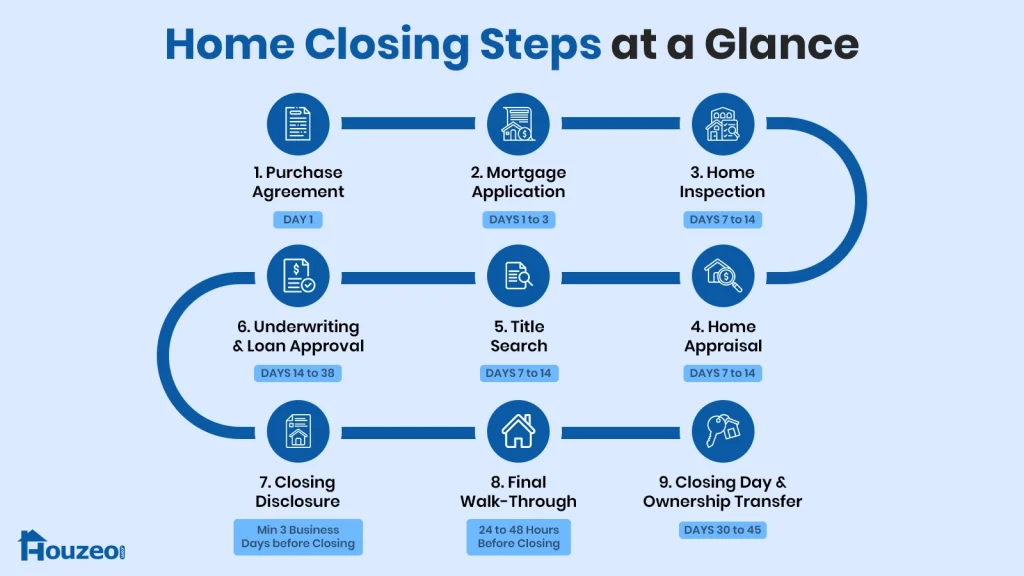
Step 1: Purchase Agreement (Day 1)
The purchase agreement confirms the sale price, contingencies, and closing date. The buyer deposits earnest money into escrow, and the closing process officially begins. Earnest money deposits can range from 1% to 2% of the home’s sale price.
Step 2: Mortgage Application (Days 1 to 3)
The buyer submits a mortgage application if they need financing. Federal law requires lenders to provide a loan estimate within three business days after receiving a completed application. This step begins the mortgage closing process and moves the loan into underwriting.
Step 3: Home Inspection (Days 7 to 14)
A licensed inspector evaluates the home’s condition. Buyers and sellers may negotiate repairs or seller credits if the inspector finds significant issues.
Step 4: Home Appraisal (Days 7 to 14)
The lender orders a home appraisal to confirm the home’s market value. A low appraisal may require the buyer and seller to renegotiate the purchase price or financing.
Step 5: Title Search (Days 7 to 14)
The title company confirms that the seller has the legal right to transfer ownership. Buyers also purchase title insurance to protect against future ownership claims.
Step 6: Underwriting and Loan Approval (Days 14 to 38)
The lender reviews the buyer’s income, assets, credit history, and appraisal report before final approval. Appraisal problems or missing documents can delay final approval.
Step 7: Closing Disclosure (3 Days Before Closing)
After underwriting, the lender issues a clear-to-close decision. The lender provides the closing disclosure at least three business days before closing. Buyers should compare it with the original loan estimate before signing.
Step 8: Final Walk-Through (24 to 48 Hours Before Closing)
The buyer completes a final walk-through before closing. Everything should match the purchase agreement.
Step 9: Closing Day and Ownership Transfer (Days 30 to 45)
Buyers and sellers sign the remaining legal documents. The lender releases the loan funds, the local government records the deed, and the buyer takes legal ownership of the home.
What Happens on Closing Day?
Closing day is the final step in the home sale process. Buyers and sellers sign the remaining legal documents, complete the financial transaction, and transfer ownership.
Most closings follow this sequence:
- Buyers and sellers sign the required closing documents.
- The buyer pays the remaining closing costs.
- The lender releases the loan funds.
- The local government records the deed.
- The buyer takes legal ownership of the home.
- The buyer receives the keys.
How Long Does Closing Day Take?
Most buyers and sellers complete closing within one to two hours. Delayed funding or missing documents may extend the closing process. Ownership transfers only after the local government records the deed.
What to Bring to Closing?
Buyers should bring a valid government-issued photo ID, proof of homeowners insurance, and proof of payment for closing costs. Compare the closing disclosure with your loan estimate before you sign. Confirm that the final loan terms and costs are accurate.
Sellers should bring a valid government-issued photo ID, property keys, garage remotes, warranty documents, and any paperwork the closing agent requests.
Documents Signed on Closing Day
Buyers usually sign the mortgage note, deed of trust or mortgage, closing disclosure, and other lender documents. Sellers sign the deed and documents required to transfer ownership. The closing agent explains each document before both parties sign.
What Causes Delays When Closing on a House?
Most home sales close on schedule, but certain issues can delay the transaction. Common causes include financing problems, appraisal issues, title concerns, missing documents, inspection findings, and repair negotiations.
These issues can increase the time to close on a house. Buyers, sellers, lenders, and home conditions can all affect the timeline. The breakdown below explains common delays from each side.
| Buyer-Related Factors Affecting Time to Close on a House | Seller-Related Factors Affecting Time to Close on a House |
| Financing issues | Title issues |
| Credit changes | Repair negotiations |
| Low appraisal | Outstanding financial obligations |
| Home sale contingency | Failure to disclose property defects |
| Slow inspection response | Missing documents |
Buyer-Related Factors Affecting Time to Close on a House
- Financing Issues: Lenders may request additional financial documents before final approval. Missing paperwork or a delayed response often extends underwriting.
- Credit Changes: New credit accounts or large purchases can affect mortgage approval. Buyers should avoid major financial changes until after closing.
- Home Sale Contingencies: Some buyers need to sell their current home before buying another. They may rely on sale proceeds for the next down payment. Instead, the home sale contingency gives the buyer the right to request an extension, which can cause a delay in the home sale.
- Low Appraisal: When a home’s appraised value falls below the purchase price, the lender may reduce the loan amount. Buyers and sellers may renegotiate the purchase price or financing. These negotiations can delay closing.
- Slow Inspection Response: Inspection reports often require decisions about repairs or seller credits. Slow negotiations can delay the closing date.
Seller-Related Factors Affecting Time to Close on a House
- Title Issues: Sellers must resolve unpaid liens, ownership disputes, or recording errors before ownership can transfer. Title problems remain one of the most common closing delays.
- Repair Negotiations: Buyers may request repairs after the inspection. Contractors, materials, or scheduling conflicts can extend the timeline.
- Outstanding Financial Obligations: Sellers must usually settle unpaid property taxes, HOA dues, or mortgage balances before closing. These obligations can delay the transfer of ownership.
- Failure to Disclose Property Defects: Many states require sellers to disclose known material defects. Missing or inaccurate disclosures can delay closing and create legal disputes.
How Long Can You Delay Closing on a House?
According to the ICE Mortgage Monitor Report, buyers and sellers can often extend the closing date by up to 60 days with mutual agreement. Contract disputes, financing problems, or title issues can push the timeline back.
Both parties should resolve these issues and sign a written extension promptly. This helps avoid contractual penalties.
How to Speed up Closing?
Early preparation helps buyers and sellers avoid many common delays. Quick communication also keeps the transaction moving.
Tips for Sellers:
- Work With Pre-Approved Buyers : Pre-approved buyers usually complete financing faster. Their offers also carry less financing risk.
- Prepare the Property Before Listing : Complete known repairs before listing your home. Early repairs often reduce inspection negotiations.
- Price Your Home Correctly : A realistic asking price lowers the risk of appraisal problems. Accurate pricing also supports smoother negotiations
- Keep Documents Organized : Gather permits, warranties, HOA records, and mortgage payoff information before accepting an offer. If you sell For Sale By Owner (FSBO), organize your FSBO documents before listing. Prepare disclosures, permits, and title documents early to avoid unnecessary closing delays
- List on the MLS : MLS exposure helps attract qualified buyers. A Flat Fee MLS listing also lets sellers manage offers and paperwork online while avoiding a traditional listing commission.
Tips for Buyers:
- Get Pre-Approved Early : Secure a mortgage pre-approval before you start your home search. It helps identify financing issues before you submit an offer. More than 95% of buyers obtain pre-approval before buying, which can help reduce unexpected financing delays during closing.
- Choose a Responsive Lender : An experienced lender reviews documents promptly and communicates throughout the transaction. Fast service helps keep closing on schedule.
- Organize Your Finances : Prepare bank statements, tax returns, and income documents before applying for a mortgage. Complete records help prevent underwriting delays.
- Complete Due Diligence Quickly : Schedule inspections early and submit requested documents promptly. Early action leaves time to resolve unexpected issues.
- Avoid New Credit Activity: Avoid financing large purchases or opening new credit accounts before closing. Lenders may review your credit again before funding the loan.
Is a Fast Closing on a House Timeline Worth the Effort?
Yes. A faster closing helps buyers and sellers complete the sale sooner. However, every required inspection, review, and approval should still happen before closing.
Ultimately, how long does it take to close on a house depends on how prepared buyers and sellers are before day one. Good preparation helps both parties avoid unnecessary delays and keeps the closing process on schedule.
For sellers, attracting qualified buyers can support a smoother closing. A Flat Fee MLS listing helps sellers reach buyers with pre-approved loans or cash offers.
» Houzeo Review: Find out why Houzeo is one of the best Flat Fee MLS websites in the US.