Now! Summer and early fall add thousands of homes to the market. This is also the season that’s got the most competition. A single-family home in Washington, DC could cost $615,000 in May but just $589,450 in September.
Late fall and winter provide room for negotiation, but there will be limited homes for sale in Washington, DC’s real estate market.
If you want to shop around before experiencing the Capital of the World, now is the best time to look for classic condos for sale in Anacostia or a single-family house in Mount Vernon Square.
Houzeo is America’s best home buying and selling platform.
For Home Sellers: List your home for a Flat Fee, and save 2.5% to 5.5% on the listing agent commission! That’s thousands of dollars extra in your pocket.
For Home Buyers: Houzeo has the most number of houses for sale in Washington, DC. Start your dream home search now!
Yes! You can list your home for sale or search millions of homes on the Houzeo mobile app!
Download now on the Apple App Store or the Google Play Store.


Key Takeaways
- Competition peaks from April through June: Washington, DC sees its strongest buyer activity in spring, especially in Northwest D.C., Capitol Hill, and neighborhoods near Metro stations.
- Inventory builds from April through July: More listings typically enter the market during late spring and early summer, giving buyers more choices.
- Price cuts become more common from August through October: As summer demand fades, sellers with lingering listings are more likely to reduce prices or improve terms.
- Buyers gain more leverage from September through November: Fall brings slower demand and more negotiating room, especially for homes that have remained on the market through summer.
Which Is the Best Season to Buy a House in Washington, DC?
Fall is the best season to buy a house in Washington, DC. While spring offers the most listings and the fastest sales for rowhouses, fall brings genuinely more room to negotiate as condo and townhome inventory ages. Here’s a season-wise breakdown of the best time to buy a house in Washington, DC:
Summer (June to August) 🌞
With unsold listings building through June, buyers have more leverage on price, repairs, and closing costs. Federal workforce uncertainty and condo oversupply are slowing summer demand. Condo prices were flat year over year in June 2026, while townhome prices fell 2.1%; single-family and rowhouse prices rose.
Heavy summer storms can push the Potomac and Anacostia Rivers out of their banks in low-lying waterfront neighborhoods. Buyers eyeing property near Georgetown’s waterfront or the Capitol Riverfront should confirm flood zone status and insurance availability before making an offer.
- Offer Strategy: On condos listed 60+ days, ask for $5,000 to $10,000 in seller concessions toward closing costs or a home warranty.
- Pricing Approach: Stale condo listings in Navy Yard, NoMa, and newer District high-rises are often more negotiable by late summer.
- Timeline: Review the condo association’s reserve fund, HOA fees, and pending special assessments before closing.
- Affordable Places to Buy a House: Anacostia, Congress Heights, Deanwood, and Fort Totten remain affordable through summer.
- Expensive Places to Buy a House: Georgetown, Kalorama, Chevy Chase DC, and Capitol Hill are also some of the best places to live in Washington, DC.
Fall (September to November) 🍂
Fall offers some of the most buyer-friendly conditions in Washington, DC. Active listings are up roughly 33% year over year in 2026, while some areas are seeing 45 to 70 days on the market. Sales are forecast to grow 8% to 10%, while prices remain relatively steady, giving buyers more leverage without a major market slowdown.
Some sellers temporarily remove listings around Thanksgiving. The Office of Tax and Revenue and local title companies may run with reduced staff late in November, which can slow closings scheduled that week.
- Offer Strategy: Target condos and rowhouses with 60+ days on market. Request inspections for aging systems and condo reserve funds. Buyer leverage is strongest in Navy Yard, NoMa, and Southwest Waterfront.
- Pricing Approach: With inventory well above last year’s levels, condo listings across the District are the most negotiable heading into November, more so than rowhouses and single-family homes, which have held their value better.
- Timeline: Close before Thanksgiving where possible. New listings typically drop off sharply in the final weeks of the year, so anything still active into December usually reflects a seller who genuinely needs to move.
- Affordable Places to Buy a House: Anacostia, Congress Heights, Deanwood, Fort Totten, and Brookland.
- Expensive Places to Buy a House: Georgetown, Kalorama, Chevy Chase DC, and Capitol Hill.
Winter (December to February) ☃️
Winter is the District’s calmest season, with activity slowing sharply through December and January. Prices are projected to dip only about 1%, while inventory remains above last year’s levels, giving buyers more negotiating power without a major price decline. Bidding wars are less common, creating room for closing cost assistance, repair credits, and flexible timelines.
The holiday season can complicate scheduling for open houses and showings, and federal government shutdown risk in some years can add uncertainty to a market this closely tied to federal employment. Late December sees modest activity as motivated sellers seek to close before year-end and investors aim to capture annual tax deductions.
- Offer Strategy: Bid below asking on condos and rowhouses listed 60-plus days. Request seller-paid closing costs, which can total 3% to 4% of the purchase price in the District.
- Pricing Approach: Focus on December and January listings from sellers needing a year-end or early-year closing, particularly in the District’s condo-heavy neighborhoods.
- Timeline: File your Homestead Deduction application between October 1 and March 31. Avoid late December, when holiday schedules can slow processing.
- Affordable Places to Buy a House: Anacostia, Congress Heights, Deanwood, and Fort Totten.
- Expensive Places to Buy a House: Georgetown, Kalorama, Chevy Chase, DC, and Capitol Hill.
Spring (March to May) 🦋
Spring is the District’s busiest home buying season, with the most new listings hitting the market. The District’s median sale price reached $747,000 over the three months ending May 2026, up 6.2% year over year, with Capitol Hill and Georgetown rowhouses drawing the sharpest competition.
Increased competition means sellers hold firm on pricing and contingencies, reducing negotiation leverage. Multiple offer situations are most common in Capitol Hill, Petworth, and the rowhouse blocks closest to Metro stations on the Red and Green lines.
- Offer Strategy: Expect 1% to 3% earnest money, a 10 to 14-day inspection period, and over 2% in District transfer and recordation taxes on homes above $400,000. Escalation clauses are common in Capitol Hill and Petworth.
- Pricing Approach: Compare recent sales in your target neighborhood before bidding. In competitive areas like Georgetown and Capitol Hill, avoid relying only on the asking price.
- Timeline: Plan 30 to 45 days from offer to close. Allow extra time for deed recording and transfer tax processing during spring.
- Affordable Places to Buy a House: Foggy Bottom, Mount Vernon Square, Chinatown, Judiciary Square, and Dupont Circle are some of the cheapest places to live in Washington, DC.
- Expensive Places to Buy a House: Georgetown, Kalorama, Chevy Chase, DC, Capitol Hill, and Foxhall are the District’s most expensive markets.
Yes, Washington, D.C. offers a homestead property tax benefit known as the Homestead Deduction, which reduces a primary residence’s assessed value by $91,950 for the 2026 tax year. This reduction saves qualifying homeowners $781.58 annually on their real property tax bills.
Yes, Washington, DC builders commonly offer year-end seasonal incentives. Common incentives include:
- Mortgage Rate Buydowns: Temporary reductions in mortgage rates for the first few years.
- Closing Cost Assistance: Credits toward closing costs, lowering upfront cash needed.
- Price reductions: Discounts on homes ready to move in, or funds for upgrades.
- Upgrade Allowances: Builders may include interior upgrades at no extra cost.
Why do these incentives exist?
- Seasonal slowdown: Winter months see fewer buyers, prompting builders to sweeten deals.
- Sales targets: Year-end pushes help builders meet annual goals.
- High inventory: More homes on the market create competition, increasing buyer benefits.

Curious about when to buy a house in other states? See the best time to buy a house across the U.S.
When is the Best Time of Year to Buy a House in Washington, DC?
If you’re wondering when to buy a home, September is the best month in 2026 for the widest selection, while November brings the deepest discount from summer’s pace. But the best month really depends on what you’re looking for. Let’s look at Washington, DC home sale price trends:
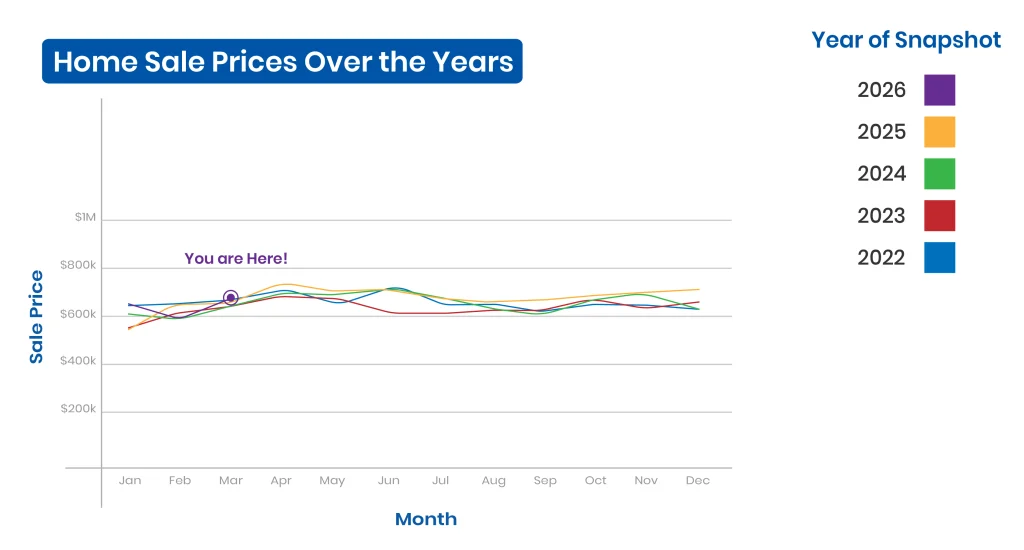
The data tells a reassuring story. Home sale prices in Washington, DC have stabilized this year. Here’s how to time your purchase based on inventory:
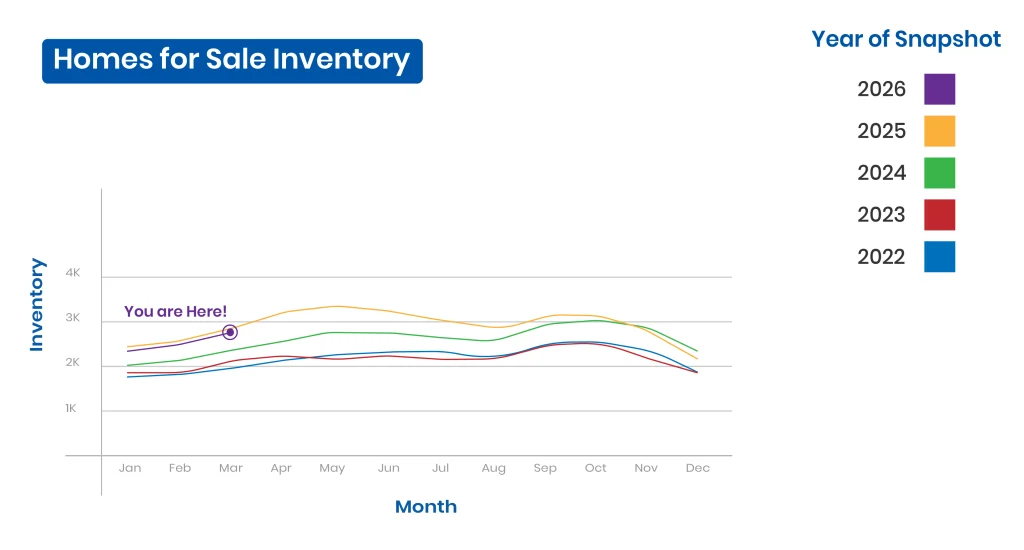
Best Time to Buy a House in Washington, DC Based on Buyer Type
Every buyer’s situation is different. Whether you’re buying your first home, investing, or planning to retire in Washington, DC, the best time to buy can vary. Here’s a quick look at what tends to work best for each type of buyer.
First-Time Homebuyers
If you are buying a home in Washington, DC for the first time, November should be circled in red on your calendar.
- District condo prices held flat year over year while inventory climbed roughly 33%, leaving real room for a patient buyer to find a deal.
- Homes that sold in 43 days in Northwest Washington this spring face a much slower pace by fall, when days on market across the District have run as high as 45 to 70.
- Sales volume is forecast to rise 8% to 10% even as prices show only modest movement, meaning a fall buyer competes against fewer bidders per listing than the spring rush ever offers.
- Sellers who didn’t close before the holidays are genuinely motivated. You can request repairs and closing cost assistance without losing the deal.
Buyer closing costs in Washington, DC can range from $13,992 to $34,981, with the final amount heavily dependent on loan type and location.


Real Estate Investors
Investors earn more during fall and winter in Washington, DC than at the spring peak. So, target October through December for Navy Yard and NoMa condo acquisitions and maximum annual deduction benefits.
- Condo prices holding flat year over year while inventory climbed roughly 33% gives investors real room to negotiate on price and terms.
- Steady federal agency, university, and healthcare employment across the District supports consistent, year-round rental demand even as inventory has loosened.
- You will have fewer competing buyers in the fall-to-winter window, and sellers are motivated to close before year-end.
- December closings let you claim rental property deductions for the full year. Consult your tax advisor.
New to Real Estate Investing? Understand what is an investment property and the steps involved in buying one before timing the market.
Retirees and Relocators
For retirees and relocators, September through November is your window.
- If you buy in October or November, you get real negotiating room as fall listings age and condo inventory stays well above last year’s pace.
- Fewer buyers in fall and winter means more negotiating power, particularly in the District’s quieter, more residential neighborhoods like Brookland, Chevy Chase DC, and Palisades.
- District homeowners 65 or older with combined household income under $163,500 can cut their property tax bill in half and lock in a 2% annual assessment cap, on top of the standard Homestead Deduction.
- Winter listings that are still active in November and December tend to reflect sellers who are genuinely ready to move, which works in a relocating retiree’s favor on timeline as well as price.
Mortgage rates are expected to gradually decline in 2026 as inflation cools. Freddie Mac and NAR forecast that mortgage rates will stabilize near 6%, which will increase affordability and buyer confidence.
Know How Much Home Can You Afford in Washington, DC Get an instant monthly payment estimate with Houzeo’s free Washington, DC mortgage calculator.
Best Time to Buy a Home by Washington, DC Neighborhoods: Quick Snapshot
Washington, DC doesn’t move as one housing market. If you’re buying in Capitol Hill, Georgetown, or Dupont Circle, the best time to make a move depends on local demand cycles. Here’s a look at the best real estate markets in Washington, DC and how to time your offer accordingly.
| Neighborhood | Best Months to Buy | Why It’s the Best | Buyer Advantage |
|---|---|---|---|
| 1. Navy Yard | November to January | Condo inventory tends to linger after the summer leasing and buying cycle. | More leverage on price, credits, and HOA costs. |
| 2. Capitol Hill | October to December | Competition for historic rowhouses eases after the spring and summer rush. | More time to negotiate without giving up location. |
| 3. Georgetown | November to February | Luxury and waterfront homes can take longer to sell once the fall market fades. | More room to negotiate on Luxury homes for sale in Georgetown. |
| 4. Petworth | October to December | Demand for Petworth rowhouses cools after the peak spring buying season. | Better odds of finding homes with longer market times. |
| 5. Anacostia | November to February | Buyer activity slows further through the colder months in Southeast DC. | Lower entry prices plus greater negotiating room. |
When Is the Best Time to Buy a House in the US?
The best time to buy a house in the US depends on what matters most to you, from finding more choices to getting a better price. Spring typically brings more listings and buyer activity, while fall and winter often offer less competition and more negotiating room.
No single month works equally well across the country, as housing markets vary by state and even by city within the same state. Tracking local inventory, days on market, and price cuts offers a more reliable basis for timing an offer.
Is the Washington, DC Housing Market Crashing in 2026?
No, the Washington, DC housing market seasonality in 2026 presents a genuine opportunity for those looking for the best time to move to Washington, DC. Prices are holding largely steady, inventory has grown sharply from a constrained base, and homes are taking longer to sell, which gives buyers real room to negotiate.
- Stabilized Home Prices: Homes are selling at a median price of $699,619, with Beckley, Martinsburg, and Princeton showing more moderate pricing trends.
- Higher Housing Supply: More listings are giving buyers additional options across Navy Yard, NoMa, and Capitol Hill, with inventory rising notably year over year.
- More Time to Decide: Homes are spending about 47 days on the market, giving buyers in Bluefield, Bridgeport, and Morgantown more time to compare properties.
- Buyers Hold Negotiating Power: About 33.1% of listings had price cuts, giving buyers more room to negotiate on price, repairs, and closing costs, particularly in Beckley, Huntington, and Martinsburg.
7 Washington, DC Home Buying Tips
Navigating the Washington, DC real estate market requires smart planning and local insight. These top 7 home buying tips will help you navigate buying property in Washington, DC confidently and secure the best possible deal.
- Research Local Markets: DC neighborhoods vary widely in price and market speed, from Anacostia and Southeast to Capitol Hill and Northwest Washington. Compare neighborhood-level prices, inventory, days on market, and property taxes to find the best fit for your budget and goals.
- Property Taxes: Washington, DC’s property tax rate is 0.85% for residential properties. Check the current tax bill and assessment before buying, especially in neighborhoods like Capitol Hill, Georgetown, and Anacostia.
- Get Pre-Approved for a Mortgage: Mortgage rates are projected to remain high but stable in 2026. Get a mortgage pre-approval to determine your budget and monthly payments.
- Work with a Local Real Estate Agent: A local agent can guide you through buying a house in Washington, DC. They understand DC’s transfer taxes, condo reserves, and historic preservation rules in areas like Georgetown and Capitol Hill.
- Inspect the Property Thoroughly: Older DC rowhouses can have aging plumbing, electrical, and roofing systems. Hire a Washington, DC home inspector who is familiar with the region’s specific conditions.
- Factor in Living Expenses: Don’t forget to account for the cost of living in Washington, DC, such as utilities, insurance, and transportation. These costs vary by area.
- Leverage First-Time Buyer Programs: Explore Washington, DC first time homebuyer programs, which offer financial assistance for down payments or closing costs.
Ready to learn how to buy a home in Washington, DC? Access our Washington, DC First Time Home Buyer Guide and avoid costly mistakes.
Is It a Good Time to Buy a House in Washington, DC?
So, is now a good time to buy a home in Washington, DC? If you’re asking us, the answer is pretty clear: yes, right now, or at least very soon. The market has finally found its balance after the 2025–2026 price trends, making now an ideal time to buy a house. Washington, DC isn’t getting any less popular, and homes aren’t getting cheaper long-term.
| Year | Est. Median Home Price | Annual Change vs. 2026 |
|---|---|---|
| 2026 | $699,619 | – |
| 2027 | $713,611 | +$13,992 |
| 2030 | $734,600 | +$34,981 |
Whether you’re a first-timer stretching your budget in November, an investor hunting October deals in Navy Yard or NoMa, or a retiree moving to Washington, DC, each season brings unique advantages. You can browse listings, compare prices, and make offers online with ease.