If you’ve ever searched for a place to live in the US, you’ve seen the word “apartment” everywhere. Switch to a British property site, and suddenly everything is a “flat.” So what is a flat, exactly? It’s simply the British English word for an apartment, the same home, different name.
Apartments are one of the most common rental choices in the country. After all, 39% of all US renters live in apartment buildings.
This guide breaks down what a flat is, the different types, how it compares to other property types, and what to know before you rent or own one.
Houzeo is America’s best home buying and selling platform.
For Home Sellers: List your home for a Flat Fee, and save 2.5% to 5.5% on the listing agent commission! That’s thousands of dollars extra in your pocket.
For Home Buyers: Houzeo has the largest number of homes for sale in the US. Start your dream home search now!
Yes! You can list your home for sale or search millions of homes on the Houzeo mobile app!
Download now on the Apple App Store or the Google Play Store.
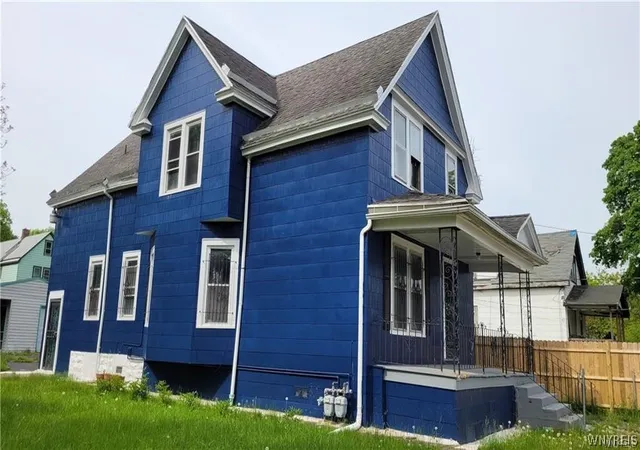


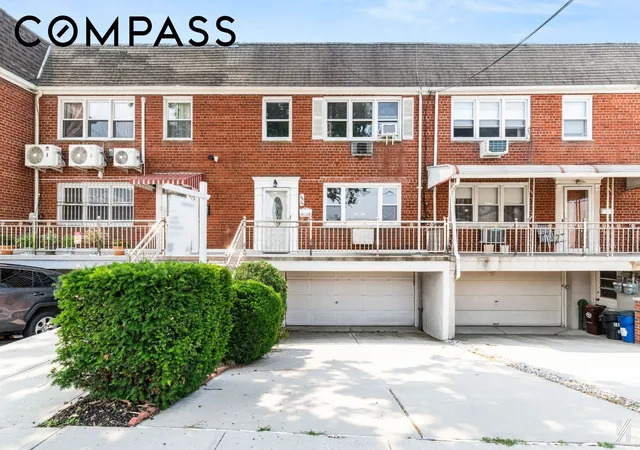


What Is a Flat?
A flat is a private residential unit with its own bedroom, bathroom, kitchen, and living area. You share common areas such as the lobby, gym, and parking spaces with other residents.
Flat vs Apartment: Key Differences
Most of the time, these words are interchangeable. But the word choice can signal real differences depending on context.
Regional Usage: British English vs. American English
In American listings, “flat” occasionally appears for historic buildings or distinctive urban units, though “apartment” remains the standard term. In British listings, “apartment” is often used for newer or more upscale properties, while “flat” remains the more common everyday term.
Over time, each market built its terminology into listings, legal documents, and everyday speech. That’s why the split hasn’t closed. It’s baked into how each country’s housing industry operates.
The short answer is history and geography; “flat” spread globally through British colonial influence. It is stuck in countries that still use British English, but the US developed its own real estate vocabulary and settled on “apartment.”
The meaning of apartment in everyday American use, a self-contained rental unit inside a shared building, solidified through legal documents, building codes, and listing language over time.
You’ll see it used for historic buildings and two-flat properties in cities like Chicago and San Francisco. In these contexts, the term often refers to older or more distinctive urban housing styles rather than modern apartment complexes. However, its usage remains relatively uncommon in the US.
The word “flat” is often linked to “flett,” an Old English term associated with a dwelling, floor, or living space. Over time, the term evolved to describe a self-contained residential unit within a larger building.
Why do Americans say “apartment” instead of “flat”?
It came down to which European language had the most influence on early US urban development. French architectural vocabulary was deeply embedded in 19th-century American cities, particularly New York and Boston.
“Appartement”, a partitioned suite of rooms, was already the word architects and developers used, and it carried over into leases, building codes, and eventually everyday speech.
Types of Flats: 3 Basic Variations You Should Know About
Not all flats look the same. Here are the main types you’ll come across.
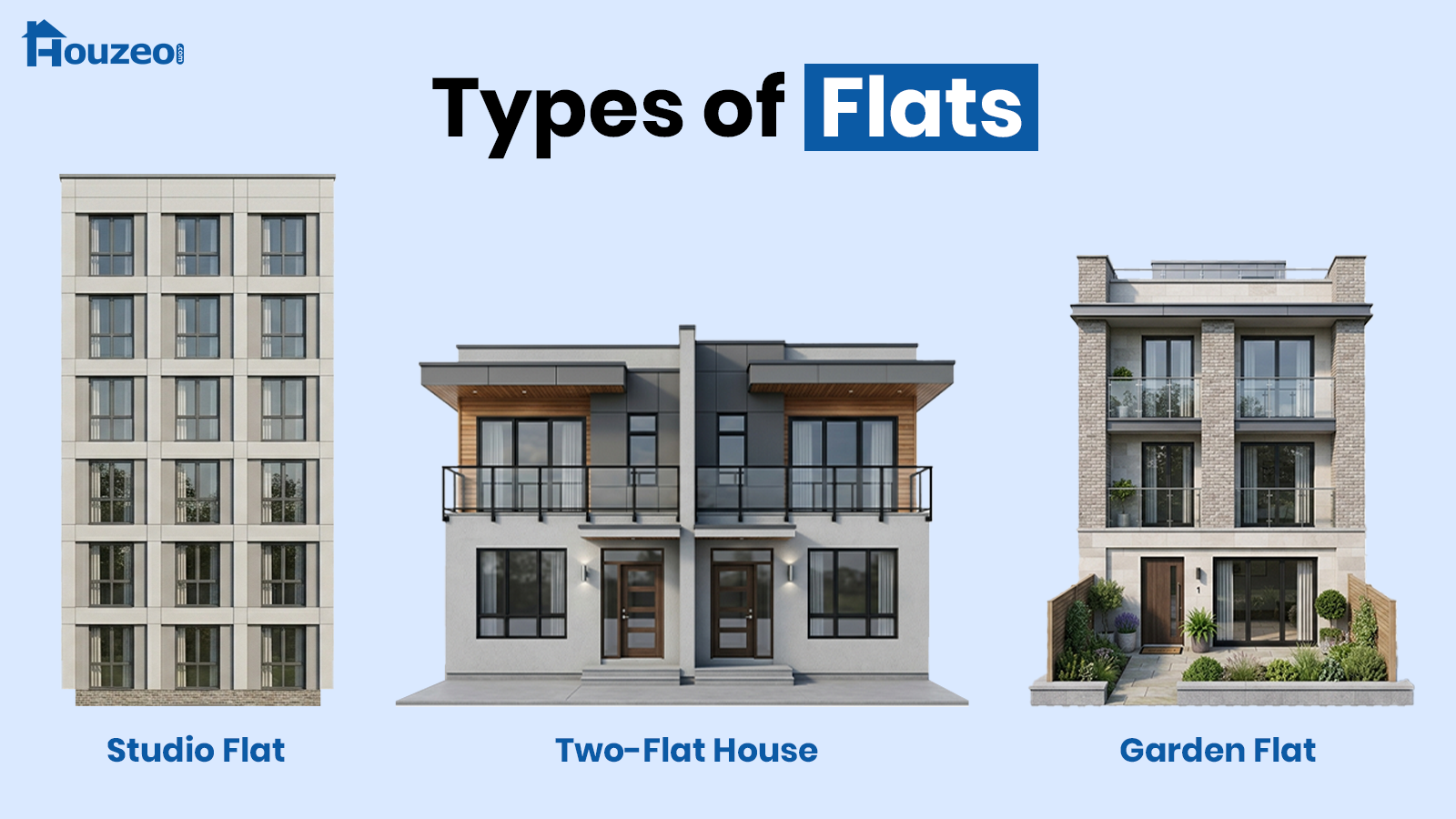
1. Studio Flat
A studio flat combines the bedroom, living area, and kitchen into one open space. The only separate room is the bathroom. It’s the most compact option and is one of the more affordable layouts in many markets.
In the US, you’ll see these called studio apartments or efficiency apartments. They’re common in dense, high-cost cities like New York City, Seattle, and Miami, where solo renters and condo buyers want to keep costs down.
2. Two-Flat House
A two-flat house is a building with two completely separate units, one on each floor. Each has its own entrance, kitchen, and living space.
These are especially common in Chicago in many older residential neighborhoods. In other parts of the US, similar buildings are often referred to as duplexes, though usage can vary depending on the structure.
Many owners live in one unit and rent out the other. The rental income offsets the mortgage, making it a common entry point into real estate investment. You can explore duplexes for sale near you if you’re looking for a property that combines personal housing with rental potential.
3. Garden Flat
A garden flat is a ground-floor unit with direct access to outdoor space, such as a patio, yard, or garden. It’s a British term, but similar units exist in the US as well. American listings typically describe these as garden-level or ground-floor apartments, often found in townhouses or converted older residential buildings.
Flat vs. Other Property Types
Shopping for a home means choosing between several property types. The definition of apartment and flat is the same in this context. Here’s how a flat compares to a single-family home and other types of properties.
| Feature | Flat/Apartment | Single Family House | Townhouse | Condo | Duplex |
|---|---|---|---|---|---|
| What it is | Unit in a multi-unit complex | Standalone home on its own lot | Multi-floor home, sharing side walls | Individually owned unit in a multi-unit building | Property split into two separate units |
| Shared walls | Yes | No | Yes | Yes | Yes (one shared wall) |
| Outdoor space | Balcony or none | Private yard | Small patio or yard | Balcony or none | Porch, yard or Patio |
| Maintenance | Building management or landlord | HOA or owner, depending on the community | Owner handles interior; HOA may maintain exterior | HOA typically maintains exterior/common areas | Owner or Landlord |
| HOA fees | Sometimes | Sometimes | Often | Almost always | Rarely |
| Builds equity | No | Yes (if owned) | Yes (if owned) | Yes (if owned) | Yes (if owned) |
Which Property Is Suitable For You?
- Flat/Apartment: Best for buyers who want lower maintenance and a convenient city location, even if space and privacy are limited.
- Single-Family House: If you want to prioritize space, privacy, and full control over the property, despite higher costs and maintenance responsibilities.
- Townhouse: This is the right fit for you if you desire more space than a flat while keeping maintenance lower than a detached house.
- Condo: Suitable for buyers who are looking for homeownership with shared maintenance responsibilities and community amenities.
- Duplex: Works well for those who want rental income potential or multi-generational living flexibility.
Can You Buy a Flat in the US?
In the US, you cannot buy a standard apartment or flat unit the way you’d buy a house. Standard apartment buildings are owned entirely by one landlord or property company. Every unit is rented out.
So if you want to live in a flat-style unit and own it, you’re buying a condo or co-op, not a flat in the traditional sense. The physical space is identical. The legal and financial structure is what changes.
- A condo looks and functions exactly like a flat; the difference is that you own it. It is an individual unit inside a multi-unit building. You pay HOA fees for shared spaces like hallways, elevators, and amenities.
- Co-op gives you shares in the building corporation, not the unit itself. The corporation owns the building, and your shares give you the right to occupy your unit. Co-ops are common in places like New York City and Washington. They tend to be more affordable than condos but come with stricter rules on subletting and resale.
How Much Does It Cost to Rent a Flat?
In the US, most flat-style units are rented rather than directly owned. Before renting one, three major factors typically affect the price: location, building age, and amenities.
1. Location: Urban cores typically have higher rental costs. In high-cost cities such as San Francisco, a one-bedroom apartment often rents for around $3,000–$3,600 per month. In lower-cost markets such as Oklahoma City or Wichita, some one-bedroom apartments (flats) can still rent for under $1,000 per month.
👉If keeping rent low is the priority, explore the cheapest places to live in the US to find markets where your budget stretches further.
2. Building Age: Older buildings are often priced lower because they may lack modern amenities or updated interiors. However, historic units in prime neighborhoods can still cost as much as newer housing. Newly built complexes typically charge higher rents for modern finishes and added amenities.
3. Amenities: Features such as gyms, rooftops, pools, and concierge services often increase rent costs, even if you don’t use them. Buildings with more amenities typically charge higher monthly rents.
As of early 2026, the national average rent for a one-bedroom apartment is around $1,500–$1,625 per month, while two-bedroom apartments average about $1,880 per month.
Budgeting Rules
A common starting point is the 30% rule. Take 30% of your monthly gross income, which is roughly what you can spend on rent without stretching your budget. Someone earning $5,000 a month would target around $1,500 in rent.
In high-cost cities like Miami or Los Angeles, the 30% rule isn’t realistic. Some renters use the 50/20/30 method instead. Up to 50% of take-home pay goes toward rent and living expenses, 20% goes toward savings and debt, and the remaining 30% covers everything else.
Pros and Cons of Living in a Flat
Pros✅
- Usually more affordable than a house in the same area.
- Lower maintenance, with no yard or exterior upkeep.
- Often located in walkable, central areas.
- Easier to secure when traveling or away for extended periods.
- Simpler management for rentals, especially when there is a single landlord.
Cons❌
- Limited customization; structural changes are usually not allowed.
- Shared walls and common areas can mean more noise.
- Older buildings may have outdated systems or lower energy efficiency.
- Typically less storage space than in a house.
- Private outdoor space is often limited.
- You usually do not own the land beneath the property.
Best Places to Buy an Apartment and Similar Properties
The following table includes buildings or similar properties to an apartment that you can actually buy and not just rent.
| Region | Apartments For Sale Near Me |
|---|---|
| Northeast | New York | Pennsylvania |
| Midwest | Indiana | Kansas | Michigan | Minnesota | Missouri | North Carolina | Ohio | Wisconsin |
| South | Alabama | Arkansas | Florida | Georgia | Kentucky | Louisiana | North Carolina | Oklahoma | South Carolina | Tennessee | Texas |
| West | Arizona | California | Montana | Washington State |
Tips for Renting a Flat or Apartment
- Set a Firm Budget: Know your ceiling before you start. It’s easy to get pulled toward units just slightly above what you planned, but stick to your budgeting rules.
- Check the Property: Look at the building, not just the unit. The entry, hallways, elevator, and common areas tell you a lot about how the property is managed.
- Ask What’s Included: Utilities, parking, and storage vary by building. Know exactly what you’re paying for before you sign.
- Read the Rules: Go through the lease or HOA documents carefully. Rules on pets, noise, guests, and renovations differ significantly. Surprises here are expensive.
- Do Multiple Visits: Visit at different times of day. A quiet unit at noon can be very different at 10 PM. Check it more than once before deciding.
- Get an Inspection: For buyers, always get an inspection. Even in a flat, an inspection catches plumbing issues and aging systems before they become your problem.
Be it buying a 1-bedroom apartment or a cozy condo, renting a two-flat house or a studio flat, make sure to check the location and building condition before making any decision. If you are moving across the US, you can start browsing properties now.
» Houzeo Reviews: Read what customers have to say about Houzeo, America’s best home buying website.