You don’t understand certain things before you actually move into a new apartment, especially when it is your first time. That is why the detailed first apartment checklist is so important, otherwise;
You’ll stand in a store at 9 pm on move-in day holding a bath mat, a shower curtain, and a single pot, only to realize you forgot them. That’s how the first night in a new apartment usually goes. This guide is organized around that distinction: what to get now, what to hold off on, and what most people buy too fast and regret.
Houzeo is America’s best home buying and selling platform.
For Home Sellers: List your home for a Flat Fee, and save 2.5% to 5.5% on the listing agent commission! That’s thousands of dollars extra in your pocket.
For Home Buyers: Houzeo has the largest number of houses for sale in the US. Start your dream home search now!
Yes! You can list your home for sale or search millions of homes on the Houzeo mobile app!
Download now on the Apple App Store or the Google Play Store.
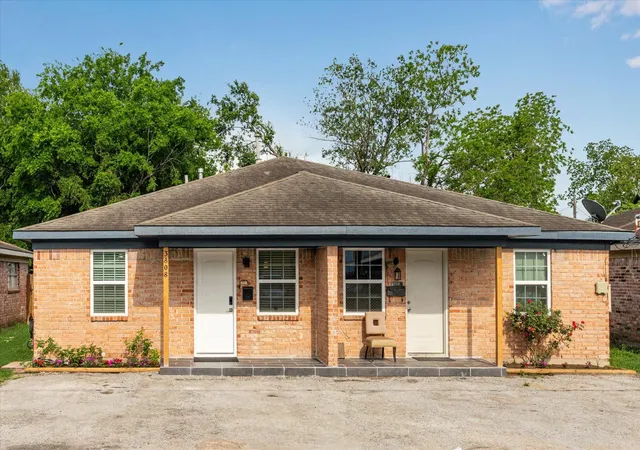


Before the Boxes Arrive: What to Sort Out First
Two weeks before move-in is when the preparation starts, and not the night before. Hence, you need to be smart about the planning, not fast. The very first things you need for a new flat are the utilities and the paperwork. Leave these until moving day, and they become problems stacked on top of an already chaotic day.
Documents and Paperwork to Have Ready
Your landlord will likely ask for some of these at the key handover. Others you’ll need for utility accounts, renters insurance, or simply proving your address to a bank or employer. It is recommended to keep physical and digital copies of each.
- Signed lease agreement
- Government-issued photo ID
- Social Security number or ITIN
- Proof of renters insurance (if required before move-in)
- Bank account details for rent payments or direct debit setup
- Emergency contact information
- Any pet documentation required by the lease
Pre-Move-In Utility Checklist
Nothing slows down a move like arriving at a dark apartment with no internet. Most utility providers need 3 to 7 business days’ notice to activate service; schedule these early.
- Electricity and Gas: Transfer or open a new account in your name
- Water: Confirm whether it’s included in rent or billed separately
- Internet: Schedule installation before move-in if possible; bring a mobile hotspot as backup
- Renters Insurance: Some landlords require proof before handing over keys
- Change Your Mailing Address: USPS, bank accounts, subscriptions, and employer payroll
If the building has an elevator, reserve it. If street parking requires a permit, apply before your moving truck arrives.
Walk-Through And Move-In Inspection
Before you start unloading your stuff into the new apartment, you need to do a few things first. Walk every room with your landlord or property manager and document what you find: scratches on hardwood, scuffs on walls, a bathroom door that won’t shut properly.
Photograph everything with a timestamp. Send the completed inspection form to your landlord in writing and keep a copy. This is not bureaucratic formality. It is the only thing standing between you and a security deposit dispute on the day you move out. You need to plan your exit before you enter the new apartment.
Recommended:
- Check all light switches and outlets
- Run every faucet and check for slow drains
- Test smoke and carbon monoxide detectors
- Look for water stains on ceilings and under sinks
- Examine all windows, doors, and locks properly
- Note any existing wall damage before hanging anything
Keep These Items With You on Move-In Day
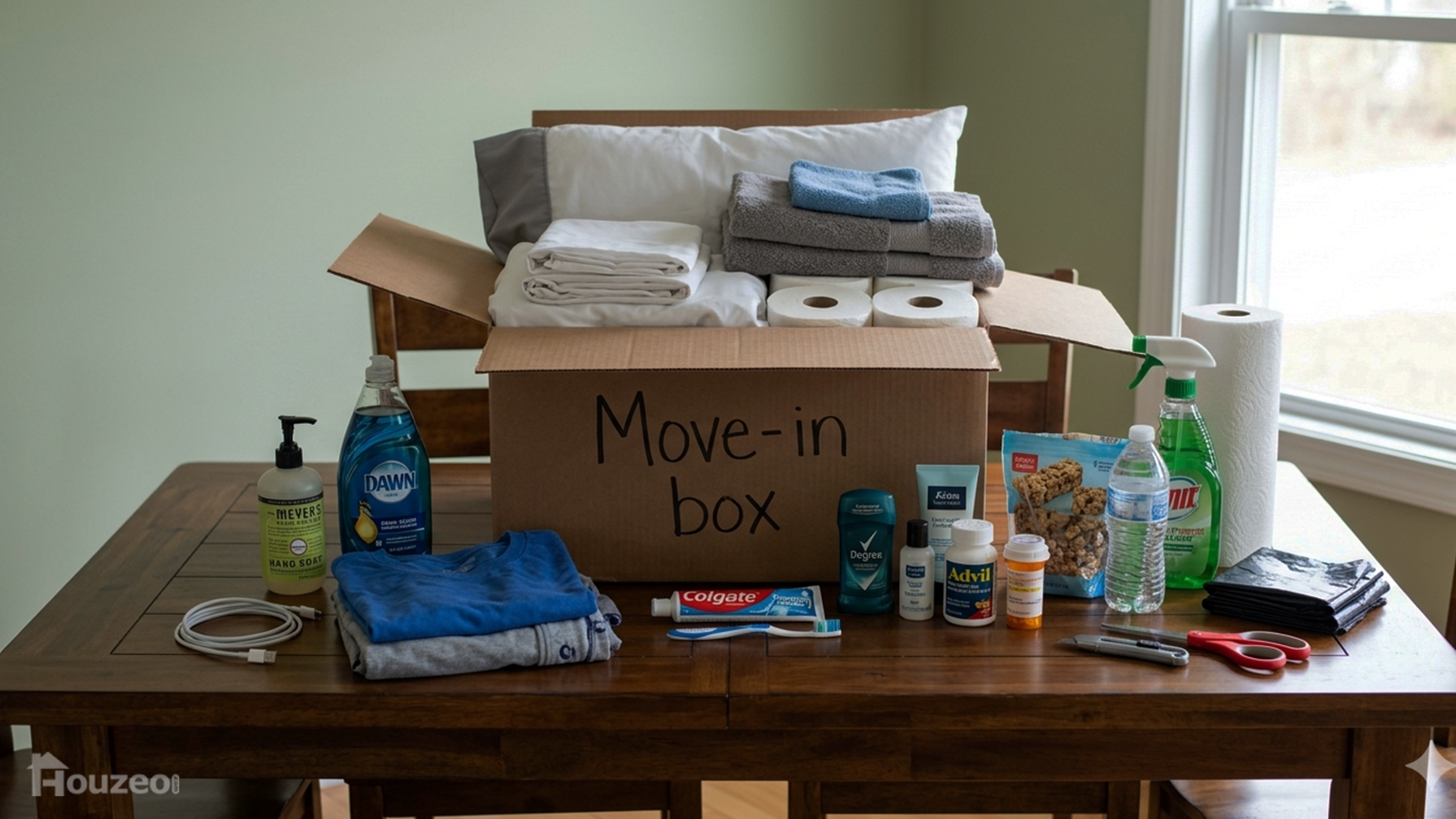
Pack one clearly labeled box or bag that never goes into the moving truck. This will get you through the night without tearing through boxes just for a toothpaste, when everything else is buried under furniture and stacked against the walls.
Your Night-One Box
- Bedding: Fitted sheet, flat sheet, pillow, and pillowcase
- One set of towels and a washcloth
- Toilet paper: more than you think you need
- Hand soap and dish soap
- Phone charger and any device cables
- A change of clothes and pajamas
- Basic toiletries: Toothbrush, toothpaste, deodorant, face wash
- Pain reliever and any prescription medication
- Snacks and a water bottle
- Multi-purpose cleaner and paper towels
- Trash bags
- Scissors or a box cutter
Move-in day logistics to confirm in advance
- Elevator reservation, since most buildings require this for moves
- Parking permit or loading zone clearance for the moving truck
- Key collection time with your landlord or building manager
- Building access codes or fob activation
- Contact number for building maintenance for emergencies
Your First Grocery Run

You don’t need a fully stocked kitchen on day two. Your first apartment grocery list should not overburden you while you’re already stretched thin on moving costs. Buy enough things to eat without spending money on takeout for every meal. The goal is a functional fridge and a pantry that covers the basics.
The first week of cooking in a new apartment is almost always simpler than you expect. Stock for simple meals such as eggs, pasta, and a rotisserie chicken. Buy what you need in the upcoming days instead of storing up for weeks or months ahead.
Fridge and freezer staples
- Eggs
- Butter or olive oil
- Milk or a milk alternative
- A block of cheese
- Bread
- Deli meat or a rotisserie chicken
- A bag of frozen vegetables
- Condiments: Ketchup, mustard, mayonnaise, hot sauce
Pantry Basics and Spices Worth Buying Early
Start with what you’ll actually use. A full spice rack bought in the first week mostly sits untouched. Buy spices as recipes call for them.
- Rice
- Pasta and a jar of marinara
- Canned beans and canned tomatoes
- Oats or cereal
- Peanut butter
- Coffee or tea
- Sugar, salt, chili powder, and black pepper
- Olive oil or neutral cooking oil
- Spices
- Noodles

Pro Tip Spices that earn their place early because they go in almost everything: garlic powder, onion powder, red pepper flakes, and Italian seasoning.
Room-by-Room Snapshot
| Room | Buy Before Move-In |
|---|---|
| Bedroom | Mattress, bedding, pillow, one lamp |
| Kitchen | One pan, one pot, chef’s knife, cutting board, plates, and bowls for two |
| Bathroom | Two towel sets, bath mat, shower curtain and liner, toilet paper, plunger |
| Living Room | Nothing urgent, this room can wait |
Things You Need For a Bedroom
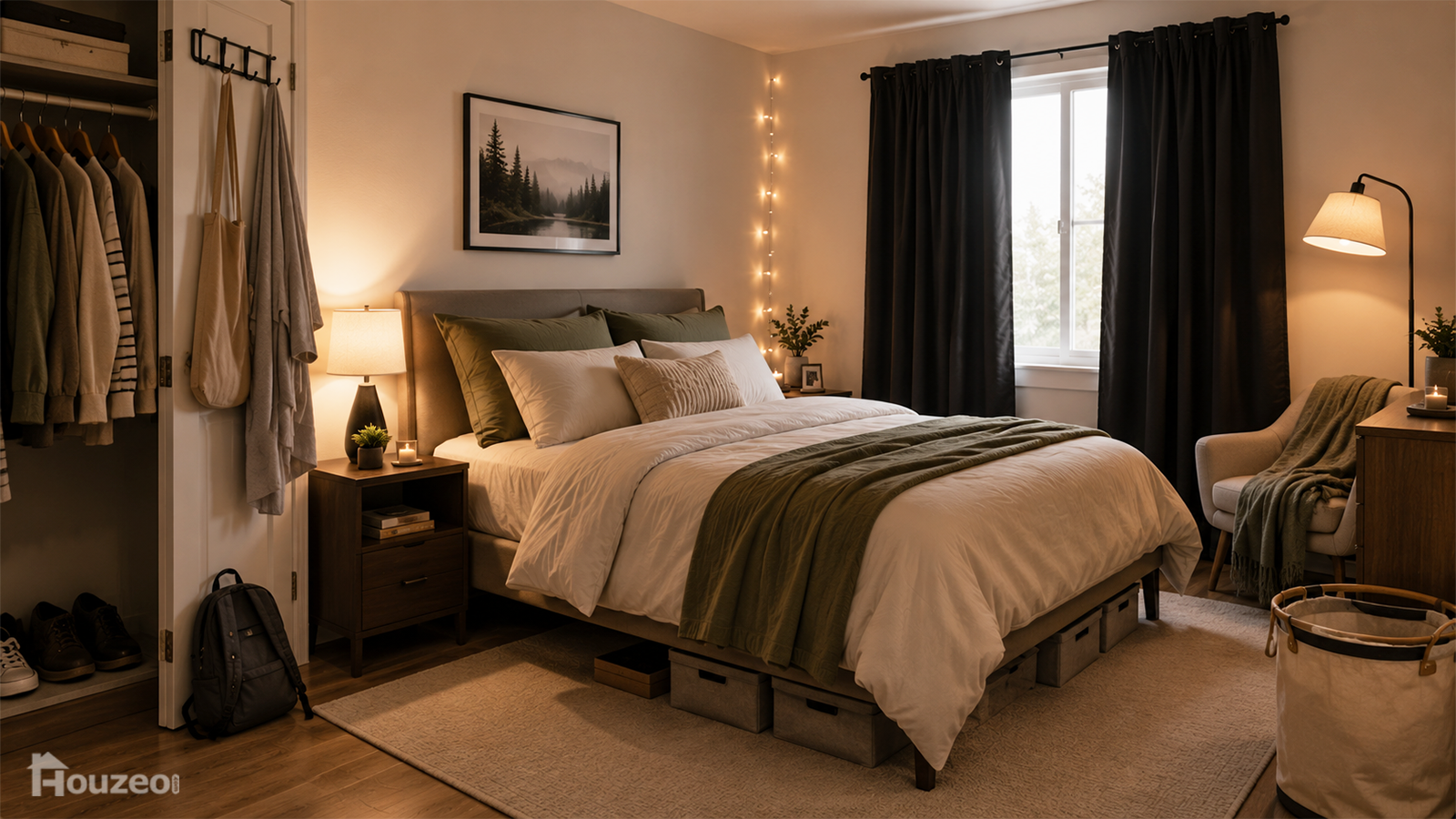
Get this room sorted before anything else. Everything beyond what gets you a decent night’s sleep can wait until the weekend.
1. Bedding and Sleep Setup
Bed frame, headboard, decorative throw pillows, and additional blankets; none of these are urgent. Your bedroom checklist for a new home should have the following:
- Mattress: measure the room before ordering; rental bedrooms are often narrower or shorter than they appear in listing photos
- Mattress protector: Buy this immediately
- Two sets of sheets: One on the bed, one in the wash
- Two pillows minimum
- Duvet or comforter with a cover
- Blackout curtains if the apartment gets strong morning light
2. Closet and Clothing Storage
Rental closets are almost always smaller than listing photos suggest. Before buying a dresser, measure the space and figure out what will actually fit. All you need is a full set of hangers, a laundry hamper, and over-door hooks for bags, robes, or towels.
Wait a few weeks before buying a dresser, under-bed storage boxes, or closet organizer systems. You’ll have a much clearer picture of what you need once you’ve lived in it.
3. Lighting
A single ceiling fixture creates flat, harsh light. In most rentals, it is also all you get. Hold off on smart bulbs, string lights, and extra lamps until you know how the room gets natural light.
For starters, only keep one bedside or floor lamp and extra light bulbs in the correct wattage.
Apartment Kitchen Essentials
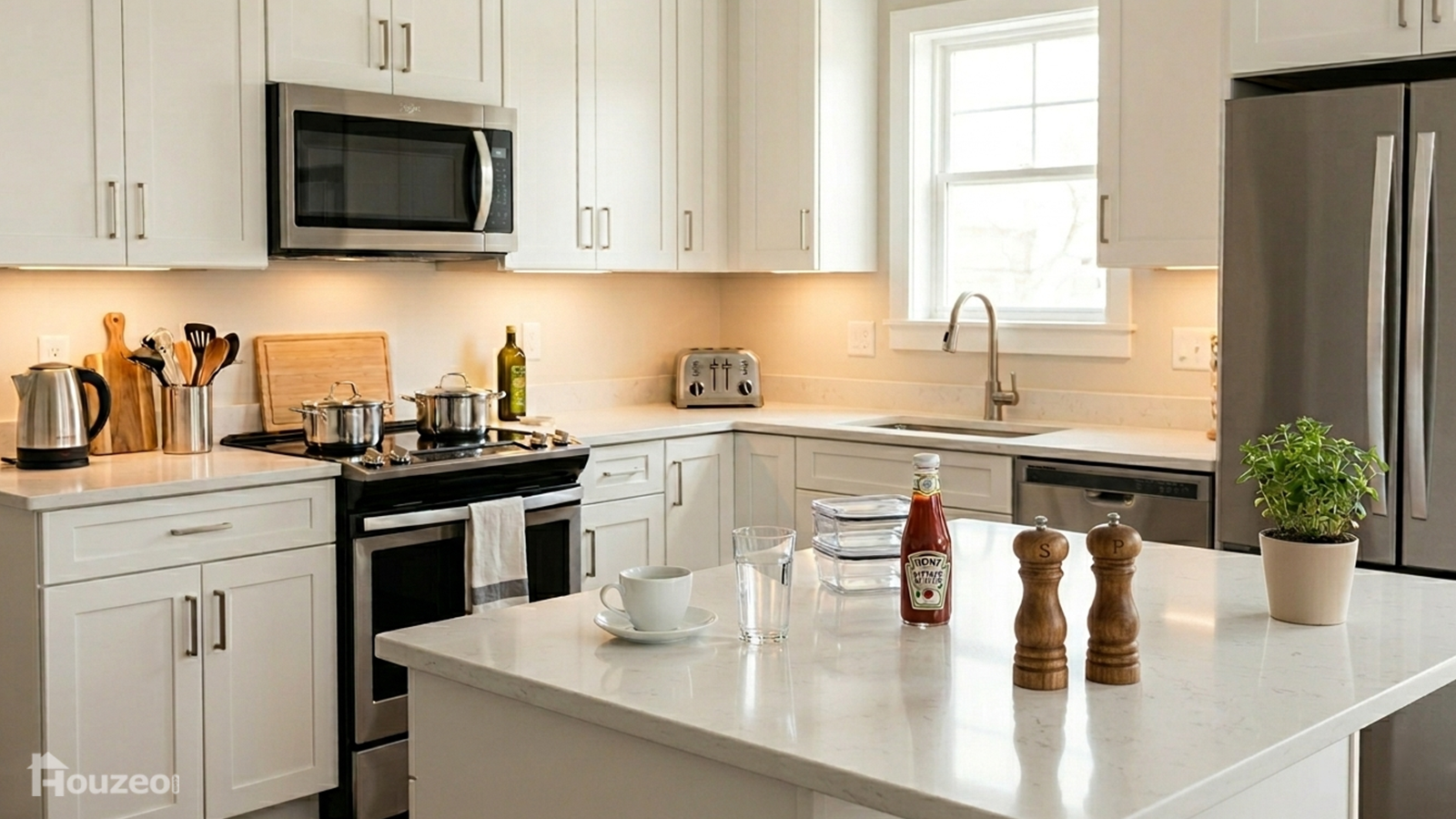
Resist the urge to fully outfit a kitchen before you’ve cooked a single meal in it. Buy what you need to cook basic meals. Add the rest as actual gaps reveal themselves.
1. Cookware and Bakeware
- One 10 or 12-inch skillet (non-stick or stainless, up to you)
- One medium saucepan with a lid
- One large pot for pasta or soups
Wait until you know what you actually cook before buying a full cookware set, baking sheets, a Dutch oven, or a cast-iron pan.
2. Dinnerware, Glassware, and Utensils
- Plates (4)
- Bowls (4)
- Mugs
- Glasses (and wine glasses, if you use them)
- Forks, knives, and spoons (4 each)
- Spatula, tongs, wooden spoon, serving spoon
- Can opener and vegetable peeler
- Colander
3. Appliances Worth Buying
Among the first apartment essentials, the only appliances that justify an immediate purchase are the ones you’ll use every single day.
- Microwave: If the apartment doesn’t have one built in
- Electric Kettle: If you drink tea or coffee daily
Buy a toaster, coffee maker, or blender only after you’ve established your actual morning routine. Plenty of people buy a coffee maker and use a café for the first few weeks anyway. Only buy a stand mixer, air fryer, rice cooker, or instant pot if it replaces something you would otherwise do manually.
4. Food storage containers
- A set of airtight containers in mixed sizes
- Ziplock bags in quart and gallon sizes
- Plastic wrap and aluminum foil
The Bathroom List
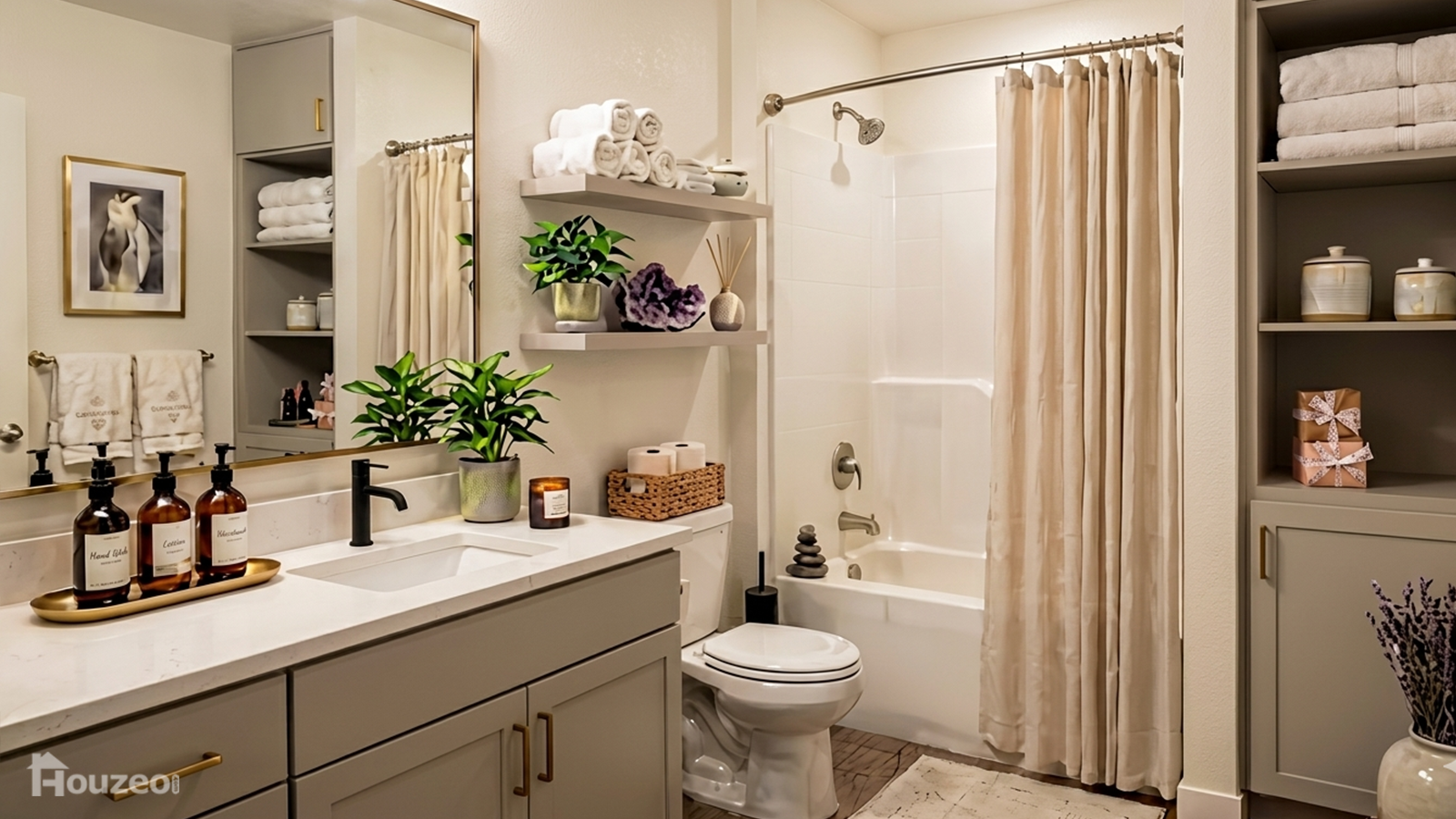
Get this right before anything else goes into the apartment. Unlike the living room, there is no workaround for an unsorted bathroom.
1. Toiletries and Personal Care
In your first flat checklist, you can skip many of the following since you probably already own most of these. So check before buying duplicates.
- Toothbrush and toothpaste
- Shampoo and conditioner
- Body wash or soap
- Deodorant
- Face wash and moisturizer
- Any prescription or daily medication
2. Towels, Bath Mat, and Shower Setup
- Two bath towels minimum, ideally four
- Two hand towels
- Bath mat
- Shower curtain, liner, and rings: Measure the rod before buying
- Plunger: Buy this before you need it, not when you need it
3. Storage and Bathroom-Specific Cleaning
Bathroom storage in a rental is almost always limited. Before buying a cabinet or shelving unit, check what wall space exists and whether your lease allows mounting.
- Toilet brush and holder
- Shower caddy for toiletries
- Under-sink organizer if there’s cabinet space
- Toilet bowl cleaner and bathroom surface spray
- Small basket for extra toilet paper storage
The bathroom is fully functional without matching towel sets, premium storage systems, or decorative accessories.”
Living Room Essentials
Things you need for an apartment do not include heavy furniture. People tend to overspend on the living room before understanding the space. Settle down in the new apartment for at least 2 to 4 weeks before buying anything large or permanent.
It’s the difference between furniture that fits your apartment and furniture you wish you hadn’t bought.
What You Actually Need on Day One in the Living Room? (Almost Nothing)
The living room solves no survival problem since you can sleep and eat without it. First, sort the bedroom and kitchen essentials before thinking about the living room. The only exception is if you work from home with no desk elsewhere, buy a chair and desk first.
Seating, Lighting, and A Rug: What to Buy First?
Coffee table, side tables, TV stand, accent chairs, none of these are week-one purchases. When you’re ready, buy the following:
- Sofa or Loveseat: Measure the room, then measure again; account for walkways on all sides
- Floor Lamp: Overhead lighting in living rooms is usually harsh or absent
- A rug to define the space and reduce echo in an empty room
Storage Solutions For Small Spaces
Storage that earns its footprint is the only storage worth buying in a compact living room. Buy these after you’ve identified actual storage problems, not in anticipation of them.
- A media console with closed storage
- An ottoman with internal storage doubles as a coffee table
- Wall-mounted shelves keep floor space clear
Decor: What To Wait On and Why?
Rugs, throw pillows, wall art, or plants, none of this is urgent. The instinct to make a new place feel like home immediately is understandable, but it is also expensive. When acted on before you know what the space actually needs.
Live there for 30 days. Note where the light is good, where you actually spend time, what the room is missing, versus what you think it’s missing. Then buy decor with that information.
Clean Before You Unpack
Every apartment gets cleaned between tenants, but not all of them are thoroughly cleaned. Before unpacking, wipe down every surface your belongings will sit on: cabinet interiors, drawer liners, closet shelves, and refrigerator shelves.
Two hours now saves you from finding someone else’s residue under your dishes six months later.
What to Clean Before the Furniture Arrives
If you can get into the apartment a day before the moving truck, do it. An empty apartment is dramatically easier to clean than a furnished one. Things you need for your first apartment to clean include the following.
- Inside all kitchen cabinets and drawers
- Refrigerator interior: Shelves, door bins, crisper drawers
- Bathroom surfaces, grout, and behind the toilet
- Window sills and tracks
- Inside closets
Cleaning Supplies For a New Apartment
- Multi-purpose spray cleaner
- Scrubbing sponges and microfiber cloths
- Mop or Swiffer with refill pads
- Broom and dustpan
- Rubber gloves
- Glass cleaner
- Trash bags in multiple sizes
- Vacuum: A lightweight stick vacuum works well in most rentals
Laundry Setup
If the building has coin-operated machines, keep quarters on hand or load a laundry card before your first wash.
- Laundry Detergent: Check whether in-unit or shared machines require specific detergent types
- Dryer sheets or wool dryer balls
- Mesh laundry bags for delicates
- Drying rack for items that shouldn’t go in the dryer
Tools Every Renter Needs in the First Week
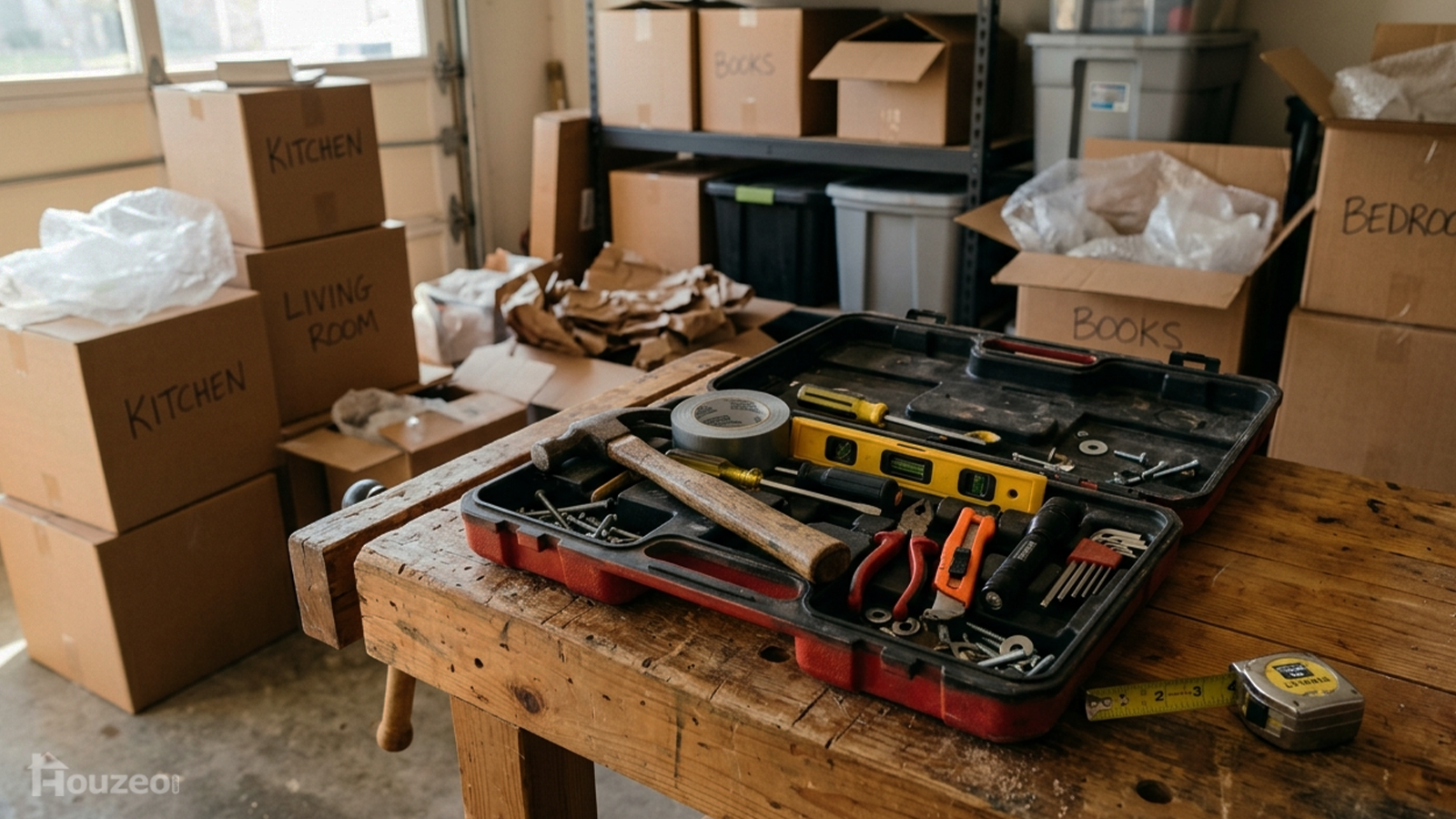
Your new apartment checklist should have a screwdriver before you write down a rug on it. Furniture arrives flat-packed, and curtain rods need mounting. Something will need tightening within 48 hours of moving in. Most people only realize this after moving in, when the only thing available to open a box is a house key.
The Basic Toolkit
- Phillips and flathead screwdrivers, or a multi-bit driver
- Hammer
- Duct tape
- Level
- Pliers
- Utility knife
- Flashlight or rechargeable work light
- Stud finder: Before mounting anything heavy
- Allen wrench set
- Measuring tape
Renter-Friendly Mounting Alternatives
Most leases restrict wall damage, but you can still hang things without damaging the walls.
- Command strips and hooks with proper weight ratings
- Adhesive picture-hanging strips
- Tension rods for curtains, closet dividers, or under-sink storage
- Furniture feet pads to protect floors from scratching
A Basic First-Aid Kit
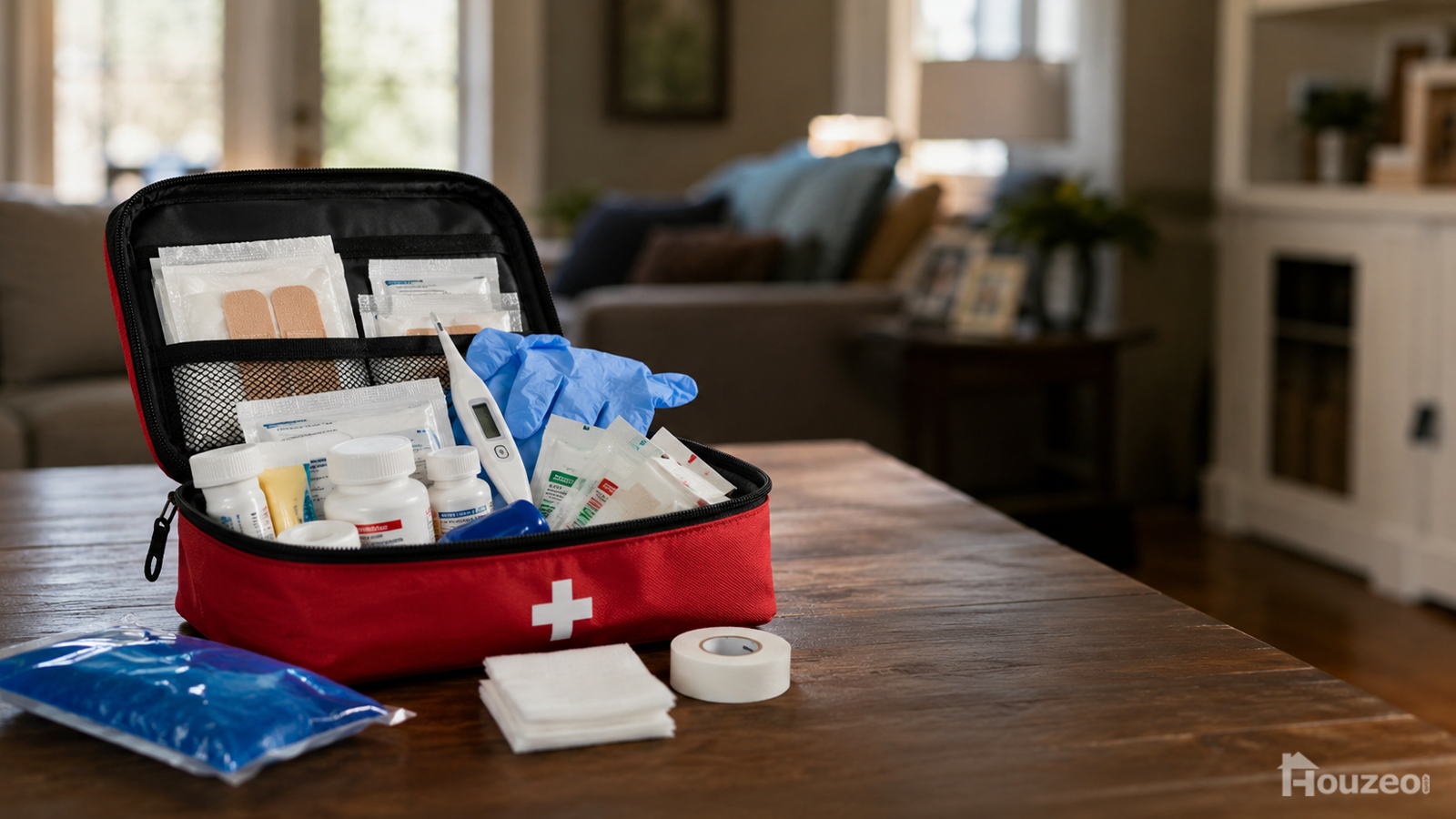
New apartment essentials must include a first-aid kit. Buy one before move-in day, not on it. Keep it in one place and tell anyone staying with you where it is.
- Adhesive bandages in multiple sizes
- Gauze pads and medical tape
- Antiseptic wipes
- Antibiotic ointment
- Tweezers
- Digital thermometer
- Ibuprofen and acetaminophen
- Antihistamine
- Cold and flu medication
- Antacid
- Reusable ice pack
- Disposable gloves
Safety Basics Most First-Time Renters Overlook
Landlords are legally required to provide working smoke detectors in most states. That doesn’t mean they’re in the right locations, recently tested, or have fresh batteries. Don’t assume everything works. Check all of these yourself on move-in day.
1. Smoke, Carbon Monoxide, and Fire Prep
- Test every smoke detector and replace the batteries (if the landlord hasn’t done so)
- Carbon monoxide detector (required by law in many states, especially in gas appliance apartments)
- A small ABC-rated fire extinguisher for the kitchen
- Know the building’s evacuation routes before you need them
2. Re-Keying and Home Security Basics
Your landlord likely had previous tenants who may have had copies of keys made. Re-keying is inexpensive and prevents previous tenants from accessing your apartment.
- Ask your landlord about re-keying or lock replacement; some lease agreements cover this
- Door reinforcement bar or secondary lock for added security
- Door stop alarm for ground-floor apartments
- Confirm all window locks work properly
3. Power Outages and Emergency Supplies
- Flashlight and spare batteries, or a rechargeable LED lantern
- Battery-powered or hand-crank phone charger
- Three days of non-perishable food and water
- Small cash reserve (card readers don’t work during outages)
Yes. Almost certainly. Renters insurance covers your personal belongings if they’re stolen, damaged by fire, or destroyed by a burst pipe. It also covers liability if someone is injured in your apartment. The average monthly renter’s insurance is $15 to $25, less than most streaming subscriptions.
Your landlord’s insurance covers the building. However, it does not cover anything you own inside the apartment. That distinction matters when something goes wrong.
Note: Check whether your lease requires it. Even if it doesn’t, get a policy before move-in day.
Setting Up a Work-From-Home Corner
If your job starts on the same day as your lease, sort this before anything else in the apartment. Otherwise, the work setup can wait. A dining chair and table work fine for a few days.
1. Desk, Chair, and Ergonomics
A kitchen chair and dining table will do for a few days. For anything longer, invest in a chair with back support. Eight hours a day on a folding chair will give you back problems within a week.
- Desk (measure the space first before buying)
- Chair with lumbar support
- Monitor stand or laptop riser to bring the screen to eye level
A standing desk converter, second monitor, and cable management can all wait until you know the space works.
2. Tech and Connectivity
- Confirm internet installation timing before move-in day
- Router placement (keep it central, away from microwaves and thick walls)
- Surge protector power strip (one for the desk, one for the bedroom or living room)
- Extension cords, if needed
Older buildings frequently have one or two outlets per room. Plan furniture placement around outlet locations before committing to a layout.
How Much Does It Cost to Furnish a First Apartment?
The range is wide because it depends almost entirely on how much you already own and what you’re willing to buy secondhand. How quickly you resist the urge to furnish everything at once also affects the final cost. This should be factored in as well.
Three ways to budget your setup
1. Bare Minimum ($800–$1,500): Mattress, basic bedding, a few kitchen items, bathroom supplies, and cleaning products. Functional more than it is comfortable. Sustainable for a month while you figure out what you actually need.
2. Realistic Starter Setup ($2,500–$4,500): Bed frame, full bedroom setup, a sofa, functional kitchen, and complete bathroom, plus cleaning supplies, along with a basic toolkit. Most people land somewhere in this range, buying a mix of new and secondhand. Not fully furnished, but livable and comfortable.
3. Comfortable Setup ($5,000–$8,000): Full room-by-room furnishing with quality pieces, appliances, decor, and storage. This is what a fully settled apartment costs from scratch.
Note: These figures assume starting from nothing. If you’re coming from a shared house or a college dorm, subtract whatever you’re bringing.
What People Consistently Overbuy, and Regret
This list is more useful than any checklist of things to buy.
- Full Matching Furniture Sets: Bought before understanding how the room actually works; pieces that don’t fit, don’t get used, or clash with what comes later.
- Full Spice Racks and Pantry Bundles: Most of it goes unused; buy spices as specific recipes require them.
- Storage Systems Bought Preemptively: Closet organizers and shelf units purchased before knowing what needs storing; usually the wrong size or configuration.
- Decorative Items in Bulk: Throw pillows, candles, frames bought to make the place feel settled immediately; most get culled within a year.
- Duplicate Kitchen Gadgets: A blender, a food processor, and an immersion blender; pick one, use it, and add more only if a real gap appears.
- Premium Versions of Low-Priority Items: Designer trash cans, high-end laundry baskets, expensive paper towel holders; not where the money should go first.
Buy Smart and Spend Less
Worth Buying Secondhand: Sofas, bed frames, dressers, coffee tables, bookshelves, lamps, rugs, decorative items, and small kitchen appliances.
Worth Buying New: Mattress, bedding, towels, pillows, anything with a hygiene consideration.
Where to Find Secondhand Furniture:
- Facebook Marketplace and Craigslist for large pieces; inspect before committing, pick up only
- IKEA As-Is section for returned and lightly damaged items
- Estate sales for quality older furniture at low prices
Best timing for deals:
- End of the month: People moving out sell quickly and cheaply
- Late August and early September: student move-outs flood the secondhand market
- Post-holiday sales for appliances and bedding
- January for furniture clearance
Don’t Rush the First Apartment
The apartments that come together well are rarely the ones furnished fastest. They’re the ones where someone bought a mattress, sorted the bathroom, stocked enough food to get through the week, and then actually waited before spending more.
Buy what you need to function on move-in day. Let the rest of the apartment reveal itself over time.
» Houzeo Reviews: Read what customers have to say about Houzeo, America’s best home buying website.