Every home tour ends the same way. You’re barely out the driveway when you hear: “So, do you like it?”
With fresh paint and rented furniture everywhere, saying yes is easy. But professional home staging is just like an early dating phase. Before you commit, you still have to look past the charm and check practical things like the roof, HOA fees or the neighborhood.
Looking past the cozy throw pillows takes a bit of detective work. To help you look beyond appearances, here are 11 questions to ask when touring a house, along with a checklist and red flags to watch for before making an offer.
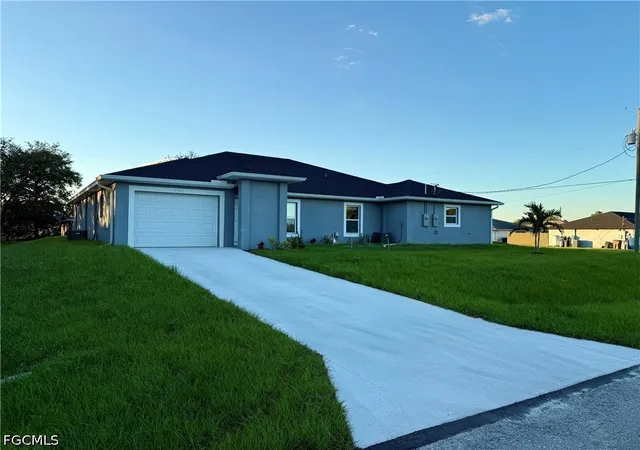


How Do You Prepare for a House Viewing?
Showing up unprepared means you are just looking at nice interiors and soft lighting. A little preparation helps you see past the staging so you know what to look for when touring a house before making any big decisions.
1. Take Off Your Rose-Colored Glasses
The seller wants you to fall in love with the space, your job is to check for potential problems. Approach what to look for when touring a house with practical home viewing questions instead of just excitement. Walk through every house viewing like an inspector, not a guest.
2. Never Tour by Mood Lighting
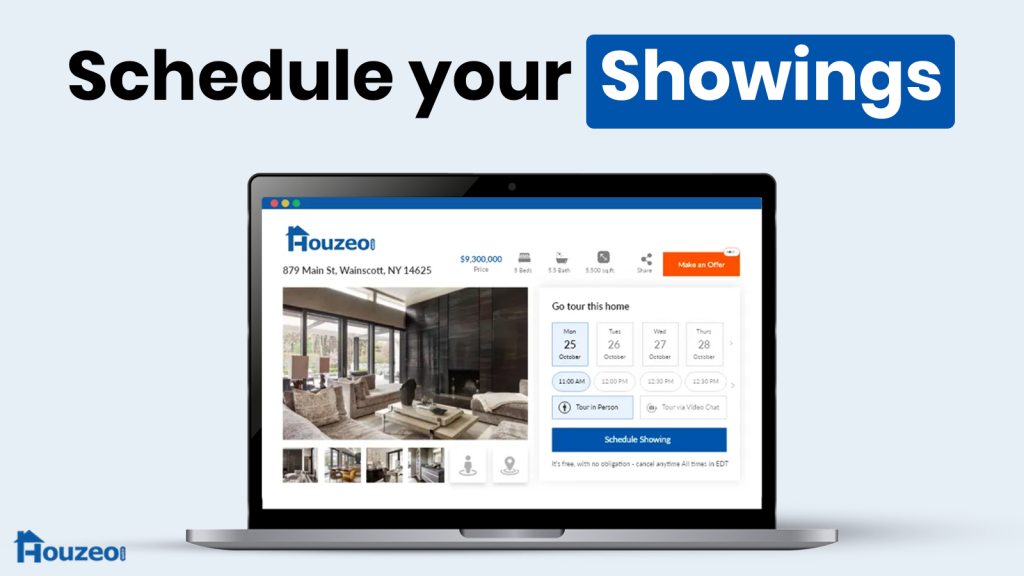
A seller showing a home in the late afternoon or evening creates a cozy vibe, but soft light makes it easy to miss physical flaws. Schedule your house showing for bright daylight so water marks, wall cracks, and uneven paint are easy to spot.
3. Pocket Your Secret Weapons
You do not need heavy equipment to check a home’s basic condition. Keep these four quick tools in your pockets to work through your house showing checklist on the spot:
| Tools | Why You Need It |
|---|---|
| Small marble | Drop it on hard floors to see if sloped flooring makes it roll. |
| Tape measure | Check doorway sizes and wall spans so your furniture fits. |
| Flashlight | Spot hidden leaks under sinks and check dark attic corners. |
| Phone charger | Plug it into wall outlets to make sure they actually work. |
11 Questions to Ask When Touring a House Before You Say “This Is It”
These 11 questions cover the biggest sources of buyer regret: expensive repairs, hidden defects, legal surprises, and recurring costs. Ask them in person, and follow up in writing so the answers are on record.
1. How Old Are the Roof, HVAC and Major Systems?
Before you sign on the dotted line, find out whether the roof, HVAC, or plumbing could leave you with a hefty repair bill soon after moving in.
The biggest expense to watch out for is the roof. A 20-year-old roof is a financial time bomb waiting to explode. Since data shows 77% of inspected roofs need maintenance, never settle for a seller’s vague claim that the roof is “in good shape.” Ask the seller directly if it’s original or replaced, and if it’s ever leaked. Be sure to request repair receipts, so you have the exact proof needed to negotiate seller repair credits before closing.
An ancient HVAC, outdated electrical panel, or leaky plumbing can crash your budget just as fast. HVAC inspections can be carried out later, but for now, ask for service records, installation dates, and last 12 months of utility bills to see what’s living on borrowed time.
2. Has This Home Ever Had Water Damage or Hidden Leaks?
Ask the seller about past water damage and leaks before you make an offer. Water issues can lead to expensive repairs, mold, and structural damage. Sellers may disclose known problems, but you still need to play detective for anything that may not be obvious.
As you walk through the house, watch for a few telltale signs:
- Ceiling stains or fresh paint patches
- Musty smells in basements or closets
- Warped baseboards or buckled floors
- Chalky deposits on basement walls
- Gutters draining water near the foundation
Ask about past leaks, repairs, and insurance claims, and check the records when available. A dry room today does not guarantee a dry history. Catching water damage early can save you from a very expensive headache later.
3. How Long Has This House Been on the Market?
How long is too long? If a home has been listed longer than similar properties nearby, ask the listing agent why it hasn’t sold. The seller may have overpriced it, or buyers may have concerns about its condition. Repeated price cuts can signal that the seller is becoming more flexible.
Houzeo’s 2026 data found that 96% of its users opted for daily listing alerts. Keep an eye on price changes to see whether the seller has lowered the asking price. Of all the questions to ask when viewing a house, this one could give you an edge when negotiating.
4. Why Are You Selling Your House?
Of all the questions to ask a seller, this one gives you the biggest edge. “Why are you selling?” sounds like polite small talk, but motivation is your true leverage. A job move, divorce, or estate sale creates real urgency. A casual seller just testing the market has all the time in the world.
When buying with a mortgage, standard deals take 30 to 45 days. Aligning your closing timeline with theirs is key. A seller who already bought their next home usually wants a quick, easy deal over the highest price.
Listen carefully to how they answer. Catching hesitation early screens out half-hearted sellers and tangled legal drama before you waste your weekends.
5. What Comes With the House?
“Wait, is that coming with the house?”
It’s easy to fall in love with a home on a Sunday tour. You picture making breakfast in that gorgeous kitchen, forgetting that the seller might load the espresso setup onto a moving truck on Friday.
Unless an item is permanently built-in, never assume it stays. Use this quick “What’s Included?” checklist when you ask the seller or listing agent to confirm what stays and what packs up.
| Category | What’s Included? |
|---|---|
| 🍳 Kitchen Appliances | Oven, dishwashers, cooktop, microwave, refrigerator, wine cooler, ice maker. |
| 🧺 Laundry & Utility | Washing machines, dryers, utility sinks, water softeners, water heaters. |
| 💡Electrical Appliances | Chandeliers, light fixtures, ceiling fans, air conditioners, furnaces, HVAC equipment |
| 🪟 Window & Wall Fixtures | Blinds, shades, curtains, curtain rods, screens/nets, shutters, TV mounts, mirrors. |
| 🔒 Smart Home Features | Smart thermostats, cameras, video doorbells, sensors, alarm systems, smart locks. |
Bottom line: if you love it, lock it down in writing. Nothing kills move-in-day excitement faster than finding out the missing washing machine or an empty espresso spot.
6. Were Any House Renovations Done With Proper Permits?
Ask this directly while viewing property, especially if you see converted garage or a beautiful open-concept kitchen or. They might look great, but house flippers and DIYers love moving walls and wiring without getting city permits.
If they cut corners, you’re the one stuck dealing with safety hazards, code issues, or unexpected repair costs down the road. Protect your budget by requesting proof of permits from the listing agent or seller. Ask for a Certificate of Occupancy, a official document issued by government verifying the home complies with local building codes and safety requirements.
Checking permit records early protects your wallet from costly post-closing surprises.
7. What Do Taxes and Utilities Cost Each Month?
Ask the listing agent for a year’s worth of utility bills and the latest tax statement. You don’t want these hidden costs to rain on your homeownership parade.
Property taxes depend on the home’s value and location. Your lender may bundle them into your mortgage payment, but your tax bill could climb after you buy if the assessed value changes.
Utility bills can also take a seasonal swing. Check past bills for summer AC spikes and winter heating costs. During the tour, inspect the HVAC system, check for drafty windows, and ask about attic insulation.
A house may steal your heart, but the monthly bills shouldn’t empty your wallet.
8. What Is the Neighborhood Like at Night and On Weekends?
A peaceful Tuesday afternoon doesn’t tell you much about a Friday night. Weekend parties, traffic noise, and packed streets can quickly test your patience. Ask the agent or seller: “Are noise complaints common here? Does the HOA enforce quiet hours? How hard is parking on weekends?”
Pay close attention to how they answer. If they offer a vague “It’s a very vibrant community!” that’s a subtle sign to dig deeper. Look out for overcrowded driveways, street lighting, and noise levels. For a broader look at safer areas, explore Houzeo’s safest places to live rankings.
A quick drive-by on a Saturday evening can save you from a massive lifestyle mismatch.
9. What Is the Mobile Cell Coverage and Internet Speed Like Here?
Of all the questions to ask when touring a house, most buyers overlook this one. A beautiful home can still be frustrating to live in if your phone becomes a paperweight due to unreliable cell reception.
Houzeo’s buyer report found that 28% of U.S. full-time employees work remotely. Maybe you’re one of them. Ask which internet providers serve the address, what speeds are available, and whether fiber is an option. While you’re there, check your own cell signal in a few different rooms.
It may seem like a small detail, but poor connectivity can become a daily headache. A quick test during the house viewing can save you from discovering that after you move in.
10. Are There Any Offers on the House Right Now?
Before you head out, get a feel for the competition. Ask the listing agent: “Have any other home buyers made an offer yet?”
If yes, ask when the seller plans to make a decision so you know how quickly to act. If not, you may have more room to negotiate. And if the agent says, “We’ve had tons of interest,” don’t assume offers are on the table. Ask whether the seller has set a deadline for offers.
This helps you decide when to make your move without rushing into a bidding war.
11. Can I Review the Seller’s Disclosure?
Request the seller’s disclosure from the listing agent before leaving. Top first-time home buyer questions should always include asking about the disclosure document. It covers known issues with the property, from past roof leaks and basement flooding to structural damage.
Sit in your car for two minutes and match the form to your tour photos. Noticed fresh ceiling paint, but no water damage mentioned? Flag that with your agent and ask them to follow up with the seller.
Houzeo’s guide to seller disclosures explains what sellers typically disclose. Catching these issues now keeps your dream home from turning into a nightmare.
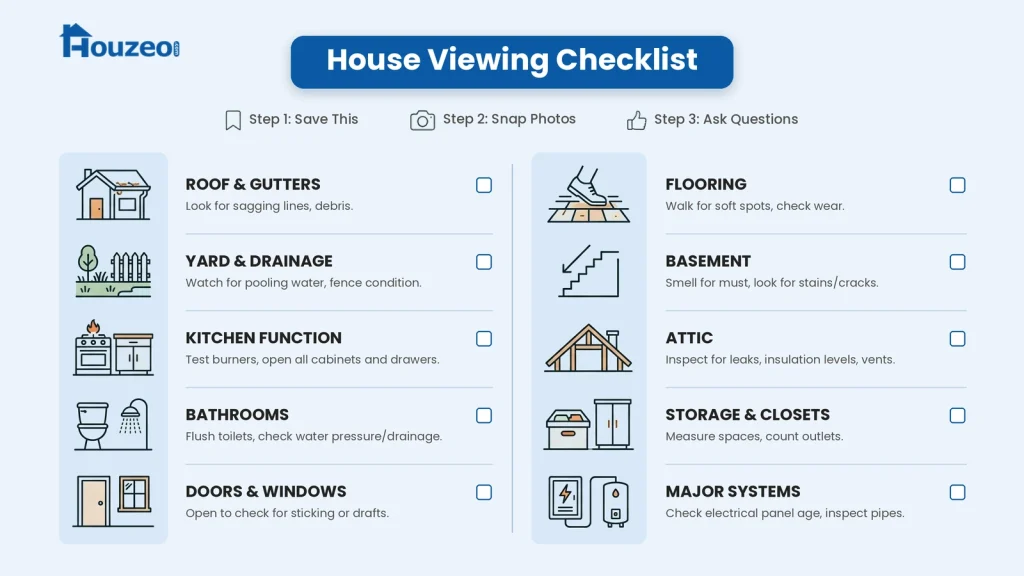
House Viewing Checklist: What to Check in Every Room
This house viewing checklist takes you through the home room by room, so staged furniture and cozy lighting can’t trick your brain into making a bad move. Save it to your notes, print a copy, or just snap a quick screenshot before you head out the door.
Don’t forget to keep your list of questions to ask when touring a house handy, and snap plenty of photos as you go.
What to Look for When Viewing a House: Red Flags to Watch For 🚩
A house can look great in listing photos and still raise a few eyebrows in person. During the tour, watch for these five red flags and keep them in mind when viewing a house.
- The Seller Won’t Let You Inspect
If the seller or listing agent refuses access to important areas or pushes back on a professional inspection, take note. You should be able to see what you are actually considering buying. - The Seller Won’t Show Disclosures
Ask to see the seller disclosure before getting too far into the process. Refusing to provide required information is a reason to slow down and get answers before buying a house. - Important Areas Are Off-Limits
Can’t see the attic, basement, garage, or utility areas? That matters. Ask the seller or listing agent why access is restricted before assuming everything is fine during the house viewing. - The Home Looks Recently “Covered Up”
Fresh paint over one suspicious wall, new drywall in an otherwise older room, or oddly placed rugs can deserve a closer look. These are the kinds of things to look for when touring a house before you make an offer. - The Neighborhood Sets Off Warning Bells
Take a look beyond the property line while you are there. Neglected nearby homes, overgrown yards, persistent noise, parking problems, or other recurring nuisances are important things to ask when looking at a house.
So, Is This House Worth Making an Offer On?
Don’t decide in the driveway on an adrenaline rush. Grab a coffee, scroll your photos, and run a quick gut check.
You already know the right questions to ask when touring a house, but before you act, boil it down to these three:
- Can your bank account handle a big surprise repair?
- Does the true total monthly cost fit inside your actual budget?
- Can you see yourself in this neighborhood for next five years?
Pretty staging tricks everyone. The real skill is spotting what actually fits your life.
If it still makes sense after the coffee cools down, don’t overthink it. Ring your agent, stick to your number, and make your offer.