Winter across the US turned brutal in 2026. A major Arctic blast brought wind chills as low as –50°F to parts of the Northern Plains and placed nearly 118 million Americans under winter weather alerts. Several states faced prolonged subzero temp and travel disruptions.
Despite freezing weather, people continue moving north. From Alaska’s extreme winters to Minnesota’s icy landscapes, many of the coldest states attract several residents. They offer lower housing costs, outdoor lifestyles, scenic winters, and quieter communities.
Houzeo is America’s best home buying and selling platform.
For Home Sellers: List your home for a Flat Fee, and save 2.5% to 5.5% on the listing agent commission! That’s thousands of dollars extra in your pocket.
For Home Buyers: Houzeo has the most number of houses for sale in US. Start your dream home search now!
Yes! You can list your home for sale or search millions of homes on the Houzeo mobile app!
Download now on the Apple App Store or the Google Play Store.



Key Takeaways
- Alaska is the coldest state in the US, but other states like North Dakota, Minnesota, Maine, and Wyoming also experience long winters and subzero temperatures.
- A state’s climate is influenced by factors such as latitude, elevation, geography, and exposure to Arctic air masses, not just its location on the map.
- The coldest states and snowiest states are not always the same, as snowfall depends heavily on moisture, mountain ranges, and weather patterns.
- Several cold-weather states, including North Dakota and Wisconsin, offer relatively affordable housing and lower living costs compared to many coastal markets.
- Before relocating to a colder climate, consider factors beyond temperature, including heating costs, winter preparedness, home affordability, and overall quality of life.
What Are the Coldest States in the US?
The coldest states in the US are known for long winters, freezing temperatures, icy winds, and heavy snowfall that can last for months. In many of these states, harsh winter weather shapes daily life, transportation, housing, and outdoor activities throughout the season.
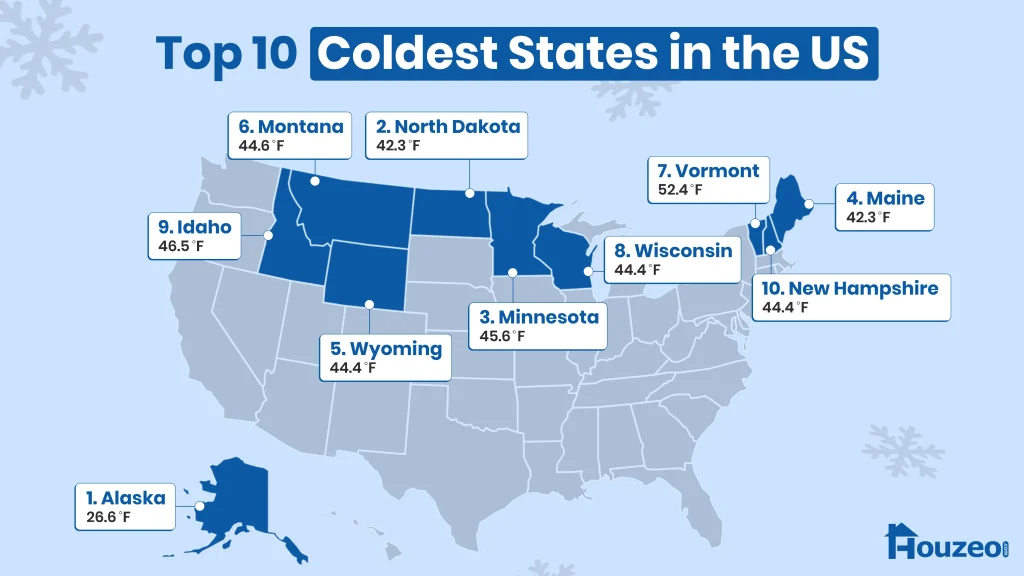
The rankings below are based on average annual temperatures, winter severity, snowfall patterns, and overall climate conditions. While northern states dominate the list, elevation, geography, and Arctic weather systems also play a major role in how cold a state gets.
1. Alaska
- Average Annual Temperature: 28.1°F
- Average Winter Temperature: Winters regularly drop below 0°F in many regions.
Alaska is the coldest state in the US, known for its long, dark winters, massive snowfall, and extreme Arctic conditions. Northern parts of the state can stay below freezing for months, while strong winds and limited daylight make winters feel even harsher.
Despite the brutal cold, Alaska attracts residents with its natural beauty, outdoor lifestyle, and quieter communities. While living costs can be high in remote areas, many buyers are drawn to the state’s scenic landscapes, adventure-focused lifestyle, and wide-open space.
» Homes for Sale in Alaska: Explore living in America’s coldest state.
2. North Dakota
- Average Annual Temperature: 41.1°F
- Winter Temperatures: Winter lows frequently drop below 0°F, especially in northern and central regions.
North Dakota winters are no joke. The cold here isn’t just about the temperature; it’s the wind that really gets you. With wide open plains and very little to block it, Arctic air moves across the state fast, making already freezing days feel even harsher.
Even so, life moves at a steady pace. Cities like Fargo and Bismarck stay active year-round, supported by industries such as energy, agriculture, and healthcare. Many residents appreciate the lower cost of living and close-knit communities, even with long winters.
» Homes for Sale in North Dakota: Find homes in one of the coldest states in the US
3. Minnesota
- Average Annual Temperature: ~41°F
- Winter Temperatures: In many parts of the state, winter lows commonly can fall below 0°F during cold snaps, especially in northern regions.
Minnesota is where winter feels like a way of life. Snow arrives early and often lingers for months. Places like Duluth and northern Minnesota regularly experience long stretches of below-freezing temperatures.
Despite the cold, cities like Minneapolis–St. Paul stays active with indoor events and winter traditions such as ice fishing, skiing, and hockey. Strong job opportunities, a high quality of life, and easy access to lakes and outdoor recreation continue to attract residents.
» Homes for Sale in Minnesota: Discover properties in one of America’s most winter-ready states.
4. Maine
- Average Annual Temperature: ~42°F
- Winter Temperatures: Winter lows often fall into the single digits in northern Maine, while coastal areas stay slightly milder but still well below freezing.
Maine winters feel coastal and raw, shaped by cold ocean air, snow, and strong winds. Inland and northern regions, like Aroostook County, experience some of New England’s harshest conditions, with snow cover lingering into early spring.
Life here is quiet and steady, with a strong connection to nature and outdoor industries like fishing and forestry. Many residents embrace the slower pace and scenic environment, even through long, cold winters.
» Homes for Sale in Maine: Browse properties in one of the Northeast’s coldest and snowiest states.
5. Wyoming
- Average Annual Temperature: ~42°F
- Winter Temperatures: Winter lows often drop below 0°F, especially in higher elevations and open valleys.
Wyoming winters bring strong winds, sudden snowstorms, and sharp temperature swings. High elevations lead to quick cold snaps, while wind chill makes conditions feel even colder. Blowing snow and hazardous driving are common across the state.
Even in harsh weather, Wyoming attracts people seeking space, privacy, and an outdoor-focused lifestyle. Ranching, energy, and tourism drive much of the economy, while mountain towns continue to draw buyers interested in skiing, hiking, and year-round access to nature.
» Homes for Sale in Wyoming: Explore homes where wide-open landscapes meet long winters.
6. Montana
- Average Annual Temperature: ~42°F
- Winter Temperatures: Subzero temperatures are common during winter, especially in the eastern plains and northern regions.
Montana experiences long winters that vary by region. Mountain areas receive heavy snowfall and long ski seasons, while the plains often face Arctic cold fronts from Canada. In some parts of the state, snow can remain on the ground well into spring.
For many residents, the tradeoff is worth it. Montana offers a slower pace of life, abundant outdoor recreation, and growing communities in cities like Bozeman and Missoula. The state continues to attract buyers seeking scenery and a nature-centered lifestyle.
» Homes for Sale in Montana: Find homes surrounded by nature and long winter seasons.
7. Vermont
- Average Annual Temperature: ~43°F
- Winter Temperatures: Winter lows frequently fall into the single digits, with consistent snowfall across the season.
Vermont is one of the snowiest states in the Northeast, with long, picturesque winters. Snow-covered towns, icy roads, and extended ski seasons are common, especially in mountain communities. Cold weather arrives early and often lasts well into March
The state is known for its small-town charm, strong sense of community, and outdoor culture. Ski tourism, maple syrup production, and local farming remain important parts of Vermont life, while many residents are drawn to the quieter pace and scenic landscapes.
» Homes for Sale in Vermont: Discover homes in one of America’s snowiest winter states.
8. Wisconsin
- Average Annual Temperature: 44°F
- Winter Temperatures: Winter lows often drop below 0°F, especially in northern Wisconsin.
Wisconsin winters are cold, snowy, and shaped by the Great Lakes. Northern areas often see longer winters and heavier snow, while Lake Michigan communities get icy winds and lake-effect snow. Winter storms and freezing temperatures are common
Despite the cold, Wisconsin has a strong sense of community. Residents embrace winter with ice fishing, snowmobiling, hockey, and winter festivals. Along with relatively affordable housing, the state remains popular with families and outdoor enthusiasts.
» Homes for Sale in Wisconsin: Browse homes shaped by long, cold winters and lake-effect snow.
9. Idaho
- Average Annual Temperature: ~44°F
- Winter Temperatures: Winter lows can drop below 0°F in northern and mountainous regions.
Idaho’s winter climate varies by elevation and location. Northern Idaho and mountain communities receive heavy snowfall, while southern valleys usually have shorter and milder winters. Ski towns and higher elevations often stay snow-covered for months.
In recent years, Idaho has seen steady population growth as buyers seek more space, outdoor recreation, and lower-density living. Cities like Boise continue to grow, while smaller towns attract residents drawn to mountain scenery, hiking, and easy access to nature.
» Homes for Sale in Idaho: Explore homes where mountain winters meet open landscapes.
10. New Hampshire
- Average Annual Temperature: ~44°F
- Winter Temperatures: Winter lows frequently fall into the single digits, with heavy snowfall across the state.
New Hampshire has long winters with frequent snowstorms, icy roads, and extended cold spells. The White Mountains see some of the Northeast’s harshest weather and attract skiers all season. In higher elevations, snowfall can begin early and last into spring.
Despite the cold, the state continues to attract residents for its natural beauty, outdoor recreation, and high quality of life. Many buyers also value New Hampshire’s lack of a state income tax, along with its mix of small-town living and access to larger New England cities.
» Homes for Sale in New Hampshire: Find homes in one of New England’s coldest and snowiest states.

House-Hunting Tip! A lower-priced home may still cost more to own if heating and maintenance expenses are high. Use a Mortgage Calculator to estimate your monthly housing costs before you buy.
What Makes Some States So Cold?
Several factors determine how cold a state gets. Latitude is key, as states closer to Canada receive less winter sunlight and longer cold periods. Arctic air masses also contribute to prolonged freezing temperatures, snow, and strong winds.
Elevation and geography also play a role. Mountain states like Wyoming, Montana, and Idaho are colder due to higher elevations. Open plains allow Arctic air to move south easily, while large bodies of water can moderate temperatures or increase snowfall.
January is typically the coldest month across most of the United States. During this time, northern states often experience their lowest temperatures of the year. Arctic air outbreaks can bring prolonged freezing weather, snow, and dangerous wind chills.
Coldest States vs. Snowiest States
People often assume the coldest states are also the snowiest, but that isn’t always true. Different weather patterns drive temperature and snowfall, so a state can be extremely cold without heavy snow. Cold conditions don’t always mean high snowfall.
States like Alaska, North Dakota, and Minnesota often see some of the lowest temperatures in the US, but many colder regions are relatively dry, limiting snowfall. If you’re planning a move, it’s important to consider both temperature and snowfall, as patterns can vary widely.
| Factor | Coldest States | Snowiest States |
|---|---|---|
| Main Characteristic | Extremely low temperatures | High annual snowfall totals |
| Winter Conditions | Long stretches of below-freezing weather | Frequent snowstorms and snow accumulation |
| What Drives It? | Latitude, Arctic air masses, and elevation | Moisture, mountains, lake-effect snow, and coastal weather patterns |
| Typical Challenge | Bitter cold, wind chill, and icy conditions | Snow removal, travel disruptions, and heavy snowpack |
| Snowfall Amount | Can be moderate despite extreme cold | Often high, even when temperatures are less severe |
| Examples | Interior Alaska, North Dakota, Minnesota | Mountain regions, lake-effect areas, and parts of New England |
What Is the Coldest Place in the US?
The coldest place in the United States is generally Utqiagvik, Alaska (formerly Barrow), the northernmost city in the country. Located above the Arctic Circle, it experiences long, dark winters and temperatures that stay below freezing for much of the year.
Some inland areas of Alaska have recorded even lower temperatures. The coldest temperature ever recorded in the US was -80°F (-62°C) at Prospect Creek Camp, Alaska, in January 1971. These extreme conditions help make Alaska the coldest state in the nation.
Living in a cold state can offer a high quality of life, especially for those who enjoy outdoor recreation and seasonal weather. Benefits often include:
- More affordable housing in some cold-weather states compared to major metro areas.
- Access to winter activities like skiing, snowboarding, and ice fishing.
- Cooler summers with fewer extreme heat waves.
- Beautiful scenery, including snow-covered landscapes and vibrant fall foliage.
- Less traffic and lower population density in many areas.
- Fewer insects and pests compared to warmer climates.
- Strong community connections and a slower-paced lifestyle.
- Cleaner air and easy access to parks, forests, and outdoor spaces.
How to Prepare for Extreme Cold Weather?
Moving to one of the coldest states in the US requires more planning than just a winter coat. Freezing temperatures can impact homes, vehicles, utility bills, and daily life. So preparation is key for a safer and more comfortable winter.
Before winter arrives, insulate your home, seal drafts, and service your heating system. Keep emergency supplies like flashlights, batteries, water, and blankets readily available. For your vehicle, carry winter tires, an ice scraper, and a basic emergency kit.
Cold-weather states invest heavily in snow removal, road maintenance, and winter preparedness programs to keep communities functioning during severe weather. Residents also prepare by insulating homes and winterizing vehicles. Many stock emergency supplies and budget for higher heating costs throughout the season.
Cold Weather Preparation Checklist:
- Insulate your home and seal drafts around doors and windows.
- Have your heating system inspected before winter begins.
- Keep emergency supplies such as flashlights, batteries, water, and blankets on hand.
- Invest in insulated, waterproof winter clothing and footwear.
- Equip your vehicle with winter tires, an ice scraper, and an emergency kit.
- Plan for higher heating bills during the coldest months of the year.
A little preparation goes a long way. Whether you’re relocating to Alaska, Minnesota, or Maine, planning ahead can make winter safer, more comfortable, and much easier to manage.
Winter Reality Check! The coldest states aren’t always the most expensive, but winter-related costs can add up over time. Comparing total living expenses can help you choose a location that fits your budget.
Cheapest Cold States to Live In
Cold weather doesn’t always mean a high cost of living. Several of the coldest states in the US offer affordable housing, lower costs, and more space than many warmer coastal markets. For buyers seeking affordability and a colder climate, they’re worth considering.
Some of the most budget-friendly cold states include:
- North Dakota – Known for affordable housing, low population density, and a stable economy driven by agriculture and energy.
- Wisconsin – Offers relatively affordable home prices in many cities and towns, along with access to lakes, outdoor recreation, and strong local communities.
- Montana – While some mountain destinations can be expensive, many areas still offer lower housing costs than major metropolitan markets.
- Idaho – Housing prices vary widely, but smaller communities can provide a more affordable alternative to larger Western cities.
- Minnesota – Combines a strong job market with home prices that are often more accessible than those in many coastal states.
Before relocating, compare not only home prices but also property taxes, utility costs, and winter-related expenses such as heating and snow removal. A state with affordable housing may have higher seasonal costs that affect your overall budget.
Pro Tip! Many cold-weather states offer larger homes and more land for the same budget than warmer, high-demand markets, making them especially attractive for families and remote workers.
Is Living in a Cold State Worth It?
Living in a cold state depends on your lifestyle, budget, and preferences. Long winters and higher heating costs can be challenging. However, many residents value the scenic landscapes, outdoor recreation, and slower pace of life.
Many cold states offer affordable housing, strong communities, and activities like skiing, hiking, and fishing. If you’re comfortable with colder weather, they can offer a rewarding quality of life that many residents wouldn’t trade for a warmer one.