Ready to move to Pennsylvania? But not sure whether Pittsburgh or Philadelphia makes more sense for your budget?
You could buy a home in Pittsburgh for significantly less and stretch your income further. Also, you can buy a home in Philadelphia for bigger career opportunities and a true big-city lifestyle. Both cities offer value, just in very different ways.
We’ve compared everything from home prices and cost of living to jobs and lifestyle so you can find the city that fits you best.
Houzeo is America’s best home buying and selling platform.
For Home Sellers: List your home for a Flat Fee, and save 2.5% to 5.5% on the listing agent commission! That’s thousands of dollars extra in your pocket.
For Home Buyers: Houzeo has the most number of houses for sale in US. Start your dream home search now!
Yes! You can list your home for sale or search millions of homes on the Houzeo mobile app!
Download now on the Apple App Store or the Google Play Store.




Key Takeaways
- Affordability: Pittsburgh offers cheaper housing, lower rent, and a lower overall cost of living than Philadelphia.
- Job Market: Philadelphia has a larger economy with stronger opportunities in healthcare, biotech, finance, and professional services.
- Housing: Pittsburgh buyers benefit from lower median home prices and stronger purchasing power.
- Transportation: Philadelphia provides better public transit and easier access to major East Coast cities.
- Taxes: Pittsburgh has higher property taxes, while Philadelphia residents pay a 3.75% city wage tax.
- Lifestyle: Pittsburgh offers a quieter, neighborhood-focused lifestyle, while Philadelphia delivers a busier big-city experience.
Pittsburgh VS Philadelphia City Overview
Before the comparison of costs and housing, it helps to understand how Pittsburgh and Philadelphia differ at a basic level. From population size to geography and overall vibe, these two cities offer very different living experiences.
Where are Philadelphia and Pittsburgh Located
Both cities are located in Pennsylvania, but offer very different geographic advantages. Pittsburgh sits in the western part of the state, while Philadelphia lies in the southeast near the East Coast.
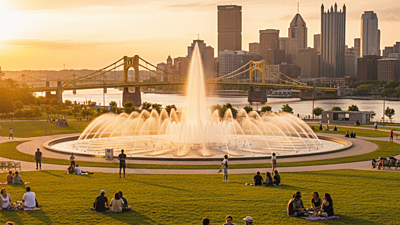
Pittsburgh is located in southwestern Pennsylvania, where the Allegheny and Monongahela rivers meet to form the Ohio River. It lies about 300 miles west of Philadelphia.
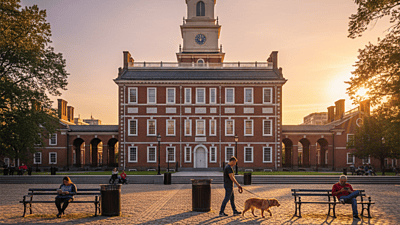
Philadelphia is situated in southeastern Pennsylvania along the Delaware River, which borders New Jersey. Its proximity to major cities makes it a key hub along the Northeast Corridor.
Pittsburgh and Philadelphia Population
Philadelphia is Pennsylvania’s largest city by a wide margin, with a population of approximately 1.6 million residents. It is the sixth‑largest city in the United States.
It anchors the Philadelphia–Camden–Wilmington metropolitan area, which includes more than 6.2 million people. Also, it ranks among the largest metropolitan regions in the country.
Pittsburgh, with a city population of about 310,003, is the second‑largest city in the state. Its metro area encompasses roughly 2.4 million residents. While smaller in size, Pittsburgh consistently ranks high in livability and offers a strong quality of life relative to its population.
Pittsburgh VS Philadelphia Key Differences
Pittsburgh is compact, hilly, and known for its neighborhood character and affordability. Philadelphia is larger, denser, and sits closer to major East Coast metros like New York City and Washington, D.C.
Here’s a quick side-by-side snapshot:
| Factor | Pittsburgh | Philadelphia |
|---|---|---|
| Population | ~310,000 | ~1.6 million |
| Median Home Price | ~$240,000 | ~$280,000 |
| Cost of Living Index | ~92.8 (below average) | ~95.2 (near average) |
| Median Household Income | ~$64,137 | ~$60,698 |
| Unemployment Rate | ~4.2% (PA avg) | ~5.7% (city, Q3 2025) |
| State Income Tax | 3.07% (flat) | 3.07% (flat) |
| Best Known For | Tech, healthcare, steel legacy | History, biotech, finance |
Philadelphia is roughly 24% more expensive than Pittsburgh overall when you factor in rent, goods, and services. This is a meaningful gap that can significantly affect how far your paycheck goes.
Cost of Living in Pittsburgh vs Philadelphia
Pennsylvania’s cost of living is 4.22% below the national average. Pittsburgh has a higher cost of living than Philadelphia in most expense categories.
| Category | Pittsburgh, PA | Philadelphia, PA |
|---|---|---|
| Cost of Living Index | 92.8 | 95.2 |
| Median Household Income | ~$64,137 | ~$60,698 |
| Utilities | 2% below | Same the national average |
| Monthly Energy Bills | ~$286/month | ~$160–$200/month |
| Healthcare vs the national average | 5% below | Same as the national average |
| Public Transit | Limited (Port Authority) | Robust (SEPTA) |
| Transportation vs. the national average | 11% above | Near the national average |
| Goods & Services vs. the national average | 7% below | Same as the national average |
| City/Local Wage Tax | None | Same as the national average |
Housing Market in Pittsburgh vs Philadelphia
Housing trends in each city vary across home prices, rental costs, and overall affordability. These differences can significantly impact how much buyers and renters can get for their budget.
Median Home Prices
The Pittsburgh housing market currently shows a median sale price of around $240,000, based on recent data. This reflects about a 5.5% year‑over‑year increase.
The market has shifted toward being more competitive. Homes are on the market for about 103 days, up from last year, and the sale‑to‑list ratio is 96.1%. This means most homes sell near or slightly below the asking price.
The Philadelphia housing market shows a median sale price of approximately $280,000. Philadelphia’s market is more balanced, and homes sell at about 93.7% of the asking price. Roughly 21.7% of homes sell above list price, which reflects steady demand.
Pittsburgh still offers savings of roughly $40,000 on the median home purchase compared with Philadelphia. On a 30‑year mortgage, that gap can still translate to hundreds of dollars in monthly savings. This gives Pittsburgh buyers stronger purchasing power.
Rent Comparison
Renters will also find Pittsburgh easier on the wallet. The median rent in Pittsburgh is approximately $1,801 per month, compared to $2,002 per month in Philadelphia.
In Philadelphia, a one-bedroom apartment in desirable neighborhoods like Fishtown, Old City, or Northern Liberties can easily exceed $1,700 to $2,000 per month.
Homes for sale in Pittsburgh in comparable neighborhoods, such as Lawrenceville, East Liberty, or Shadyside, tend to come in at about 15% to 25% cheaper. This gives renters more purchasing power for a similar urban, walkable lifestyle.
Housing Affordability
Affordability is driving more movers than it used to. According to the 2026 Home Buyer Report, 45% of interstate movers cite it as their main reason for relocating.
Pittsburgh holds a clear advantage over Philadelphia. With a lower median home price and overall cost of living, and a slightly higher median household income, Pittsburgh residents enjoy stronger purchasing power.
Philadelphia offers some strong support for buyers through programs like the Philly First Home Program. It provides grants of up to $10,000 (or 6% of the purchase price) for down payment and closing cost assistance.
The Pennsylvania Housing Finance Agency (PHFA) also offers statewide mortgage and down‑payment assistance, which includes the PHFA Keystone Home Loan.

Looking for cheaper options? If you’re open to smaller cities, explore some of the cheapest places in Pennsylvania, where home prices and rents are well below those in Pittsburgh and Philadelphia.
Job Market in Pittsburgh vs Philadelphia
Pittsburgh and Philadelphia each have distinct economic profiles, even though both are anchored by healthcare, education, and professional services.
Pittsburgh
- Economic Base & Employers: Pittsburgh’s economy is centered around healthcare, education, and robotics. Major anchors include UPMC, the University of Pittsburgh, and Carnegie Mellon, especially around Oakland and the medical corridor.
- Tech & Innovation: The city is a national leader in robotics, AI, and autonomous systems, largely driven by Carnegie Mellon University and its surrounding research and startup ecosystem.
- Job Market: Pittsburgh added around 13,000 jobs in 2025, showing steady and stable growth across its core industries.
- Employment Stability: The unemployment rate sits around 4.3%, supported by large institutional employers and a relatively steady job base.
Philadelphia
- Economic Base & Employers: Philadelphia has a more diversified economy, including healthcare, life sciences, finance, education, and government services. Major employers include Penn Medicine, CHOP, Jefferson Health, and Comcast, mainly concentrated in Center City and University City.
- Tech & Innovation: The city’s strength lies in biotech and pharmaceuticals, with University City serving as the primary hub for research institutions and hospital-led development.
- Job Market: Philadelphia added about 36,400 jobs in 2025, making it the strongest job-growth metro in Pennsylvania.
- Employment Stability: The unemployment rate is around 5.7%, higher than in Pittsburgh, despite stronger overall job creation.
Transportation from Pittsburgh to Philadelphia
The straight-line distance between Pittsburgh and Philadelphia is approximately 259 miles, while the driving distance via I-76 (Pennsylvania Turnpike) is roughly 301–307 miles.
The two cities are at opposite ends of Pennsylvania: Pittsburgh in the southwest, Philadelphia in the southeast.
Philadelphia to Pittsburgh Travel Options
There are several ways to travel between the two cities:

Lifestyle in Philadelphia VS Pittsburgh
The next step is to evaluate how each city aligns with your lifestyle and long‑term goals. The following pros and cons focus on practical, day‑to‑day implications rather than restating the statistics.
Living in Pittsburgh
- Getting Around the City: Daily travel in Pittsburgh is a mix of driving and limited transit. The T (light rail) mainly connects Downtown, Oakland, and the South Hills, while most neighborhoods like Shadyside, Squirrel Hill, and Lawrenceville are easier to reach by car or bus.
- Neighborhood Life and Housing: Each neighborhood feels self-contained. Shadyside has walkable streets with boutiques and apartments, Squirrel Hill is more residential with families and local restaurants, Lawrenceville has converted warehouses, breweries, and newer apartments, and Mount Washington is quieter with hillside homes and skyline views.
- Daily Routine and Local Access: Most errands happen within neighborhood clusters. Walnut Street (Shadyside), Murray Avenue (Squirrel Hill), and Butler Street (Lawrenceville) act as local hubs for groceries, cafés, and daily services, so residents often stay within their area for routine needs.
- Culture and City Energy: Pittsburgh’s activity is concentrated in pockets rather than spread evenly. Oakland is shaped by universities like Pitt and CMU, Downtown is business-focused on weekdays, and Lawrenceville drives much of the city’s nightlife and creative scene.
- Weekend Movement: Weekends are usually local and outdoors-focused. Residents spend time along the Three Rivers Heritage Trail, in Frick Park or Schenley Park, or at waterfront spots like North Shore, rather than traveling far outside the city.
Want a strong neighborhood identity? Pittsburgh offers something different: a livable, manageable city with strong neighborhood identity, affordable housing, and a creative class. It consistently ranks as one of the best places to live in Pennsylvania.
Living in Philadelphia:
- Getting Around the City: Most daily movement happens through SEPTA, walking, or short rides between neighborhoods. Center City, University City, and South Philly are the most transit-friendly areas, while outer neighborhoods often rely more on cars.
- Neighborhood Life and Housing: Living patterns are very neighborhood-specific. Center City has high-rise apartments near Rittenhouse and Logan Square, Fishtown and Northern Liberties are packed with renovated lofts and nightlife spots, while South Philly is known for traditional row homes and tight-knit residential blocks.
- Daily Routine and Local Access: Grocery runs, gyms, coffee shops, and restaurants are usually done within your own neighborhood. Places like Reading Terminal Market (Center City) or Passyunk Avenue (South Philly) often act as local anchors for daily life.
- Culture and City Energy: Philadelphia’s cultural life is very localized. The Museum District around the Parkway, Old City’s historic blocks, and South Street’s nightlife each offer very different day-to-day experiences within a short distance.
- Weekend Movement: Residents often split weekends between local neighborhood spots and quick escapes to the Jersey Shore, Manayunk’s Main Street, or nearby suburban town centers like Ardmore or Media.
Prioritizing safety? If you care more about low crime than low cost, you can explore some of the safest places to live in Pennsylvania, which rank well below the state and national crime averages.
Taxes in Pittsburgh vs Philadelphia
Taxes can affect your overall cost of living almost as much as housing prices, and Pittsburgh and Philadelphia differ significantly in how residents are taxed.
Property Taxes
Property taxes increased sharply in Pittsburgh in 2026 after several local agencies raised their tax rates. The City of Pittsburgh increased its millage rate by 20%, Pittsburgh Public Schools raised taxes by 2%, and Allegheny County had already increased its rate by 36% the previous year.
A millage rate is the tax rate used by local governments to calculate property taxes, which represents the amount per $1,000 of a property’s assessed value.
As a result, a Pittsburgh homeowner with a property assessed at $100,000 now pays approximately $2,731 per year in combined property taxes. This total includes city taxes, school district taxes, county taxes, and parks and library taxes.
Philadelphia has a simpler property tax structure. The city and school district share a combined property tax rate of 1.3998%. Philadelphia homeowners may also qualify for a Homestead Exemption, which reduces the taxable assessed value of an owner-occupied property by $80,000.
For a $280,000 home in Philadelphia, annual property taxes are approximately $3,920 before the exemption and around $2,800 after the exemption is applied.
City Wage and Income Taxes
Philadelphia residents also pay a city wage tax of about 3.75% on earned income, which significantly increases the overall tax burden for workers. Pittsburgh does not charge a comparable city wage tax.
Both cities are also subject to Pennsylvania’s flat 3.07% state income tax.
| Tax Category | Pittsburgh | Philadelphia |
|---|---|---|
| State Income Tax | 3.07% flat rate | 3.07% flat rate |
| City Wage Tax | No city wage tax | ~3.75% for residents |
| Property Tax Rate | ~2.73% effective rate | 1.3998% combined rate |
| Homestead Exemption | $15,000 reduction in assessed value | $80,000 reduction in assessed value |
| Estimated Annual Property Taxes | ~$2,731 on a $100K assessed home | ~$2,800 on a $280K home after exemption |
Overall, Pittsburgh residents generally pay more in property taxes, while Philadelphia residents pay more in wage taxes. For renters and younger professionals, Philadelphia’s wage tax often has a larger day-to-day financial impact than property taxes.
Education
Education is an important consideration for families and long-term residents, and both Pittsburgh and Philadelphia offer a mix of public schools, strong suburban districts, and respected universities.
K-12 Public Schools
The School District of Philadelphia has 219 schools and more than 117,000 students. Pittsburgh Public Schools is smaller, with 56 schools and around 19,769 students. Neither district ranks among the top in Pennsylvania overall, but both cities have strong magnet and suburban schools.
In Philadelphia, top schools include Julia R. Masterman School, Central High School, and William W. Bodine High School. In the Pittsburgh area, North Allegheny School District, Mt. Lebanon High School, and Fox Chapel Area High School are highly rated for academics.
Many families choose suburbs for stronger school districts. Near Philadelphia, Lower Merion, Radnor Township, and Tredyffrin-Easttown regularly rank among the best in the state. Around Pittsburgh, North Allegheny and Mt. Lebanon are also well-regarded.
Universities and Higher Education
Both cities also have strong higher education networks, although Philadelphia offers a larger concentration of nationally recognized universities.
Pittsburgh is best known for Carnegie Mellon University, which excels in computer science, AI, robotics, and engineering. The University of Pittsburgh is strong in medicine and health sciences, while Duquesne University is known for law, pharmacy, and nursing.
Philadelphia’s university network is broader and includes the University of Pennsylvania and the Wharton School, along with Villanova University, Drexel University, Temple University, and Penn State within the state system.
Should You Choose Pittsburgh or Philadelphia?
If affordability and quality of life at a lower cost are your top priorities, Pittsburgh is hard to beat. If career opportunities, big-city amenities, and East Coast connectivity matter more, Philadelphia is the stronger choice.
For anyone ready to move to Pennsylvania, the state’s flat 3.07% income tax and housing costs well below national averages make both cities compelling options compared to much of the country.
» Houzeo Reviews: Read what customers have to say about Houzeo, Pennsylvania’s best home buying website.