The cost to build a duplex in 2026 is influenced by a combination of construction, land, regulatory, and market factors.
Your total investment can vary widely from as low as $180,000 for a basic build in a low-cost area to over $600,000 for a high-end duplex in a competitive housing market.
Unlike buying an existing property, building a duplex gives you full control over layout, materials, and long-term functionality. However, it also introduces variability in costs due to labor shortages, fluctuating material prices, and local zoning requirements.
Houzeo is America’s best home buying and selling platform.
For Home Sellers: List your home for a Flat Fee, and save 2.5% to 5.5% on the listing agent commission! That’s thousands of dollars extra in your pocket.
For Home Buyers: Houzeo has the largest number of houses for sale in the US. Start your dream home search now!
Yes! You can list your home for sale or search millions of homes on the Houzeo mobile app!
Download now on the Apple App Store or the Google Play Store.


Key Takeaways
- A mid-range duplex offers the best value: Most projects cost $250K–$450K. This range balances build quality with strong rental potential.
- Location is the biggest cost driver: Urban builds can exceed $500K. Higher land prices, labor rates, and stricter regulations significantly increase total costs.
- Smaller duplexes are more affordable to build: Compact layouts reduce material and labor needs.
- Larger duplexes bring higher rental returns: They require more upfront investment but often deliver higher and more consistent income.
- Construction dominates your total budget: Typically, 40%-60% of overall cost; material choices, labor, and design complexity directly impact how much you spend.
- Hidden costs can add up quickly: Expect 10%-20% extra on permits, utilities, and delays.
Why Build a Duplex?
A duplex is a residential building divided into two separate living units, either side-by-side or one stacked above the other, sharing a common wall or floor.
Duplexes and triplexes are multi-family residential properties that differ mainly in the number of units, with duplexes having two separate living spaces and triplexes featuring three.
To build a duplex is not just about owning property; it’s about creating a flexible financial asset that can serve multiple purposes over time.
One of the biggest advantages is the ability to generate rental income. By renting out one unit, you can offset a significant portion of your mortgage. If you rent both units, the property can become a steady income-producing investment.
Another key benefit is cost efficiency. Compared to building two separate homes, a duplex allows you to share walls, utilities, and land, which reduces the overall cost per unit. This makes it a more efficient way to maximize your investment.

Pro Tip If your goal is to optimize cost efficiency, mid-sized duplexes often provide the best balance between total cost and rental income potential. Extremely large or highly customized builds tend to reduce overall return on investment.
Average Cost to Build Duplex
The average cost to build a duplex in 2026 ranges from $180,000 to $600,000, but this broad range reflects differences in location, construction quality, and property size. A more realistic expectation for most real estate markets is between $250,000 and $450,000.
Cost Range by Budget Level
- Low-end duplexes typically fall between $180,000 and $250,000. These projects usually involve smaller layouts, basic finishes, and construction in lower-cost areas. They are often chosen by investors focused on minimizing upfront costs.
- Mid-range duplexes range from $250,000 to $450,000 and represent the most common category. These properties balance affordability with quality, offering durable materials, functional layouts, and moderate customization.
- High-end duplexes start around $450,000 and can exceed $600,000. These builds include custom architectural designs, premium materials, high-end appliances, and advanced features such as energy-efficient systems or smart home technology.
What Drives These Cost Differences?
Several variables explain why duplex costs vary so widely:
- Location: Labour and material costs differ significantly between regions.
- Size: Larger duplexes require more materials and labour.
- Design complexity: Multi-story or custom layouts increase construction time.
- Material quality: High-end finishes can double interior costs.
- Market conditions: Inflation and supply chain issues can impact pricing.
How Much to Build a Duplex?
Average cost per square foot is one of the most reliable ways to estimate your total budget early in the planning stage. Generally, the type of construction may affect the average cost.
While most duplex homes for sale fall between $250,000 and $450,000, this range only reflects base construction costs in most housing markets.
- Standard construction typically costs between $100 and $200 per square foot.
- High-end construction can range from $200 to $350+ per square foot.
For example, a 2,000 sq ft duplex at $150 per sq ft would cost approximately $300,000. However, adding premium finishes or building in a high-cost city could push that same project above $450,000.
Cost per square foot is not fixed; it changes based on several factors:
- Smaller homes often have a higher cost per square foot due to fixed costs like permits and design.
- Larger homes benefit from economies of scale, slightly reducing cost per square foot.
- Multi-story buildings increase structural and labor costs.
- Complex layouts require more time and skilled labor.
Hidden Costs Many Buyers Overlook
Many first time home builders underestimate additional costs beyond construction, but often overlook several additional expenses that can significantly impact the total budget.
These hidden costs typically include architectural and design fees, permit and home inspection fees, utility connections and impact fees, as well as landscaping and exterior work. On top of that, unexpected delays or sudden increases in material prices can further drive up costs.
In most cases, these extra expenses can add 10% to 20% to your overall budget, which is why setting aside a contingency fund is essential when planning your duplex build.
Duplex vs Single-Family Home Cost
Building a duplex typically costs more upfront than a single-family home because you are essentially building two living units. However, the cost per unit is often lower due to shared walls and infrastructure.
More importantly, a duplex offers income potential that a single-family home does not. Renting out one or both units can offset your mortgage and improve long-term returns.
Cost Estimates Based on Size
- A smaller duplex of around 1,500 sq ft may cost between $150,000 and $300,000, depending on finishes and location.
- A mid-sized duplex around 2,000 sq ft typically ranges from $200,000 to $400,000, making it one of the most common choices for homeowners and investors.
- Larger duplexes around 3,000 sq ft can cost between $300,000 and $600,000 or more, especially if they include multiple floors or premium features.
Duplex Construction Cost Breakdown
To understand how your total budget is distributed across different components, is critical when building a duplex. A detailed cost breakdown not only helps you plan better but also identifies areas where you can control or reduce expenses.
On average, duplex construction costs are divided into five major categories: land, construction, permits, site work, and interior finishes. However, each of these includes multiple sub-costs that can significantly impact your final budget.
1. Land Cost (20% – 40%)
Land is often one of the largest expenses, especially in urban or high-demand areas. The price of land varies widely based on location, zoning, and accessibility.
What Affects the Land Cost?
- Proximity to city centers, schools, and amenities: Locations closer to key facilities usually have higher land prices due to increased demand.
- Zoning regulations: Local laws determine whether duplex construction is allowed, which can directly affect land value and usability.
- Lot size and shape: Larger or irregularly shaped lots can increase costs due to design adjustments and land use efficiency.
- Availability of utilities: Easy access to water, sewer, and electricity reduces setup costs, while missing connections can be expensive.
- Site conditions: Flat land is cheaper to build on, while sloped or rocky terrain may require additional preparation and higher costs.
In some markets, the cost of land for sale alone can account for nearly half of your total project cost. Additionally, you may need to invest in site preparation, such as clearing trees, to level the ground, or soil testing.
2. Construction Costs (40% – 60%)
This is the core of your budget and includes both materials and labor required to build the duplex structure.
Major Construction Components Are:
- Foundation and concrete work: Forms the base of the duplex and ensures structural stability, making it one of the most critical early-stage costs.
- Framing and structural systems: Creates the main framework of the building, including walls, floors, and overall support structure.
- Roofing and exterior siding: Protects the property from weather and plays a key role in durability and curb appeal.
- Windows and doors: Affect natural light, ventilation, energy efficiency, and overall design of the duplex.
- Plumbing, electrical, and HVAC systems: Essential systems that provide water supply, power, heating, and cooling for both units.
Labor costs can vary significantly depending on your location and the availability of skilled workers. Material costs also fluctuate due to market conditions, especially for lumber, steel, and concrete.
Construction Costs Increase If:
- You choose multi-story designs.
- You carry out a foundation inspection first.
- You use premium or imported materials.
- You include custom architectural features.
3. Permits and Fees (5% – 10%)
Before construction begins, you’ll need to obtain various permits and approvals from local authorities.
Common Permits and Fees Include:
- Building permits: Required to legally begin construction and ensure your duplex meets local building codes.
- Zoning approvals: Confirm that your land is approved for duplex construction based on local zoning laws.
- Impact fees: Charged by local authorities to cover the cost of public services like roads, schools, and utilities.
- Inspection fees: Paid for mandatory inspections at different stages to ensure construction safety and compliance.
These costs may seem small compared to construction, but delays or compliance issues can increase both time and expenses.
4. Utilities and Site Work (5% – 10%)
Site work prepares your land for construction and connects your duplex to essential utilities. For this, several points need to be considered, including:
- Land clearing and grading: Remove obstacles and level the ground to create a stable base for construction.
- Driveways and access roads: Provide safe and convenient entry to the property for residents and construction vehicles.
- Water and sewer connections: Link the duplex to the local water supply and waste management systems.
- Electrical and gas line installation: Brings power and gas to the property for daily living needs.
- Drainage systems: Prevent water buildup and protect the structure from flooding or long-term damage.
If your land is not already connected to utilities, these costs can increase significantly.
5. Interior Finishes (10% – 20%)
Interior finishes play a major role in determining both cost and rental value. This is where you can adjust your budget based on your goals. The interior finishing involves:
- Flooring (tile, hardwood, carpet): Impacts durability, maintenance, and overall interior appeal of each unit.
- Kitchen cabinets and countertops: Define functionality and style, and can significantly affect total costs based on material quality.
- Bathroom fixtures: Include sinks, toilets, and showers, all of which influence comfort and long-term maintenance.
- Lighting and appliances: Improve usability and energy efficiency, while also adding to the overall value of the property.
- Painting and finishing work: Completes the interior look and protects surfaces from wear and tear.
- Duplex conversion cost: Applies if modifying an existing property into a duplex, which can involve structural and layout changes.
High-end finishes can quickly increase your total cost but may also allow you to charge higher rent.
6. Hidden and Unexpected Costs
Even with careful planning, unexpected expenses are common in construction projects. Some of these expenses are as follows.
- Design changes during construction: Mid-project changes can increase both material and labor costs.
- Material price increases: Fluctuations in supply costs can raise your overall construction expenses.
- Labor delays: Shortages or scheduling issues can extend timelines and add extra costs.
- Inspection rework: Failing inspections may require corrections, leading to additional expenses.
- Temporary housing during construction: If the project is delayed, you may need to cover extra living costs.
A contingency budget of at least 10% to 15% of your total cost is recommended to handle these surprises.
How Much Does It Cost To Build A Duplex By Size
The size of your duplex, especially the number of bedrooms per unit, has a direct impact on construction costs, rental potential, and long-term return on investment.
Larger units require more materials, labor, and time, but they can also generate higher rental income depending on the market.
| Type | Cost Range | Key Traits | Best For | Investment Note |
|---|---|---|---|---|
| 1-Bedroom | $150k–$300k | Compact, fast build | Urban budget investors | Lower rents |
| 2-Bedroom | $200k–$400k | Balanced size/income | Families, first-timers | Best ROI balance |
| 3-Bedroom | $300k–$550k | Spacious, suburban appeal | Long-term tenants | Reliable income |
| 4-Bedroom | $400k–$700k+ | Premium features | Luxury family markets | Highest returns |
Side-by-Side vs Up-and-Down Duplex
When you plan to build a duplex, you will typically choose between two layouts, side-by-side or up-and-down, both of which differ in cost, space use, and tenant experience.
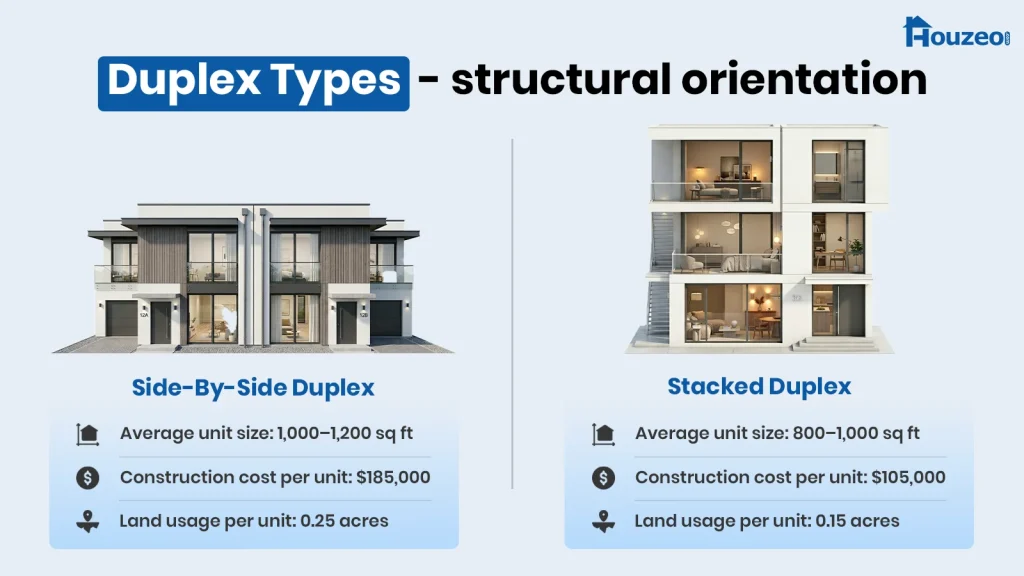
Figure: Duplex Types based on structural orientation.
Side-by-Side Duplex
A side-by-side duplex is usually more expensive to build, and costs often range from $130 to $220 per sq ft.
It requires a larger foundation and roof, but better privacy since each unit sits next to the other with no shared ceilings or floors. This setup often appeals more to tenants, which can make it easier to rent.
Up-and-Down Duplex
An up-and-down duplex, on the other hand, is more cost-efficient. It typically costs around $100 to $180 per sq ft.
Since both units share the same structure, it reduces construction costs and works well on smaller plots of land. The trade-off is that noise between floors can sometimes be an issue, which may affect tenant comfort.
Quick Tip If your goal is affordability and faster returns, modular or simple duplexes are often the best choice. If you’re focused on long-term appreciation and premium tenants, investing in a higher-end duplex may provide better returns.
Duplex Cost by Location
Location is one of the most important factors, which influences the cost to build a duplex. Even with the same design and size, construction costs can vary significantly depending on where you build.
Differences in labor rates, material availability, land prices, and local regulations all contribute to these variations for an entire duplex for sale.
Cost Differences by Region
- Labor Costs:
Labor costs can change a lot depending on how many skilled workers are available. Cities usually have higher labor costs because demand and living costs are higher. - Material Availability:
Material prices can rise in remote areas because transportation costs are higher. In cities with good supply chains, materials may cost less. - Land Prices:
Land is often the biggest cost. In high-demand areas, land can take up a large part of your total budget. - Local Regulations:
Building codes, zoning laws, and permit rules vary by city and state. Some places also require extra approvals, inspections, or fees, which can increase the total cost.
San Francisco leads the U.S. cities for the most expensive duplexes the list at $1,070/sq ft due to land scarcity and regulations, so duplex builds can exceed $1M easily.
Urban vs Suburban vs Rural Comparison
Construction costs and rental demand can vary significantly depending on whether you build in an urban, suburban, or rural area.
- Urban Areas: Construction costs are typically the highest due to expensive land, higher labor rates, and stricter building regulations. However, these locations also offer the strongest rental demand.
- Suburban Areas: Costs are more moderate, with a good balance between land prices and construction expenses. These areas usually see stable rental demand, making them a practical choice for long-term investment.
- Rural Areas: Building costs are generally the lowest because land is more affordable and regulations are less restrictive. However, rental demand tends to be limited, and property appreciation may be slower over time.
Pro Tip Building in the right location can significantly reduce costs, especially in the cheapest places to live in the US.
Cost to Build vs Buy a Duplex
Deciding whether to build or buy a duplex is one of the most important choices you’ll make. Both options come with different costs, timelines, and levels of risk.
Timing your project matters. Knowledge of the best time to buy a house helps you save on land and materials.
Cost Comparison:
To build a duplex, higher upfront costs are incurred due to construction, permits, and land purchase. However, it allows full customisation and may offer better long-term returns.
Buying a house, especially a duplex, usually requires less upfront uncertainty and allows you to generate rental income immediately, but you may pay a premium based on market conditions.
Building a Duplex
- Full design control: Customize layout, materials, and finishes to match your needs.
- Modern, efficient construction: Build energy-efficient units with the latest features.
- Higher long-term value: New builds in growing areas can appreciate more over time.
- Longer timeline: Construction can take 6 to 18 months or more.
- Higher upfront costs: Requires significant initial investment with risk of overruns.
- Project management needed: Need to manage contractors, permits, and approvals all by yourself if you buy a house without a realtor.
- Cost factors: Includes construction, financing, timeline, and maintenance.
- Best for: Buyers focused on customization and long-term returns.
Buying a Duplex
- Faster move-in or rental: Start living or earning income quickly.
- Immediate cash flow: Rental income can begin right after purchase.
- Easier financing: Simpler loan process compared to construction.
- No build risks: Avoid delays, labor issues, and construction uncertainty.
- Limited customization: Options depend on the existing property.
- Possible repair needs: Older homes may need upgrades or fixes.
- Market-driven pricing: Costs can be higher in competitive areas.
- Cost factors: Includes purchase price, financing, and repairs.
- Best for: Buyers seeking quicker income with less complexity.
Should You Build a Duplex?
Building a duplex can be a powerful way to combine home ownership with income, but success depends on smart planning. From choosing the right location to controlling cost to build a duplex, every decision directly impacts your returns.
Before moving forward, compare building vs buying, evaluate your budget, and focus on markets with strong demand. With the right approach, a duplex isn’t just a property, it’s a long-term investment strategy.
» Houzeo Reviews: Read what customers have to say about Houzeo, America’s best home buying website.