Only about 0.47% of homes in the U.S. are true waterfront properties, making them one of the rarest segments of the housing market. Many homes marketed as “near the water” are actually water view or water access properties, which offer very different levels of shoreline access, privacy, and long-term value.
This guide explains the key differences between waterfront, water view, and water access homes, including how they compare in access, pricing, maintenance, and long-term value.
Houzeo is America’s best home buying and selling platform.
For Home Sellers: List your home for a Flat Fee, and save 2.5% to 5.5% on the listing agent commission! That’s thousands of dollars extra in your pocket.
For Home Buyers: Houzeo has the most number of houses for sale in America. Start your dream home search now!
Yes! You can list your home for sale or search millions of homes on the Houzeo mobile app!
Download now on the Apple App Store or the Google Play Store.



Key Takeaways
- Waterfront homes sit directly on the water, offering private access and commanding the highest prices in the U.S. market.
- Water view homes provide visible water scenery without direct access, making them more affordable than waterfront properties.
- Water access homes include shared or nearby entry points like docks or beaches, usually at the lowest price point.
- Price hierarchy is clear: waterfront is most expensive, water view is mid-range, and water access is budget-friendly.
- Choice depends on lifestyle: pick waterfront for daily use, water view for scenic living, and water access for occasional recreation.
- Waterfront real estates that are directly adjacent to water bodies with immediate shoreline access are known to have 30-150% higher prices than those of comparable inland properties.

Image Source: Gemini AI
Waterfront vs. Water View vs. Water Access: Key Differences Explained
These differences affect price, privacy, maintenance costs, and resale value, making it important for buyers to understand exactly what type of access and experience each property provides.
| Feature | Waterfront Homes | Water View Homes | Water Access Homes |
|---|---|---|---|
| Location | Directly on the water | Near water but not directly on it | Away from water with shared/nearby access |
| Water Access | Private and direct | No direct access | Shared or community access |
| Views | Unobstructed water views | Partial or full water views | Usually no views |
| Price | Highest price range (~$750,000 to $3,000,000+) | Mid-range pricing (~$500,000 to $1,700,000) | Most affordable option (~$350,000 to $700,000) |
| Lifestyle Use | Daily use like boating, swimming | Scenic enjoyment | Occasional recreation |
| Maintenance | High due to water exposure | Moderate | Lower maintenance |
| Resale Value | Strong demand and appreciation | Good resale value | Moderate resale potential |
What Is a Waterfront Property? 🌊
Waterfront property is real estate that directly borders a body of water such as a lake, river, ocean, or bay. It gives buyers private and immediate access to the shoreline, offering more than just a view. You can use the water for boating, relaxing, or recreation. These homes are usually more expensive and offer strong resale value.
Types of Waterfront Properties

Canal-front Properties: These homes are connected to man-made waterways and often include private boat slips. They offer convenient access to larger water bodies while being part of planned residential communities.
Riverfront Estates: Homes built along rivers provide continuous water views and direct access for activities like boating or kayaking. They combine natural scenery with functional water use.
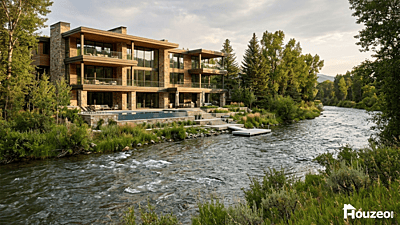
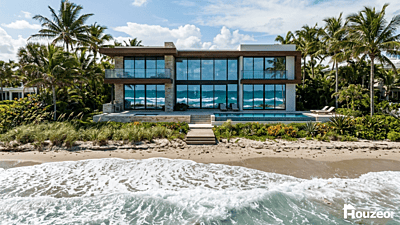
Oceanfront Properties: These homes sit directly on the beach with immediate access to the shoreline. They are among the most desirable and usually come at the highest price point due to location and lifestyle appeal.
Lakefront Homes: These properties are located along lakes and often allow owners to build private docks. They offer calm surroundings and are popular for both year-round living and vacations.
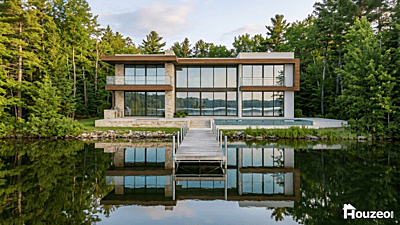
Waterfront properties offer more than just a place to live. They combine location, lifestyle, and long-term value. Choosing the right type depends on how you plan to use the water and what fits your budget.
For example, buyers searching for waterfront homes for sale in Florida or waterfront homes for sale in North Carolina can find options that balance scenic living with affordability.

Pro Tip: Check flood zones, insurance costs, and shoreline regulations before buying to avoid unexpected expenses.
What Makes a Home Water View?
Water view properties are homes where you can see a lake, river, or ocean from the property, but the home does not sit directly on the shoreline. This keeps costs lower than waterfront homes and can make mortgage payments more manageable.
Homes of these kind are ideal for buyers who value the visual appeal of water without the higher costs tied to waterfront ownership. While you may not have private access, many water view homes are located near public beaches, parks, or marinas, offering convenient ways to enjoy the water.
What Sets Water Access Homes Apart?
Water access homes offer shared or nearby access to a lake, river, or ocean, rather than direct frontage or views. These properties may include rights to a community dock, private beach, boat ramp, or marina, allowing homeowners to enjoy the water without owning the shoreline.
They are usually more affordable than waterfront or water view homes. This makes them a practical option for buyers who want to enjoy water activities without paying a higher premium.
Waterfront vs. Water Access vs. Water View: Price Points
When you compare waterfront, water access, and water view properties, the biggest differences come down to proximity, access, and price.
- Waterfront homes (highest)
Typically range from $500K to $5M+ depending on location, with luxury coastal markets going much higher. These homes often sell for 20% to 50% more than comparable water-view homes due to direct access and scarcity. - Water access homes (mid-range)
Usually fall between $300K to $1.5M in many U.S. markets. You pay a moderate premium for shared docks or beach access, but less than true waterfront since you do not own the shoreline. - Water view homes (lowest premium)
Commonly range from $250K to $1M+, depending on the strength of the view and location. While more affordable, homes with scenic water views can still carry a significant premium, sometimes up to ~78% higher than non-view homes in certain markets.
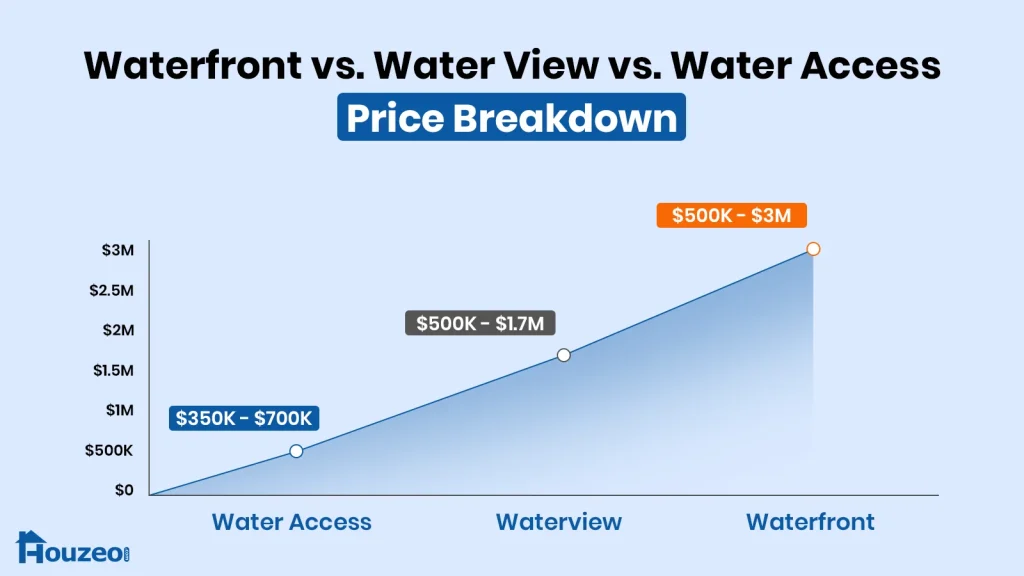
Keep in Mind: These values can vary significantly depending on location, property type, and market conditions.
Pros and Cons of Properties by the Water
Properties vary by the balance of affordability, lifestyle, and location but come with trade-offs that buyers should evaluate carefully.
Pros ✅
- Scenic views and lifestyle appeal: Water-based properties offer natural views and a more relaxed living environment.
- Higher resale value potential: Limited supply often supports stronger demand and long-term appreciation.
- Recreational access: Easy access to activities like boating, swimming, or fishing adds everyday value.
- Privacy and exclusivity: Many waterfront homes are located in quieter, less crowded areas.
Cons❌
- Higher purchase price: Waterfront homes often come at a premium due to their views, limited availability, and strong appeal in vacation destinations.
- Maintenance costs: Annual upkeep can equal roughly 1% to 4% of a home’s value due to moisture, salt air, and humidity accelerating wear and corrosion.
- Insurance and risk factors: Homes in high-risk areas can carry flood insurance costs that range from hundreds to several thousand dollars annually, depending on location and coverage requirements.
- Zoning and environmental restrictions: Local waterfront regulations and environmental rules can limit renovations, expansions, or certain property uses.
Who Should Buy Properties by the Water?
Buying property near water in the US attracts both investors and lifestyle buyers. Limited supply and strong demand support long-term value. They often serve as both a personal retreat and a solid investment, especially in high-growth housing markets.
| Region | Top Waterfront Markets | Who Should Buy & Why |
|---|---|---|
| Southeast | Miami | Naples | Tampa | Hilton Head Island | Retirees: warm climate, relaxed coastal living, strong boating access year-round. |
| West Coast | Malibu | Newport Beach | Seattle | San Diego | High-income Professionals: Premium coastal living with strong job markets nearby. |
| Great Lakes / Midwest | Lake Tahoe | Chicago waterfront | Traverse City | Lake Michigan towns | Families: More affordable waterfront living with recreation, space, and year-round outdoor activities. |
| Mountain & Inland Lakes | Coeur d’Alene | Lake of the Ozarks | Lake Geneva | Second-Time Homebuyers: Peaceful lakefront lifestyle and strong weekend home appeal. |
| Gulf Coast | Destin | Gulf Shores | Pensacola | Corpus Christi | Investors: Lower prices with strong vacation demand and high rental income potential. |
| Northeast | The Hamptons | Newport | Annapolis | Bar Harbor | Luxury Buyers: Exclusivity, limited supply, and strong long-term appreciation. |
Pro Tip: Buy waterfront only if you plan to use it often. Otherwise, you’re just paying premium rent for a view.
Factors to Consider Before Buying a Water Property
To buy a water property is not just about the view. Focus on how the home fits your lifestyle, budget, and scenery.
1. Water Type : Choose between ocean, lake, river, or lagoon. Each offers a different level of activity, privacy, and scenery.
2. Proximity to Water: Decide how close you want to be to the waterbody. Homes for sale near the shoreline offer better access but may come with higher costs and risks.
3. Privacy and Neighbors: Check nearby homes, public access points, and foot traffic. More space usually means more privacy.
4. Lifestyle Fit: Pick based on how you use the water. Boating, swimming, or relaxing each require different setups.
5. Noise and Activity: Busy areas can bring boat traffic and tourists. Visit at different times before you decide.
6. Maintenance Needs: Expect upkeep for docks, seawalls, and exterior exposure to water and weather.
7. Climate: Warmer areas allow year-round use. Colder climates may limit how often you use the water.
8. Legal and Access Rights: Verify dock permits, shoreline rights, and HOA rules before you buy.
Water quality can affect your lifestyle, health, and property value. Check for algae blooms, pollution, erosion, odors, or seasonal weed issues before buying. Some waterfront homes for sale may also sit near wetlands or protected areas with maintenance and building restrictions.
Flood risk affects both safety and ownership costs. Review FEMA maps, seller disclosures, and past flood claims before buying. Homes in high-risk zones may require flood insurance, while features like raised foundations and flood vents can help reduce damage.
Which Type of Water Property is Right for You?
The right choice depends on how you want to experience the water. Waterfront homes offer direct access and a premium lifestyle, while water view and water-access homes provide more affordability with limited access.
Consider your home buying budget, how often you will use the water, and the level of access you need. When these factors align, you can choose a property that fits your lifestyle and supports long-term value.