What if your next home could either save you 20–30% upfront or pay you back every month through rental income? Choosing between a townhouse and a duplex is more than picking a property. It decides how you want to live, spend, and build wealth. Both types of houses are popular in urban and suburban markets.
This guide goes beyond the surface-level definition of a townhouse and duplex. You’ll get real-world cost breakdowns, ownership insights, finance nuances, and investment analysis. This will result in a confident, data-driven decision.
Houzeo is America’s best home buying and selling platform.
For Home Sellers: List your home for a Flat Fee, and save 2.5% to 5.5% on the listing agent commission! That’s thousands of dollars extra in your pocket.
For Home Buyers: Houzeo has the most number of houses for sale in US. Start your dream home search now!
Yes! You can list your home for sale or search millions of homes on the Houzeo mobile app!
Download now on the Apple App Store or the Google Play Store.




Key Takeaways
- Financial Strategy: A duplex often has a higher upfront cost but offers dual income potential that can offset 50–90% of a mortgage.
- Maintenance Difference: Townhouse owners enjoy lower maintenance due to HOA management, while duplex owners have full responsibility for the building and land.
- Ownership Structure: Townhouse buyers generally own the interior and a small parcel of land, whereas duplex buyers own the entire structure along with the underlying lot.
- Lifestyle & Privacy: Duplexes typically offer greater privacy and flexibility, while townhouses provide access to community amenities like pools and gyms.
- Market Liquidity: Townhouses tend to sell faster in dense urban areas, while duplexes are specialized investments that attract a smaller pool of focused buyers.
Townhouse vs. Duplex: Costs, Lifestyle & Amenities
As a keen buyer in the US real estate, navigation through the market could be difficult. Choosing between a duplex vs townhouse is a difficult choice to make. This article breaks down the difference between duplex and townhouse.
What Is a Townhouse?
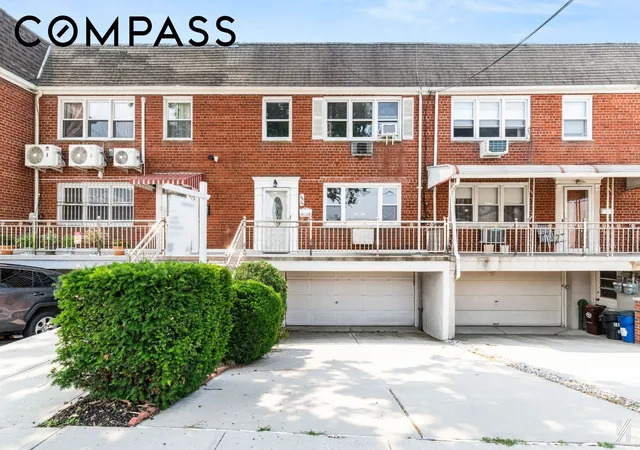
A townhouse (or townhome) is a vertically constructed single‑family residence that shares one or two walls with adjacent units but has its own private entrance. These homes are typically two or three stories tall. They offer a compact footprint that maximizes space in urban and suburban settings.
Townhouses are often part of a planned community governed by a Homeowners Association (HOA). It manages exterior maintenance, landscapes, and shared amenities like pools, gyms, or playgrounds.
It is important to know what parts of the home does one owns after buying a townhome for sale in the US. In most cases, you’ll fully own the interior of your home, along with the exterior walls. In some communities, the roof. You may also own a small parcel of land directly beneath and around your unit, based on the property setup.
Typical U.S. Market Characteristics of a Townhouse
Townhouses offer a convenient, community-focused lifestyle, often close to work, schools, and daily essentials. Prices vary widely by location and typically range from about $250,000 to over $700,000. It depends on demand and market trends.
Owning a Townhouse: Benefits and Tradeoffs
- Lower purchase price but HOA fees and restrictions apply.
- Reduced maintenance burden (HOA‑managed) but limited privacy with shared walls.
- Access to amenities like clubhouse, gym, and landscaping, but rental restrictions in some communities.
- Easier mortgages and resale but less control over exterior changes.

Want to Buy a House? Use a mortgage calculator to get a detailed breakdown of costs that you may incur.
What Is a Duplex Home?
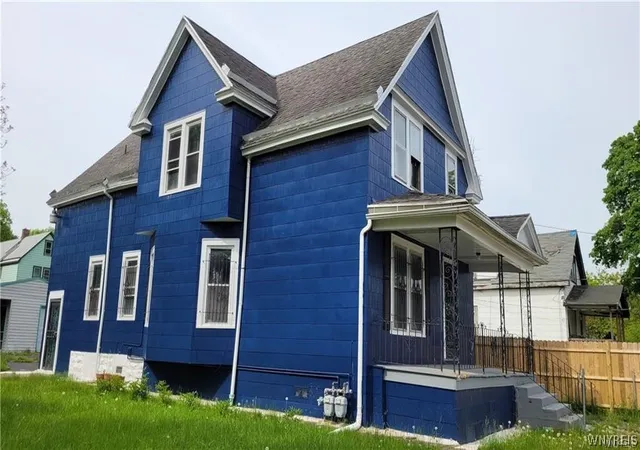
What does duplex mean? A duplex in the US is a multifamily property with two separate house units within one structure, either side-by-side or stacked. Each unit has its own entrance, kitchen, bathrooms, and utilities. It is functionally independent while still part of the same building.
This makes a small duplex attractive to nuclear families. Duplexes are a high supplemental income for investors as long‑term rental opportunities. Duplexes also serve as a practical solution for multigenerational households.
For a duplex owner, they technically own the entire building, along with the land it is built on. This is true for both units and most cases HOA is not applicable.
Typical U.S. Market Characteristics of a Duplex
Duplex appeals as both a residential and investment property. They generally fall within a price range of $350,000 to $900,000 or more, based on location and condition of the duplex.
With high rental opportunities, duplexes in the US are in high demand. Buyers often seek properties that can generate consistent rental income while owners stay in their personal space.
In suburban areas, duplexes are popular among families for privacy and proximity reasons. Investors also value duplexes in these areas for their ability to balance affordability with long‑term appreciation.
Owning a Duplex: Benefits and Tradeoffs
- Dual income potential but higher upfront cost.
- Greater privacy than townhouses but full maintenance responsibility.
- No HOA fees but more complex finances.
- Higher long‑term ROI potential but landlord obligations (tenant management, legal compliance).
A duplex in US may cost $100K more upfront, but rental income can offset 50–90% of your mortgage.
What is the Difference Between a Townhouse and Duplex
It is essential to understand what is the difference between a duplex and townhouse. It helps buyers to make an informed choice. One key difference is ownership structure. Townhouses are typically individually owned units within a larger community, often with shared walls and HOA-managed spaces.
Duplexes are usually a single property split into two units that can be owned by one person and rented out or occupied separately. Here are the other key differences a buyer must know before choosing their home.
| Feature | Townhouse | Duplex |
|---|---|---|
| Property Type | Single-family attached | Multifamily |
| Ownership | Individual unit | Entire building |
| Privacy | Moderate | Higher |
| Maintenance | HOA-managed | Owner-managed |
| Rental Income | Limited | Significant |
| Flexibility | Restricted | High |
| Investment Potential | Moderate | High |
Buyer Cost Considerations
Understanding total cost is where most buyers make or lose money. There are different kinds of costs levied when buying a townhouse or a duplex. Here is a breakdown of the costs in the US to help you set budgets accordingly.
Upfront Costs
These are one‑time expenses at purchase, includes down payment, closing costs, and fees.
| Cost Component | Townhouse | Duplex |
|---|---|---|
| Median Price | Lower | Higher |
| Down Payment | 3%-10% (FHA/Conventional) | 3.5%-25% |
| Closing Costs | 2%-5% | 3%-6% |
| Inspection | $300-$600 | $500-$1000 |
Monthly Ownership Costs
These are the recurring expenses, such as mortgage payments, property taxes, insurance, and HOA dues.
| Expense | Townhouse | Duplex |
|---|---|---|
| Mortgage | Moderate | Higher |
| HOA Fees | $150–$500 | $0 |
| Maintenance | Low | High |
| Insurance | Lower | Higher (landlord policy) |
| Property Taxes | Moderate | Higher |
Income & Wealth
Financial capacity from earnings, savings, and assets that determines affordability and long‑term stability.
| Metric | Townhouse | Duplex |
|---|---|---|
| Rental Income | Limited | $1,000–$3,000+/month |
| Cash Flow | Low | Moderate to High |
| Appreciation | Stable | Strong (market-dependent) |
| Tax Benefits | Standard | Enhanced (depreciation, expenses) |
Getting the Right Mortgage
Your finance strategy can make or break your decision. Make sure you understand how lenders view a townhouse versus duplex before you apply.
For Townhouses:
- Easier Approval Process: Townhouses are considered single‑family residences, thus lenders often treat them like traditional homes.
- Lower Debt‑to‑Income Requirements: Townhouses typically allow a DTI of about 36%–45% (up to ~50% with strong credit). Duplex or multifamily properties are usually held to a tighter range of around 36%–43% with stricter financial checks.
- HOA Must Meet Lender Guidelines: The homeowners association’s financial health, insurance coverage, and reserve funds must align with lender standards.
- Conventional Loan Options: Townhouses are widely eligible for conventional loans, making them accessible to a broad range of buyers.
For Duplexes:
- Higher Reserve Requirements: Lenders may require additional cash reserves since duplexes are classified as multifamily properties.
- FHA Loans Allow 3.5% Down Payment: This makes duplexes attractive for first‑time buyers who want affordability.
- Rental Income Counts Toward Qualification: Buyers can use projected rental income from the second unit to strengthen their loan application.
- Owner‑Occupancy Advantage: Many first-time home buyers use FHA loans to purchase duplexes and live in one unit, building equity while minimizing housing costs.
- Financing Flexibility: Duplexes may qualify for certain Conventional, FHA, and VA loans, but underwriting is stricter compared to single‑family homes. Lenders require stronger credit, higher reserves, and more detailed income verification.
Get Approved to Buy a Home
A pre‑approval is critical in competitive U.S. markets. It signals to sellers that you are a serious buyer with financing already in place. Without it, your offer may be overlooked in favor of buyers who have demonstrated financial readiness.
When lenders evaluate your application, they focus on several key factors. Here is a list of what lenders look for before approving a loan:
What Lenders Evaluate:
- Credit Score: A score of 620 or higher is generally preferred, though stronger credit scores unlock better interest rates and loan options.
- Debt‑to‑Income Ratio (DTI): Lenders assess how much of your monthly income goes toward debt payments. A DTI lower than 36% shows you can comfortably manage a mortgage.
- Employment Stability: Consistent work history and reliable income reassure lenders that you can meet long‑term obligations.
- Cash Reserves: Savings or liquid assets demonstrate your ability to cover down payments, closing costs, and unexpected expenses.
In fast‑moving markets, having a lender’s commitment in hand can be the difference between securing your dream home and losing out to another buyer.
Pro Tip Lenders may consider projected rental income (typically 75%), improving your buying power.
Which Is The Right Choice For You?
The difference between townhouse and duplex is now clear. However, how to make the right choice for you? As a buyer, it is important to have clarity on the requirements, budget, and cost of living in both houses.
Pro Tip Use Houzeo’s Closing Costs Calculator to simulate total ownership costs before making a decision.
Should I Buy a Duplex or Townhouse?
This final decision to choose between a duplex vs townhouse comes down to your priorities:
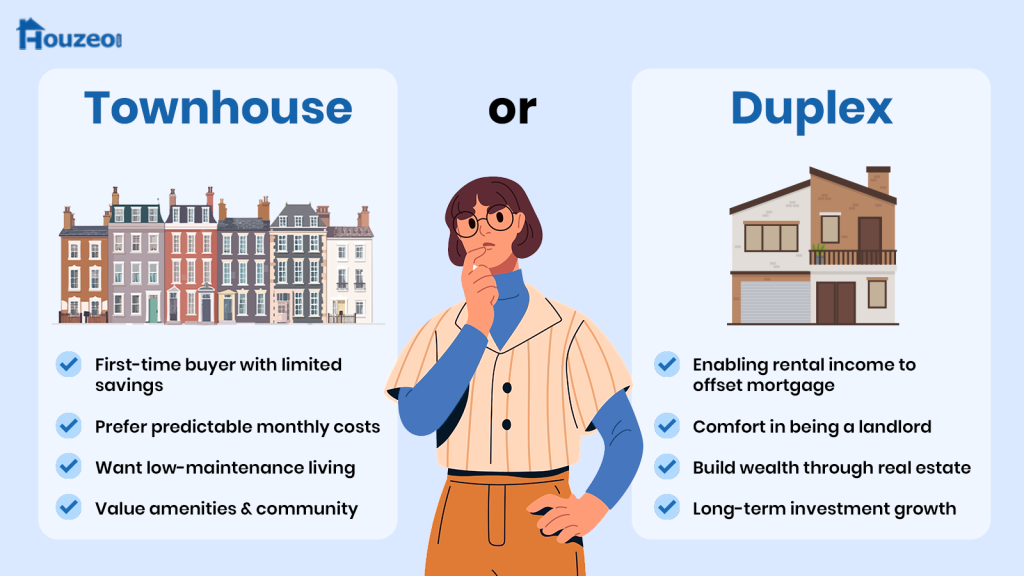
- Want simplicity, affordability, and ease? → Choose a townhouse
- Want rental income, flexibility, and long-term wealth? → Choose a duplex
The smartest buyers don’t guess; they compare numbers, analyze costs, and use the right tools. Whether you are buying a townhouse or a duplex, make sure to research according to your needs. Shortlist properties, attend showings, and then finalize. After all, buying a house is not a small deal.
» Houzeo Reviews: Read what customers have to say about Houzeo, America’s best home buying website.