How long does it take to buy a house? In most cases, the process takes 2 to 6 months from start to finish. But the exact timeline depends on how quickly you find a home, secure financing, and complete the closing process.
Some buyers, especially cash buyers, can close in as little as 7 to 14 days, while others may take several months due to inspections or market competition. The timeline isn’t fixed, but it is predictable once you understand the steps involved.
Houzeo is America’s best home buying and selling platform.
For Home Sellers: List your home for a Flat Fee, and save 2.5% to 5.5% on the listing agent commission! That’s thousands of dollars extra in your pocket.
For Home Buyers: Houzeo has the most number of houses for sale in US. Start your dream home search now!
Yes! You can list your home for sale or search millions of homes on the Houzeo mobile app!
Download now on the Apple App Store or the Google Play Store.


Key Takeaways
- Typical timeline is 2–6 months: Most homebuyers complete the process within this range, depending on search time, financing, and closing.
- Cash vs. mortgage timelines differ: Cash buyers can close in 7–14 days, while mortgage buyers usually take 30–90 days after offer acceptance.
- Multiple steps shape the timeline: Pre-approval, house hunting, inspections, underwriting, and closing all add to the total time.
- Preparation can speed things up: Getting pre-approved early and keeping documents ready helps avoid unnecessary delays.
- Some factors are uncontrollable: Lender processing, appraisals, seller responses, and market conditions can slow things down.
- Buyer experience impacts speed: First-time buyers may take longer, while experienced buyers often move faster.
- Delays are common but manageable: Inspection issues, financing delays, and competition can extend timelines, but staying organized helps.
Home Buying Timeline: Step-by-Step Breakdown
The home buying process follows a clear sequence of steps, and each stage adds time to your overall timeline. While some steps can overlap, most buyers move through them in order, from getting pre-approved to closing on the home.
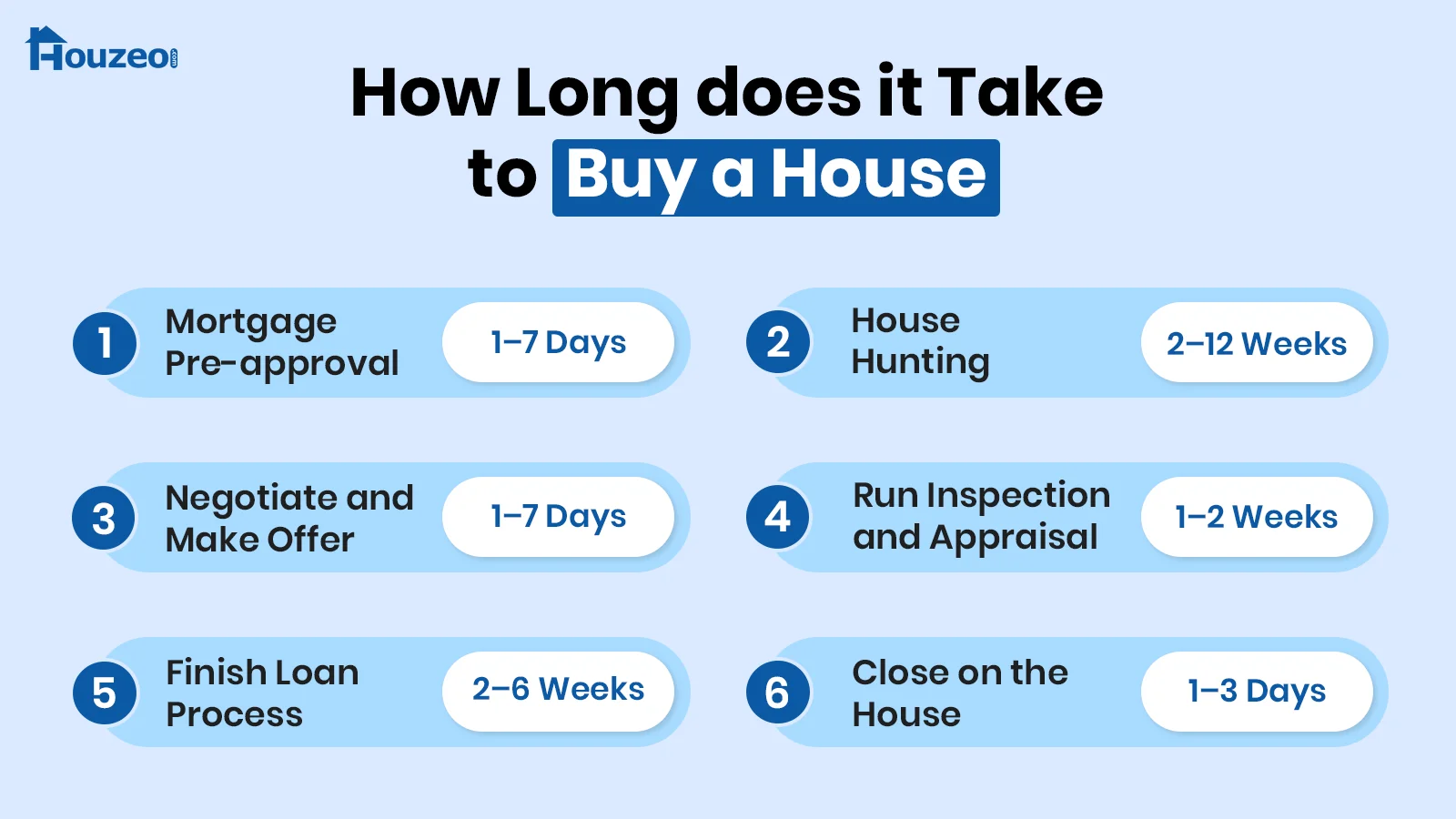
Below is a step-by-step breakdown of the home buying process, including how long each phase usually takes and what happens during every step.
1. Mortgage Pre-approval
Start by getting pre-approved with a lender. This step helps you understand exactly how much you can afford and shows sellers that you’re a serious, qualified buyer. It’s smart to do this before house hunting to avoid looking at homes beyond your budget.
In most cases, the pre-approval process is fairly quick and can take up to about 7 days. But it depends on the lender and how quickly you provide your documents.
2. House Hunting
Once you’re pre-approved, it’s time to start a home search that matches your budget and needs. This phase can take some time, depending on your location, price range, and market competitiveness.
As you explore your options, focus on key factors like the neighborhood, property condition, price, and long-term value. Staying clear on your priorities will help you narrow down choices more efficiently.
When you start matters too. Houzeo’s 2026 Home Buyer Report recorded that searches doubled from February to March. Search activity remained high all summer instead of dropping off.
On average, this step can take anywhere from 2 to 12 weeks. So, patience and consistency are key while you find the right fit.
3. Make an Offer and Negotiate
Once you’ve found the right home, submit an offer with your broker’s guidance. You may need to negotiate key terms like price, contingencies, or closing timeline.
In competitive markets, it’s normal to make multiple offers before one is accepted. With your broker’s help, you can submit a stronger offer that stands out and gets accepted faster.
4. Schedule Inspection and Appraisal
Once your offer is accepted, the next step is to schedule a home inspection and appraisal. The inspection uncovers potential issues, like structural, plumbing, or electrical, so you know what you’re buying.
The home appraisal, on the other hand, is conducted by a lender-approved professional to confirm that the home’s value matches the agreed purchase price.
If any issues or discrepancies come up during this stage, you may have the opportunity to renegotiate with the seller. This could include price adjustments, requests for repairs, or requests for credits before closing.
5. Complete Loan Processing
Your lender will now move your application into underwriting to finalize the loan. They’ll review your financial details, like income, assets, credit history, and employment. They may also request additional documents or clarifications.
If you respond quickly and provide accurate information, it can make a big difference here. The faster you submit what’s needed, the smoother the process will be. It will help prevent unnecessary delays in getting your loan approved and moving toward closing.
6. Close on the House 🥳
In the final step, you’ll sign all the necessary paperwork, transfer your funds, and officially close on your new home. Before closing, you’ll do a final walkthrough to confirm the home is in the agreed-upon condition and any requested repairs are complete.
Once everything is signed and the transaction is complete, ownership is transferred, and the home is officially yours.

Pro Tip! Closing costs can add up quickly and often include lender fees, title charges, taxes, and insurance. Use a closing cost calculator to estimate your total expenses before closing.
How Timeline Changes Based on Buyer Type
The time it takes to buy a house varies significantly depending on the type of buyer. Your financing method and experience can either speed up or delay the process by weeks.
Let’s see how different buyer types typically compare:
Cash Buyers vs Mortgage Buyers
Cash buyers generally complete the home buying process much faster than mortgage buyers. That is because they do not depend on lender requirements and mortgage approvals. Without underwriting, appraisal conditions tied to financing can close in as little as 7–14 days.
Mortgage buyers, on the other hand, generally take 30–90 days after an offer is accepted. This additional time comes from lender verification, document review, underwriting, and final loan approval before closing.
Pro Tip! Use a mortgage calculator to estimate your monthly payments and see how rental income from the other units can offset your costs.
First-Time Buyers vs Experienced Buyers
If you are a first-time buyer, you’ll usually take longer to complete the process because you have to navigate each step for the first time. You’ll often spend more time understanding requirements, comparing options, and coordinating with lenders. This can extend the overall timeline.
Experienced buyers tend to move through the process more quickly. Their experience with documentation, financing, and negotiations helps them move faster and avoid delays.
Saving for a house usually takes anywhere from a few months to several years. It depends on your income, expenses, and the home price you’re targeting. The biggest factor is how much you can consistently set aside for your down payment, closing costs, and emergency savings.
Buyers with higher incomes or lower living expenses may reach their goal faster, while others may take longer to build enough savings.
What You Can and Can’t Control in the Timeline
Not every part of the home buying process moves at your pace. Some steps depend on your actions, while others rely on lenders, sellers, or market conditions. If you understand this difference, it will help you avoid unnecessary delays and keep the process moving smoothly.
| What You Can Control | What You Can’t Control |
| Get pre-approved before house hunting | Lender underwriting and approval timelines |
| Keep financial documents ready | Market conditions and home availability |
| Respond quickly to lender or agent requests | Home appraisal results and valuation delays |
| Make competitive and clean offers | Seller response time and negotiation delays |
| Schedule inspections and paperwork promptly | Inspection findings and repair negotiations |
What Delays the Home Buying Process?
Buying a home usually involves a lot of moving parts. Even when everything is going smoothly, small delays can still slow things down. Most of the time, it’s not one big issue, but a combination of steps that take longer than expected.
Some of the most common reasons that can push your timeline back are:
- Mortgage & Approval Delays: These can take longer if your documents are missing or need verification. Underwriting, credit checks, or sudden changes in your financial details can also delay the process.
- Inspection & Appraisal Issues: After your offer is accepted, inspection or appraisal issues can slow things down. Repair negotiations or a lower-than-expected valuation often require your additional time to resolve.
- Market Competition: In competitive markets, limited inventory and multiple offers can extend the home search. You may need to compete in bidding situations before you secure the property.
- Seller Delays: Delays can also come from the seller’s side, such as slow responses, extended move-out timelines, or unresolved title and paperwork issues.
- Buyer Decision Delays: If you take too long to decide, switch between properties, or delay offer submissions, it can stretch the overall timeline, especially in fast-moving markets.
The time it takes to move into a house depends on your closing date and how prepared you are to move. In most cases, buyers can move in within a few days after closing. Some choose to move in immediately, while others may take a week or two to:
- Arrange movers
- Complete minor repairs or cleaning
- Coordinate lease endings or utility setup
How to Buy a House Faster
A home purchase can take anywhere from a few weeks to several months. It depends on how prepared you are and how smoothly each step goes. While some delays are unavoidable, many parts of the process can be sped up with the right approach.
Most delays happen when you are not fully prepared when opportunities come up. This can include missing documents, slow responses, or waiting too long to take action. The key is to stay ready and move quickly at every stage.
Let’s see a few practical ways to speed things up:
- Get pre-approved before you start house hunting.
- Keep your financial documents ready.
- Make decisions quickly in competitive markets.
- Respond quickly to lender and agent requests.
- Be flexible with location and home features.
How Technology Can Speed Up the Home Buying Process
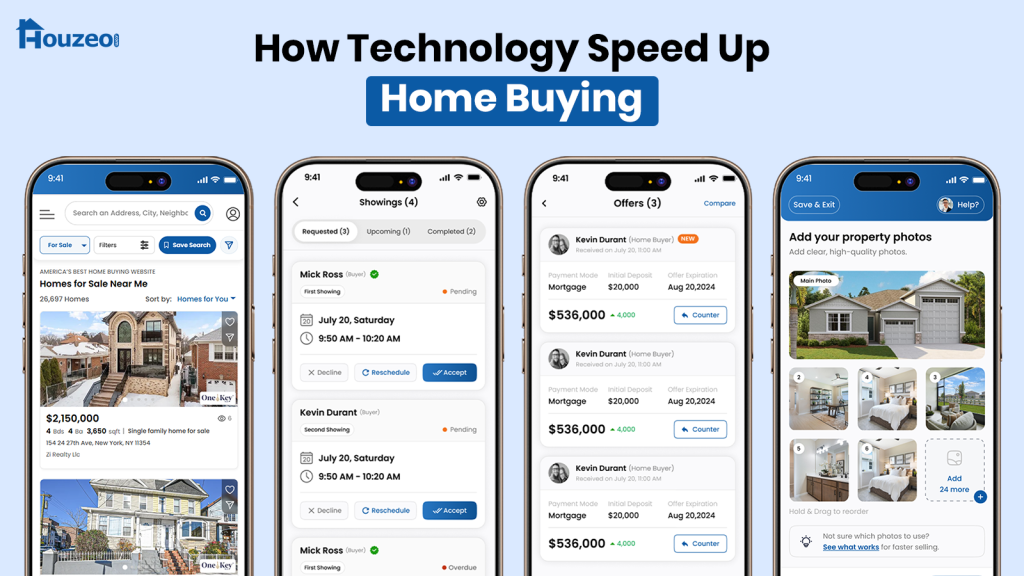
Technology has made buying a home much faster and more efficient than before. Instead of relying on manual coordination and in-person steps, most parts of the process can now be handled online.
You can search listings in real time, take virtual tours, submit offers digitally, and upload documents without waiting for back-and-forth paperwork. Even mortgage approval and closing steps have become faster with digital verification systems.
As a result, what used to take months can now move significantly faster when technology is used effectively throughout the process.
Home Buying Timeline vs Reality: Common Misconceptions
The home buying process often takes longer than you may expect. While it may seem like there’s a fixed timeline, real-world factors can change things quickly. These factors include financing, inspections, and market conditions.
So, there are some common misconceptions compared to how the process actually works.
1. “You can always close in 30 days.”
A 30-day closing is only realistic when everything goes smoothly, including pre-approval, paperwork, inspection, and appraisal. For many buyers, the process takes longer due to lender timelines and coordination between multiple parties.
2. “Once the offer is accepted, it’s almost done.”
Offer acceptance is only the middle of the process, not the end. After this stage, home inspection, appraisal, underwriting, and final approvals still follow and often take the most time.
3. “Cash buyers close immediately.”
Cash buyers do move faster, but they still go through essential steps like home title check, inspections, and paperwork verification. Even without a mortgage, closing usually takes several days to a couple of weeks.
4. “Every buyer follows the same timeline.”
There is no standard timeline that applies to everyone. Factors like buyer experience, types of home financing, and market competition can make two similar purchases take very different amounts of time.
House terms usually refer to the length of your mortgage loan, not the home buying process itself. The most common mortgage term in the U.S. is 30 years, followed by 15 years for buyers who want to pay off their loan faster.
A longer term typically means lower monthly payments, while a shorter term helps you save on interest over time.
How Long Does It Really Take?
On average, buying a house in the U.S. takes about 2 to 6 months. Cash buyers may close within one to two weeks, while financed purchases usually take 30 to 90 days after an offer is accepted. Financing, preparedness, and market conditions can affect the timeline.
Overall, there’s no fixed timeline. Factors like market conditions, financing, and how quickly you respond at each stage all play a role. But staying organized and prepared can help you move faster and quickly close your deal.