Finding an apartment is now more competitive than ever. With national occupancy still holding in the 92% to 95% range, net absorption is projected at 350,000 to 400,000 units.
Rent growth is expected to be around 2%, so renters need to move quickly and search smartly. In a market where demand remains solid and good listings can disappear fast, knowing how to find the right apartment can make all the difference.
Houzeo is America’s best home buying and selling platform.
For Home Sellers: List your home for a Flat Fee, and save 2.5% to 5.5% on the listing agent commission! That’s thousands of dollars extra in your pocket.
For Home Buyers: Houzeo has the largest number of homes for sale in the US. Start your dream home search now!
Yes! You can list your home for sale or search millions of homes on the Houzeo mobile app!
Download now on the Apple App Store or the Google Play Store.



Key Takeaways
- Start Your Search Early: Most apartments are listed 30–60 days before move-in, and good rentals disappear quickly in competitive markets.
- Budget Beyond Rent: Include utilities, parking, renter’s insurance, pet fees, and move-in costs before setting your price range.
- Prioritize Location Carefully: Focus on commute time, safety, transit access, walkability, and nearby essentials before choosing a neighborhood.
- Use Alerts and Multiple Platforms: Set saved searches on rental websites so you can respond quickly to new listings.
- Tour Before Signing: Always inspect the apartment in person and check for noise, maintenance issues, water damage, and security concerns.
- Read the Lease Carefully: Review fees, renewal terms, maintenance responsibilities, and all promised amenities before signing.
How to Look For Apartments?
Finding an apartment can feel overwhelming, especially with so many listings, websites, and rental requirements. A clear plan can make the process easier, faster, and less stressful. Here’s a step-by-step guide to help you find the right apartment.
1. Set Your Budget
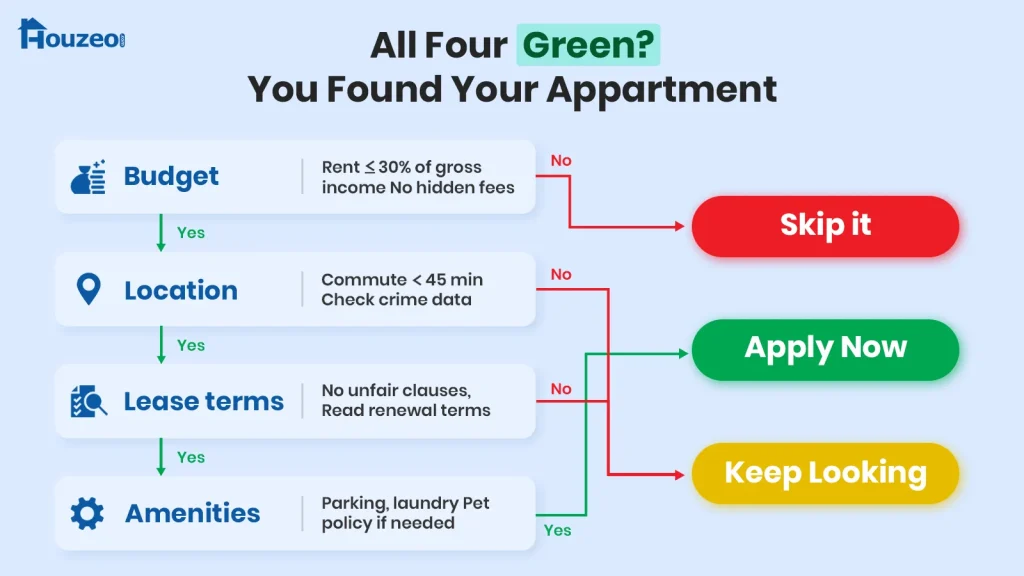
Before you search a single listing, figure out what you can actually afford. The most widely used rule of thumb is the 30% rule. Your monthly rent should not exceed 30% of your gross monthly income. If you bring home $5,000 a month before taxes, your rent ceiling is roughly $1,500.
In practice, many renters in high-cost cities end up spending more, so factor in all housing-related costs, not just rent. Pull your last three months of bank statements and calculate what you actually spend on housing today.
What to include in your total housing budget?
- Pet Fees or Pet Rent: If you have pets, many apartments charge upfront pet deposits, one-time pet fees, or monthly pet rent in addition to your regular rent payment.
- Monthly Rent: This will be your biggest recurring expense, so make sure it fits comfortably within your monthly income and overall budget.
- Utilities: Many apartments do not include electricity, gas, water, trash collection, or internet in the rent. On average, apartment utilities cost renters about $253 per month, though costs vary by location and season.
- Renter’s Insurance: Most landlords require renter’s insurance before move-in. Policies are usually affordable, costing around $15–$30 per month, and help protect your belongings from theft, fire, or damage.
- Parking Fees: Some apartment communities charge extra for parking spaces, covered parking, garages, or guest parking permits.
2. Choose Location
Location affects your commute, monthly rent, safety, and overall lifestyle. Narrow your preferred areas before you search for listings. Areas near downtown business districts, universities, or major transit corridors often come with higher rents but better accessibility.
Focus on commute times, public transportation, grocery stores, parking availability, walkability, and school quality if relevant. Reviewing neighborhood guides like the Midtown Miami neighborhood guide can help you compare pricing, amenities, and lifestyle differences before choosing an area.
Research local crime data, traffic patterns, flood risk, and transit access before committing to a neighborhood. Visit the area during both daytime and evening hours so that you can evaluate noise levels, parking conditions, and overall livability.
3. Search For Apartments For Rent Online
Once you know your budget and preferred location, start your search. Before you compare different platforms, review the best apartment search sites. It can help you understand which sites offer the most listings, best filters, and strongest options for different types of renters.
Use filters for rent price, bedrooms, pet policies, parking, amenities, lease length, and move-in date to narrow your options faster. Save your searches and turn on listing alerts so you can respond quickly when new apartments hit the market.
In competitive rental markets, well-priced apartments can receive applications within 24 to 48 hours. Apartments in high-demand neighbourhoods near transit, universities, and employment centers get occupied fast, especially in areas with strong housing market demand.
4. Shortlist and Compare
After a few days of apartment search, narrow your list to five or six apartments before scheduling tours. This keeps the process organized and makes it easier to compare units side by side.
Two apartments with similar rent prices can have very different overall monthly costs once additional fees are included. Create a simple spreadsheet or notes list to track pricing, move-in costs, square footage, application fees, and included features.
Pay close attention to what the rent actually includes. An apartment with utilities, parking, or internet included may cost less overall than a lower-rent unit with several added monthly charges.

Pro Tip If you are considering whether buying vs renting a home makes more sense for your situation, compare long-term costs, monthly payments, flexibility, and equity growth before making a decision.
5. Tour and Apply
Never sign a lease for an apartment you have not toured in person. Photos and virtual tours often fail to show maintenance issues, noise problems, or the property’s true condition.
Before submitting your application, inspect the apartment carefully. Check water pressure, appliances, natural light, noise levels, locks, smoke detectors, and signs of leaks, mold, or pests. Also review parking, building security, laundry access, storage space, and overall maintenance.
Most landlords require a government-issued ID, proof of income, bank statements, employment verification, rental history, references, and authorization for credit and background checks. After your application gets approved and the lease terms look good, you are ready to move into your new place.
Congratulations, you found the right apartment for your lifestyle and budget! 🎉
Best Way to Find Apartments Fast
In competitive rental markets, apartments can get rented within days. Starting early and responding quickly gives you a better chance of securing the right unit.
Start Early
Begin your search 60 to 90 days before your intended move-in date. Most landlords list units one to two months in advance, which gives you enough runway to search methodically rather than accept the first thing available out of desperation.
If you are in a tight market like New York, San Francisco, or Boston, starting 90 days out is strongly recommended. In slower markets and smaller cities, 45 to 60 days is usually sufficient.
Use Alerts
Most apartment websites and rental apps allow you to save searches and receive instant notifications when new listings match your criteria. Set alerts for factors like budget, neighborhood, bedrooms, pet policies, parking, or move-in dates.
Alerts help because house hunting rarely happens 9 to 5. Houzeo’s Home Buyer Report found 57% of search activity happens after 6 pm, and 29% between midnight and 6 am.
Enable both email and mobile push notifications so you can respond quickly. In competitive markets, well-priced apartments often disappear within 24 to 48 hours. Early inquiries can improve your chances of scheduling a tour or submitting an application before other renters.
Be Flexible
Renters who find apartments quickly are often willing to compromise on non-essential preferences. Flexibility with move-in dates, lease length, floor level, unit size, or amenities can open up significantly more rental options.
For example, choosing a mid-month move-in date, a slightly smaller unit, or a lower-demand floor plan may reduce competition and improve pricing. Apartments that stay on the market longer may also give renters more room to negotiate rent, parking fees, or lease terms.
Being flexible does not mean lowering your standards completely. Focus on your non-negotiables first, such as safety, budget, commute, or pet policies, while remaining open on less important features.
Quick Tip Set your budget filter $100 to $200 above your actual ceiling. Landlords sometimes reduce rent after a unit sits for a few weeks, and being first to see it when it drops keeps you ahead of the competition.
Where to Look for Apartments?
Knowing where to find apartments for rent can help you compare listings faster, avoid scams, and secure a place within your budget. Search on multiple platforms to find better listings and respond before other renters.
1. Apartment Search Websites
Major rental platforms list most professionally managed apartments. Apartments.com, Trulia, and HotPads are common starting points for renters.
Each platform has different strengths. Apartments.com works well for large apartment buildings, while HotPads is popular for map-based searches and local rentals.
2. MLS Platforms
MLS listings are not limited to homebuyers. Many condos, townhouses, single-family rentals, and smaller apartment buildings are listed through the MLS by licensed agents.
Houzeo gives renters and buyers direct access to MLS listings, including properties that may not appear on traditional apartment websites. These rental listings often do not appear on consumer-facing rental apps, which means less competition for them.
3. Local Sources
Do not rely only on major apartment websites. Many quality rentals never appear on large listing platforms and are often found through more local channels:
- Facebook Marketplace and Local Housing Groups: Private landlords often post rentals directly in local Facebook groups and marketplace listings before advertising them on larger rental platforms.
- Neighborhood Subreddits: Local Reddit communities frequently share rental leads, apartment recommendations, and honest feedback about specific neighborhoods and property managers.
- Drive or Walk Through Neighborhoods: Many smaller landlords still advertise with “For Rent” signs that never appear online, especially in suburban areas and smaller cities.
- University or Employer Housing Boards: Colleges and large employers often maintain housing boards with nearby rentals for students, faculty, or employees.
- Property Management Company Websites: Some management companies post available apartments on their own websites before syndicating them to national listing platforms.
How to Find a Good Apartment
So, how do you find an apartment? If you ask us, finding an available apartment is one thing. Finding one that fits your budget, commute, and daily lifestyle takes more research.
1. Neighborhood and Safety
Before signing a lease, spend time in the neighborhood at different hours, especially evenings and weekends. Pay attention to traffic, noise, lighting, parking availability, and how comfortable the area feels overall.
Check local crime data through city police department websites and review commute times during peak hours. If you are moving to a flood- or hurricane-prone area, verify whether the property falls within a FEMA flood zone since standard renters insurance usually does not cover flood damage.
If you are relocating from another city entirely and cannot visit in person, look up the best places to find apartments on local subreddits and ask specific questions. Locals are usually candid about what a neighborhood is actually like day-to-day.
Rental scams are a serious and growing problem. The FBI receives tens of thousands of real estate and rental fraud complaints annually. Knowing the warning signs protects you from losing your security deposit or rent money to someone who has no right to the property.
- Too-Good-To-Be-True Pricing: If a two-bedroom apartment in a desirable neighborhood is listed far below market value, treat it as suspicious.
- Landlord Is Conveniently Unavailable: Scammers often claim to be overseas, in the military, or unable to meet in person before requesting a deposit.
- Wire Transfer Or Gift Card Requests: Legitimate landlords do not request payments through wire transfers, Zelle, or gift cards.
- Pressure To Decide Immediately: Fake urgency is a common scam tactic. Real landlords allow time to review the lease.
- Listing Is Copied From Elsewhere: Reverse-search listing photos, since scammers often steal images from real listings.
- No Written Lease: Avoid any rental without a written lease agreement.
2. Hidden Costs
Advertised rent is rarely the full amount you will pay each month. Many renters focus only on the base rent and overlook additional fees that can significantly increase the actual cost of living and overall net operating expenses associated with an apartment.
One-time move-in costs may include several upfront fees before you get the keys, such as:
- Security Deposit: Often equal to one or two months’ rent.
- First and Last Month’s Rent: Some landlords require advance payments before move-in.
- Application And Background Check Fees: Covers credit and background screenings.
- Administrative Fees: Some communities charge lease or move-in fees.
You should also review additional fees and lease terms before signing the agreement, which include:
- Lease Renewal Terms: Some apartments raise rent significantly at renewal.
- Late Fees: Check penalties for missed or delayed payments.
- Parking Rules: Review guest parking and vehicle restrictions.
- Maintenance Responsibilities: Understand which repairs are covered by management.
Ask for a full breakdown of upfront and monthly costs before signing a lease. This helps you compare apartments accurately and avoid unexpected expenses.
You should also review the lease renewal terms, late-payment penalties, parking rules, and maintenance responsibilities carefully. Some apartments advertise attractive introductory pricing but increase rent significantly at renewal.
Pro Tip Expanding your search to the cheapest places to live in the US can significantly increase your apartment options while lowering monthly rent and overall living costs.
Cost of Renting an Apartment
Apartment rental costs vary widely based on location, unit size, building age, amenities, and local demand. Rent in major metro areas is often significantly higher than in suburban or rural markets.
The national median rent currently stands at $1,370 per month, but that figure masks enormous variation. While median rents in rural Alabama sit around $1,072 for a two-bedroom, a comparable unit in California costs 53% above the national average.
Apartments in high-demand areas usually cost more. Strong job markets and limited inventory often raise prices. Typical monthly rent ranges by unit size are:
| Unit Type | Approximate Monthly Rent |
|---|---|
| Studio/Efficiency | $1,200 – $1,500 |
| 1 Bedroom | $1,400 – $1,700 |
| 2 Bedroom | $1,600 – $2,100 |
| 3 Bedroom | $2,000 – $2,700 |
Best States to Find Affordable Apartments
Not every renter can relocate across state lines, but if you have flexibility, location can significantly affect your monthly housing costs. While national rent prices remain elevated, several states still offer below-average rents, lower living costs, and less competitive rental markets.
1. North Dakota
Average Rent: $1,162/month
North Dakota keeps rental costs relatively manageable because demand stays concentrated around major employment corridors instead of dense urban centers.
In Fargo, apartment growth near Downtown Fargo, the NDSU campus area, and the Sanford Medical Center corridor has helped stabilize rents despite steady population growth.
2. Arkansas
Average Rent: $1,128/month
Arkansas continues to attract renters with lower housing costs and expanding suburban apartment communities.
Demand remains strongest around Bentonville’s Walmart headquarters area, Fayetteville’s University of Arkansas district, and the I-49 growth corridor connecting Northwest Arkansas cities.
3. Iowa
Average Rent: $1,226/month
Iowa combines affordable rents with stable employment growth across finance, insurance, and healthcare sectors.
In the Des Moines area, apartment demand remains concentrated around Downtown Des Moines, West Des Moines office parks, and the Jordan Creek retail corridor.
4. South Dakota
Average Rent: $1,201/month
South Dakota maintains relatively affordable apartment prices because new development continues to expand alongside population growth.
In Sioux Falls, newer apartment communities near Sanford USD Medical Center, Empire Place, and the Louise Avenue retail corridor have increased rental inventory in recent years.
5. Louisiana
Average Rent: $1,248/month
Louisiana offers below-average apartment rents across many local markets, especially outside tourism-heavy neighborhoods.
In Baton Rouge, renters often search near LSU, Perkins Rowe, and the Bluebonnet Boulevard corridor. Apartment supply in some of the best places to live in Louisiana remains more affordable than in many comparable college and government markets.
6. Kansas
Average Rent: $1,316/month
The safest places to live in Kansas often attract renters because apartment demand stays relatively balanced across most metro areas.
In Wichita, affordable rentals remain concentrated near Downtown Wichita and Old Town. Employment hubs surround the McConnell Air Force Base and the city’s aerospace manufacturing corridor.
7. Indiana
Average Rent: $1,323/month
Indiana combines lower apartment costs with steady job growth in healthcare, logistics, and tech industries.
In Indianapolis, many renters target apartments near Broad Ripple, Downtown Indy, and the Keystone Crossing corridor, where newer developments continue to expand housing inventory.
Find Apartments Near Me
| Region | Apartments For Sale Near Me |
|---|---|
| Northeast | New York | Pennsylvania |
| Midwest | Indiana | Kansas | Michigan | Minnesota | Missouri | North Carolina | Ohio | Wisconsin |
| West | Arizona | California | Montana | Washington State |
| South | Alabama | Arkansas | Florida | Georgia | Kentucky | Louisiana | North Carolina | Oklahoma | South Carolina | Tennessee | Texas |
Find the Right Apartment With Confidence
Finding the right apartment takes more than scrolling through listings. The renters and buyers who move fastest are usually the ones who start early, understand their budget, research neighborhoods carefully, and stay organized throughout the process.
If you rent now and plan to buy a house later, take time to compare costs, tour properties carefully, and review every detail. In competitive housing markets, preparation and quick decision-making often give buyers a major advantage.
» Houzeo Reviews: Read what customers have to say about Houzeo, America’s best home buying website.