17% of FSBO sellers struggle with pricing, while 10% are stuck on paperwork. But the biggest roadblock for FSBO sellers isn’t pricing or paperwork; it’s invisibility.
Homes on the MLS sell for 17.5% more than those not on the MLS. But FSBO listings aren’t on the MLS. Without MLS exposure, a successful sale is almost impossible. No wonder FSBO listings dropped to an all-time low of just 5% in 2025.
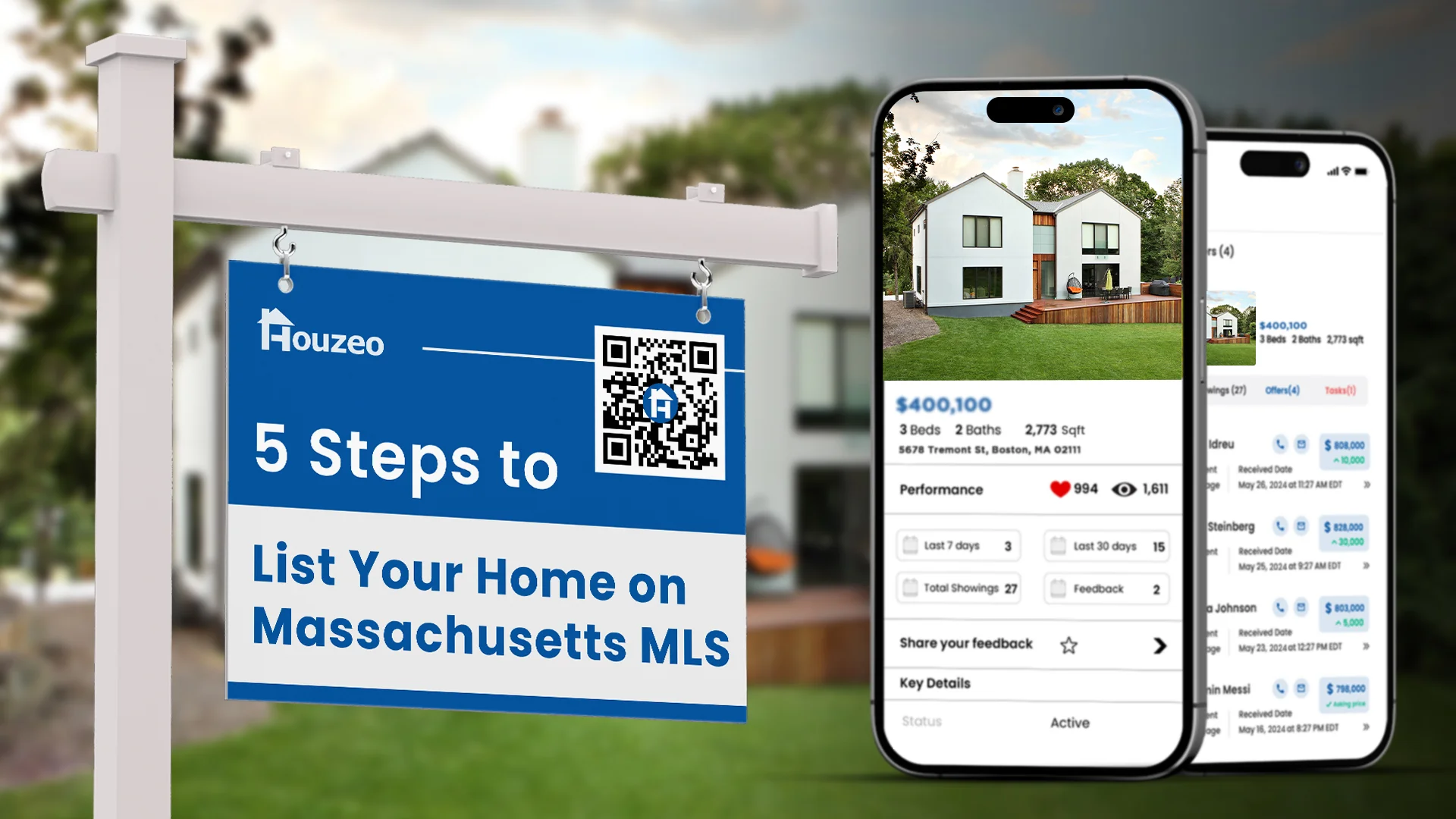
Houzeo, Masachusetts’s #1 FSBO website, solves all three issues without the 3% commission. Even the most affordable Bronze plan can get you MLS exposure, showing management, and 10 listing changes, all 100% online.
Houzeo is America’s best home buying and selling platform.
For Home Sellers: List your home for a Flat Fee, and save 2.5% to 5.5% on the listing agent commission! That’s thousands of dollars extra in your pocket.
For Home Buyers: Houzeo has the most number of houses for sale in Massachusetts. Start your dream home search now!
Yes! You can list your home for sale or search millions of homes on the Houzeo mobile app!
Download now on the Apple App Store or the Google Play Store.
Key Takeaways
- Price Smart: Set your price using local comps and Massachusetts-specific factors like the roof’s age, flood risk, property taxes, radon testing results, and rising insurance costs due to coastal storms.
- Fix Deal Killers First: Fix major risks early—foundation cracks, ice dams, radon, and septic compliance. Prepare lead paint disclosures for pre-1978 homes, control basement moisture, and prevent inspection issues, buyer walkouts, or legal trouble later.
- Prep and Present Well: Boost curb appeal by removing snow and ice, sealing driveway cracks, and trimming evergreens. Install and test Massachusetts-required smoke and carbon monoxide alarms on every level.
- Market Widely: Combine an MLS listing with professional photos, a clear description, yard signs, open houses, and virtual tours to reach more buyers.
- Negotiate and Close Confidently: Evaluate offers based on price and contingencies. Work with a title company and an attorney, so your paperwork, deed transfer, and payout go smoothly.
Points to Remember Before Selling a House in Massachusetts
| Median Home Price in Massachusetts | $636,500 (Jan 2026) |
| Average Days on the Market | 40 (Jan 2026) |
| Homes for Sale | 12,200 Homes (Jan 2026) |
| Required Disclosures in Massachusetts | Title V septic status, Lead-Based Paint (pre-1978), radon gas, mold, roof or ice dam damage, foundation cracks, and any pending HOA assessments or code violations. |
| Required Essential Documents in Massachusetts | Property Deed, Lead Paint Notification (pre-1978), Title V Report (if septic), Fire Dept. Smoke/CO Certificate, 6(d) Certificate (if condo), and Mortgage Payoff. P&S Agreement, Closing Disclosure (ALTA), Property Tax Proration, and HOA Docs. |
What Does Selling a House By Owner in Massachusetts Mean?
Selling a house by owner in Massachusetts means you manage the entire sale without a real estate agent. This approach, known as For Sale By Owner (FSBO), gives you full control and allows you to eliminate the listing agent’s fee.
But increased control comes with trade-offs: less exposure and more work. When you sell FSBO, your home won’t be on the MLS. It will be invisible to the 88% of buyers who use an agent to find their dream homes. You’ll also have to handle marketing, negotiations, and contracts all by yourself.
The most cost-effective approach involves a “hybrid” strategy. You must use free tools for local marketing while paying a small flat fee to access the Multiple Listing Service (MLS) to reach the broadest buyer pool.
To list your home, land, or condo on the MLS without a full-service agent, you must use a Flat-Fee MLS listing service. These companies act as “entry-only” intermediaries that post your property for a one-time fee, instead of the standard 3% listing commission.
- Research Providers: Find a service that covers your specific local MLS region. Common national options include Houzeo, Beycome, and List With Freedom.
- Choose a Package: Choose a plan based on your needs. Basic plans often limit the number of photos or listing duration, while premium plans may include yard signs, lockboxes, or contract assistance.
- Prepare Your Materials: You must provide all content, including a detailed property description and high-quality photos. For homes and condos, include HOA fees and amenities. For land, highlight zoning or utility access.
- Sign the Agreement: You must sign a contract that formalizes the arrangement. This allows the broker to list the home while you retain the right to sell it yourself.
- Submit Disclosures: You are legally required to complete state-specific property disclosure forms.

Pro Tip: Sell your home FSBO with Houzeo and enjoy MLS exposure, contract reviews, and complete support, all without steep agent fees!
How to Sell a House Without a Realtor in Massachusetts?
In Massachusetts, the typical FSBO process is divided into two main phases:
- Listing Prep: You must price your home accurately, complete crucial repairs, and handle all required Massachusetts disclosures.
- Marketing & Negotiations: After listing, your attention should be on execution. Market your property, manage showings, negotiate offers, and sell your home successfully.
Massachusetts’ housing market keeps steady momentum, whether it’s Greater Boston commuters year-round, families relocating in summer, or suburban buyers seeking space in spring and fall. The process to sell a house by owner in this dynamic environment involves these 8 steps:
1: Price Your Home Competitively
2: Check Maintenance and Make Repairs
3: Fill the Disclosure Forms
4: Make Your Home Market-Ready
5: Increase Your Property’s Visibility
6: Organize Home Showings
7: Review, Compare, and Negotiate Offers
8: Finalize the Sale
If you’re wondering how to sell your house fast by owner, start by pricing it competitively using recent local sales to attract serious buyers quickly. Prepare your home with repairs, a deep clean, and strong photos for online listings. List on the MLS through a Flat Fee MLS service for maximum buyer exposure. Respond fast to inquiries and negotiate directly to close without a realtor.
Step 1: Price Your Home Competitively
Pricing your home correctly is the most important decision you’ll make as an FSBO seller. With 3% more homes for sale and a 6-day increase in median days on market, Massachusetts buyers now have more negotiating power.
Your goal is to set a price that attracts them without leaving money on the table. A CMA report is your shortcut to accurate pricing, and you can get it for free with Houzeo’s Gold plan!
Sellers can conduct their own Comparative Market Analysis (CMA) by leveraging a combination of CMA tools like Automated Valuation Models (AVMs) and manual research into recently sold comparable properties, or comps.
While agents typically have exclusive access to the Multiple Listing Service (MLS), much of this data is accessible to the public through real estate aggregators and public records.
Start with instant estimate tools like Houzeo’s Free Home Value Estimator to establish a baseline price range. Since each tool uses a different algorithm, checking multiple sites provides a more balanced and accurate view of your home’s market value.
Compare Your Home to Recent Sales
The best way to price your home accurately without a listing agent is to start with real estate comps. Comps are recently sold homes in your immediate area that are similar to yours. Don’t just look at list prices; focus on final sale prices. Here’s how you can compare your home:
- Get Your Facts in Order: Identify your property type (single-family, condo, townhouse, etc.), heated living area, bed/bath count, lot size, and school zone.
- Find Similar Properties: Look for 3 to 6 homes that have sold within the last 6 months. They should be as similar to your property as possible and located within a 0.25 to 1.0-mile radius. Only expand this radius if local inventory is extremely low.
- Account for Key Features: Adjust the value of your comps based on factors like:
- Outdoor patios, decks, and fire pits (limited seasonal use due to harsh winters)
- Lakefront or river access
- Roof age and material (critical for snow/ice dam insurance claims)
- Energy-efficient or storm-rated windows and doors
- Updated kitchens and bathrooms
Understand Your Local Market
To price your home effectively, you must analyze your specific metro area and neighborhood. What works in Cambridge may not necessarily work in Springfield. Here’s a snapshot of the Massachusetts housing market:
| Location | Median Sale Price | Year-on-Year Change | Days on Market | Market Tempo |
|---|---|---|---|---|
| Boston | $825,000 | -3.2% | 60 | Somewhat competitive. |
| Plymouth | $650,000 | +4.8% | 43 | Somewhat competitive. |
| Haverhill | $469,000 | -8.8% | 26 | Very competitive. |
| Springfield | $303,000 | +1.2% | 28 | Very competitive. |
| Worcester | $421,400 | -4.2% | 43 | Very competitive. |
To reduce days on market and avoid underpricing or overpricing your property, your pricing strategy must reflect the trends in your specific housing market:
- In ‘somewhat competitive’ cities like Boston and Plymouth, you can price near the middle of your CMA range to capture early buyer traffic.
- In the ‘very competitive’ cities, like Haverhill, Springfield, and Worcester, price at or slightly above the top of your CMA range to capitalize on fast-moving buyers.
Pro Tip: If homes in your area are selling for 3% to 5% below list price, set your price accordingly. Have a plan to lower it within the first two to three weeks if buyer interest is low.
Consider Unique Features and Upgrades
Adjust your price to reflect your home’s condition and appeal in the Massachusetts market. A move-in-ready home with a roof rated for heavy snow loads or an updated HVAC can justify a premium price.
On the other hand, homes with broken windows, ice-dammed gutters, foundation cracks from freeze-thaw cycles, or are outside high-demand lakefront or top school zones should be priced lower.
Other Factors to Account For
- Flood Zones and Insurance: Buyers in 2026 are hyper-aware of rising premiums. Verify your zone via the FEMA Flood Map Service Center. If you are in a high-risk area, account for the buyer’s increased insurance costs in your asking price.
- Property Taxes: Your current Massachusetts property tax bill is governed by Proposition 2½, which caps the growth of the town’s total tax levy. While a sale doesn’t trigger an automatic “reset” to the purchase price, the town will eventually adjust the assessed value to reflect the new market rate during its annual or 5-year certification cycle. Disclose the current tax rate and assessment so buyers can estimate their future costs.
- Condo/HOA Disclosures: Massachusetts lenders scrutinize association reserves. If your HOA has low funds or a pending special assessment, it may limit the buyer’s financing options—price accordingly.
👉 Tired of Reading? Watch how to sell a home by owner now
Step 2: Check Maintenance and Make Repairs
If you’re selling a home by owner, a pre-listing home inspection helps you catch issues early and keeps your sale on track. The goal is to identify and fix issues that could stop a buyer from getting an insurance policy or a loan.
Which Home Repairs Have the Highest ROI?
| Repair | Average Cost | Average Resale Value | Costs Recouped |
|---|---|---|---|
| Garage Door Replacement | $4,317 | $15,081 | 349% |
| Entry Door Replacement – Steel | $2,547 | $4,659 | 183% |
| Manufactured Stone Veneer | $13,045 | $17,290 | 133% |
| Minor Kitchen Remodel – Midrange | $28,936 | $38,865 | 134% |
| Siding Replacement – Fiber-Cement | $20,678 | $29,963 | 145% |
| Deck Addition – Wood | $25,817 | $24,729 | 96% |
As a FSBO seller, handling repair requests efficiently is about separating major structural or safety issues from minor cosmetic ones.
- Prioritize Safety and Structural Repairs: Efficiently filter buyer requests by addressing issues that could affect their financing. These include deal-breakers like electrical hazards, mold, lead paint, or plumbing leaks.
- Offer Credits: The most efficient way to handle repairs is to offer credits at closing or a price reduction. By doing so, you can avoid the high repair costs and reduce closing time.
- Get Professional Estimates: If you choose to negotiate with the buyer, make sure to use digital tools or a local professional to get accurate quotes. Share these estimates with the buyer to negotiate the credit offer or refuse repairs.
- Document Everything: To prevent last-minute delays at the closing table, ensure all repair agreements are formalized in a single addendum.
- Leverage Market Conditions: Your negotiation power depends on the current market. If you have backup offers, you can be firmer and refuse non-essential repairs.
When selling without a full-service agent, you must personally manage the inspection contingency timeline and legal obligations. Without a Realtor to mediate, sellers typically use the following strategies to handle buyer requests:
- Categorize the Demands: Focus on safety issues (faulty wiring, gas leaks, etc.), structural problems (foundation cracks, roof defects, etc.), and major systems (HVAC, plumbing, etc.). You are generally not required to fix cosmetic flaws or minor wear and tear.
- Offer Credits Instead of Repairs: Many self-represented sellers prefer offering a closing credit. This eliminates your liability for the quality of the work and prevents delays caused by coordinating contractors before closing.
- Get Independent Estimates: If a buyer presents a high repair quote, hire your own licensed contractor to provide a second opinion. Having your own documentation gives you leverage to counter unreasonable demands.
- Consult a Real Estate Attorney: You can also hire an attorney to review the inspection response and draft the legal addenda for a flat fee. This ensures you don’t breach the contract or fail to meet the state-mandated disclosure requirements.
- Leverage Market Conditions: In a seller’s market, you have more power to decline minor requests. However, be aware that if a major material defect is found and the deal falls through, you may be legally required to disclose that defect to the next buyer.
- Stay Within Deadlines: Most contracts have a strict “inspection period.” If you fail to respond to a buyer’s objection within the specified window, you may be forced to accept their terms or risk the buyer legally canceling the contract.
What Issues Should You Fix Before You Sell Your Home in Massachusetts?
- Winter Weather Damage: Massachusetts’ harsh winters require proactive care. Fix ice dam damage on roofs and gutters, repair foundation or driveway cracks from freeze-thaw cycles, and improve attic insulation to reduce heat loss and ice buildup.
- Radon and Basement Moisture: Test for and mitigate elevated radon levels common in Massachusetts soil. Seal basement walls and repair sump pumps to prevent water intrusion and mold from heavy rain or snowmelt.
- Condo-Specific Issues: Fix unit-level issues that can stall a sale. Update unsafe electrical panels, corroded railings, and old boilers. Disclose building-wide problems or special assessments early. Lenders scrutinize these in 2026 and may deny financing without transparency.
What are the Common Problems Found in Massachusetts Homes?
In Massachusetts, closings are most often blocked by these issues:
- Winter Weather Damage: Harsh winters create ice dams and heavy snow loads that damage roofs and cause attic leaks. Inspectors often flag missing shingles, poor flashing, and weak attic ventilation that worsen freeze-thaw damage.
- Foundation and Grading Issues: Freeze-thaw cycles cause foundation cracks, uneven floors, and basement moisture. Poor grading traps snowmelt and rainwater, leading to erosion or flooding near the foundation.
- Outdated Electrical Systems: Many older Massachusetts homes, especially pre-1970s builds in Boston or Worcester, have ungrounded outlets, knob-and-tube wiring, or overloaded panels that fail modern codes and create fire risks.
- Plumbing Concerns: Corroded galvanized pipes, low water pressure, and failing sump pumps cause basement leaks. Inspectors also flag cast-iron drain lines and water heaters near the end of their lifespan.
- Aging HVAC Systems: Furnaces and boilers over 15 years old struggle with Massachusetts’ temperature swings. Inspectors often flag dirty filters, duct leaks, and inefficient thermostats that drive up energy bills.
- Radon and Mold Presence: Rocky soils can cause high radon levels that require disclosure. Poor drainage also leads to basement or crawlspace moisture and mold.
To get ahead of potential problems, you can schedule a few targeted inspections:
- Roof and Attic Inspection: Massachusetts insurers heavily scrutinize roofs over 15–20 years old. A clean roof inspection report confirming snow-load resilience and the presence of ice-shield membranes can prevent a buyer’s insurance from being denied or limited to “Actual Cash Value.”
- Radon and Basement Inspection: Massachusetts’ rocky soils make radon a top concern. Get a radon test, as it’s commonly required in disclosures. Check for basement moisture, foundation cracks from freeze-thaw cycles, or sump pump issues that plague New England homes.
Step 3: Fill the Disclosure Forms
There isn’t a mandatory, all-in-one Massachusetts seller disclosure form. Instead, you are legally required to provide the Massachusetts Mandatory Residential Home Inspection Disclosure before any offer is signed. You must also submit specific forms for radon, lead-based paint (pre-1978 homes), well/septic systems, local zoning or boundary issues, etc.
Additionally, federal and Massachusetts disclosure laws require you to provide buyers with several specific notices. If you fail to provide these disclosures, the buyer has a legal right to cancel the contract. With Houzeo’s Gold plan, you get all disclosures automatically assigned based on your MLS.
- Property Tax Disclosure Summary: This informs the buyer that while Proposition 2½ limits the town’s total tax levy growth, individual tax bills are not “locked.” Explain that the local Board of Assessors updates property values annually based on market trends, meaning a sale price can influence a future increase in the home’s assessed value.
- Radon and Environmental Hazards: While there is no “statutory warning” required in the contract, you must disclose any known radon test results or mitigation systems. Buyers typically include a radon testing contingency in their offer, especially in high-risk rocky soil regions of the state.
- HOA Disclosure: For homes in a mandatory association, you must provide the buyer with all governing documents, including the Master Deed, bylaws, and rules, during the due diligence period. Sellers must also provide a 6(d) Certificate at closing to prove all fees are paid in full.
- Condominium & Cooperative Resales: You must provide the condo’s governing documents and recent financial reports. Unlike new construction, Massachusetts resales do not carry an automatic 3-day right of rescission. Any “cooling-off” period must be specifically negotiated into the Purchase & Sale (P&S) agreement.
- Flood Zone and History Disclosure: Under the new 2026 state requirements, you must provide a standard notification form if your property is in a FEMA-designated flood zone or has a history of flooding. This informs buyers of potential insurance mandates and the home’s specific flood vulnerability.
Massachusetts law does not require sellers to disclose certain “stigmatizing” events. This includes deaths, homicides, suicides, or a prior occupant’s HIV or AIDS status.
FSBO (For Sale By Owner) platforms support sellers in states with complex regulations by providing them with the right tools. This includes legal document access and specialized listing services designed to navigate strict local requirements.
- State-Specific Disclosure Templates: Platforms like Houzeo offer automated paperwork and legally compliant disclosure forms tailored to specific state laws. This is critical in states where failure to disclose defects before a contract is signed can lead to lawsuits or immediate cancellation.
- Integrated Professional Referrals: To manage high-risk areas like escrow, title searches, and contract review, many platforms provide direct access to affiliate legal referral services. These services ensure all state-mandated steps are followed correctly.
- Education and Checklists: Some services offer dynamic checklists that walk sellers through the closing process. These include instructions for sourcing local inspectors and attorneys to meet regional standards.
Step 4: Make Your Home Market-Ready
A well-staged home can help buyers see its full potential. In fact, 83% of buyers’ agents say home staging influences buyers’ decisions, so make your home pop before you list it.
Here’s what you can do to make your home market-ready:
- Declutter and Depersonalize: Clear out personal items and unnecessary furniture. A clean and neutral space helps buyers picture themselves living there.
- Improve Curb Appeal: Massachusetts’ changing weather makes curb appeal critical, especially in winter. Clear snow and ice, edge walkways, add seasonal mulch or evergreens, and refresh worn exteriors to create an inviting first impression—even in New England cold.
- Showcase Outdoor Living Areas: Massachusetts’ short but cherished summer season makes outdoor appeal a major driver for the buyers. Add comfortable seating and simple décor to decks, patios, or fire pit areas to demonstrate how the home’s footprint extends outdoors for seasonal entertaining and relaxation.
- Opt for a Professional Home Stager: Bring in home staging companies to give your place a polished look. They place your furniture and decor strategically to create a more spacious appeal. This can boost your value by up to 10%.
Pro Tip: Love your pets, but buyers don’t need to see the evidence. Hide the chew toys, swap out the scratched-up rug, and make sure pet hair isn’t taking over every surface.
What Safety Aspects Should You Focus on When Staging Your Home?
Along with the aesthetics of your home, you should also:
- Install Required Alarms: Massachusetts law (M.G.L. c. 148, § 26F) requires smoke and carbon monoxide alarms on every habitable level, within 10 feet of bedrooms, and in basements. Test all alarms and ensure they work properly.
- Title V Septic Compliance: If your home has a septic system, secure a passing Title V inspection certificate. Most towns require it for buyer financing.
- Elevation Certificate: If your property is in a FEMA Special Flood Hazard Area, provide an Elevation Certificate. Buyers need it for flood insurance and mortgage approval.
Step 5: Increase Your Property’s Visibility
Selling a house in Massachusetts without strong marketing is like selling a beach house without mentioning the ocean view. In a competitive market, you must highlight what sets your home apart, or it will get lost in the crowd
- List on Your Local MLS: Get your property on the MLS for extra exposure. It will also be syndicated to major sites like Zillow, Trulia, Realtor.com, etc. You can list your home on the MLS in Massachusetts to attract more local agents and buyers searching for that perfect home.
- Hire a Pro Photographer: Listings with professional photos sell 50% faster on the MLS as they elevate the appeal of your property. 85% of buyers say that high-quality photos entice them as they browse properties online.
- Craft a Compelling Description: Highlight what makes your Massachusetts home stand out, whether it’s a finished basement, large yard, or commuter rail access. Highlight strong schools, walkable neighborhoods, and four-season living to help buyers envision life there.
Your MLS listing description must be truly compelling and go beyond basic facts. The description must eliminate friction by answering “scary questions” up front and highlighting high-demand features, such as energy efficiency and flexible layouts.
The two key elements of a compelling MLS listing description include:
- Structural Essentials: Your MLS listing description must have a captivating headline, designed to “stop the scroll”. It must focus on the most desirable aspects of your home and highlight specific selling points like a renovated kitchen or a spacious primary suite.
- Strategic Content: Instead of just listing features, describe the experience. For instance, “Enjoy morning coffee on the private lanai overlooking the canal” is more engaging than “has a back patio.” Keep the description around 250 words, as buyers aren’t likely to read a lengthy text.
To effectively highlight energy-efficient features in a Massachusetts MLS listing, you must translate technical specifications into tangible benefits. This means showcasing “green” features such as cost savings, enhanced comfort, and future-proofing.
- Optimize the Listing Description: Instead of just listing the technical specifications, use emotive language that highlights lifestyle improvements, such as “lower utility costs” or a “blanket of comfort.” Make sure you name-drop reputable brands and emphasize specific features, such as insulation and sealing.
- Provide Proof and Documentation: Transparency helps build buyer confidence and assists in the appraisal process. So, make sure to provide a breakdown of your utility and maintenance costs.
- Leverage Emerging Trends and Visuals: Modern buyers are increasingly looking for infrastructure that supports a sustainable lifestyle. So, you must highlight features like EV charging and solar panels. You can also use placards to point out hidden features during showings.
Put a “For Sale” Yard Sign: Buyers are always looking for homes in the best places to live in Massachusetts. Whether you’re in Boston or Pittsfield, a well-placed yard sign can grab attention. Houzeo’s Gold plan gives you a customizable sign with a QR code. Just one scan will send buyers directly to your listing!
Step 6: Manage Property Tours
Listing your home on the MLS gets attention, but showings and open houses seal the deal. Buyers can’t picture life in the The Bay State without seeing the deck or feeling the coastal breeze. Here’s how to highlight your home’s best features:
- Host Open Houses: Almost 50% of all buyers attend open houses. In fact, open houses can double your home’s visibility! Plan them on sunny weekends to highlight decks, patios, or coastal views. Create a relaxed atmosphere for buyers to explore, ask questions, and envision living there.
- Set up a Showings Calendar: Many buyers browsing homes for sale in Massachusetts prefer to schedule private showings online. Simplify this process with an online booking system like Houzeo Showings. Offer flexible times and virtual tours or live video showings for out-of-state buyers.
After a showing, reach out to the buyer within 24 to 48 hours. You can answer questions, gauge interest, and remind them about upcoming offer deadlines. You can also ask buyers for their honest opinions and make repairs or adjust the pricing as needed.
Yes! A virtual tour can help attract attention from out-of-state buyers who may not be able to attend your open house. In fact, 95% buyers show greater interest in listings with a virtual tour. You can have:
- Live Video Tours: Use Zoom, FaceTime, or other video platforms to conduct live home tours and answer questions in real-time.
- Recorded Walkthroughs: Post high-quality walkthrough videos or 3D virtual tours on listings and social media. This way, prospective buyers can view your home at their convenience. Matterport and Zillow 3D Home.
To create a truly compelling virtual open house, sellers must blend traditional staging with modern engagement to provide an immersive experience.
- Staging: Use neutral palettes for the open house and use natural lighting wherever possible.
- Invest in Quality Gear: Use a stabilizer to avoid shaky footage and use a good mic for clear audio.
- Engage Your Audience: Don’t just show rooms, but narrate the lifestyle of the home. You can also use a co-host to help you engage the audience.
When selling a house without an agent, you assume the safety responsibilities that a professional typically manages. Protecting yourself and your property requires a proactive approach before, during, and after every showing.
- Pre-Showing Preparation: Secure all valuables, hide sensitive personal documents, and lock away medications or weapons. Depersonalize the space by removing family photos to protect your privacy. Also, ensure the walkways are well-lit to prevent “slip and fall” liability.
- At the Showing: Always screen visitors in advance and require them to provide contact details on a sign-in sheet. During the showing, have someone join you and walk behind the visitors, directing them into each room verbally.
- Post-Showing Security: After visitors leave, check every room and the backyard to ensure the property is vacant. Check that all windows and doors are locked properly and use smart locks to monitor and record property access.
Step 7: Review, Compare, and Negotiate Offers
Massachusetts’ competitive real estate market means buyers may come with different types of offers. Since you are selling a house without a Realtor, you must keep these questions in mind during negotiations:
- Are cash offers worth it? Ensure the buyer is legitimate and verify their proof of funds. It’s also important to assess whether the offer reflects the fair market value of the property to avoid underselling.
- Can the buyer finance the purchase? Verify the buyer’s pre-approval status with their lender. Also, ensure the buyer’s loan type, whether it’s a VA or FHA loan, aligns with the conditions of the sale. Confirm the buyer’s ability to deposit the standard Massachusetts 5% total deposit, which is usually split between the initial offer and the signing of the Purchase & Sale agreement.
- How will contingencies impact the sale? In Massachusetts, waterfront sales include extra contingencies like Title V septic checks and flood zone reviews. These can delay closing. Inspection waivers are no longer allowed under 2026 law. Speed up the process by sharing Title V reports and Elevation Certificates upfront.
- Who will cover closing costs? Sellers usually cover their own closing costs in Massachusetts, like Deed Excise Tax, commissions, etc. However, buyers may negotiate for them to contribute more. You must calculate your final proceeds and negotiate accordingly.
When reviewing an offer, ensure that you focus on inspection periods, appraisal requirements, financing contingencies, and timelines that could affect closing. Ambiguous or long deadlines are red flags that increase the risk of the deal falling through.
Additionally, check the earnest money deposit amount. Larger deposits signal committed buyers who are less likely to back out.
In a FSBO transaction, the best practice to handle earnest money is to use a neutral third party. Sellers should avoid holding these funds directly to prevent legal complications and maintain buyer trust.
- Utilize Neutral Escrow Agents: Since there is no listing agent, you must decide who will hold the deposit. Typically, the role is played by a title company, a real estate attorney, or, in some cases, the buyer’s brokerage.
- Adhere to a Standard Timeline: To keep the deal moving, have the buyer transfer the funds within 1 to 3 business days of both parties signing the purchase agreement.
- Prioritize Secure Transfer Methods: Use wire transfer or specialized digital earnest money platforms. Avoid personal checks since they can bounce and cause significant delays.
- Contractual Protection: The purchase agreement must explicitly define how funds are released. It should include forfeiture clauses and refund contingencies for failures in inspection, financing, or appraisal.


Step 8: Finalize the Sale
You now need professional legal help for this crucial step:
1. Select Your Closing Agent
In Massachusetts, a title company, closing attorney, or licensed escrow agent typically handles the closing. Most FSBO sellers opt for a title company to manage the paperwork, handle funds, and file documents with the relevant government agencies.
The title company will also perform a title search to ensure the house has a clear title. They will identify and work with you to clear any outstanding issues, such as open permits, contractor liens, HOA/condo association debts, etc.
Pro Tip: For added legal protection, especially in complex sales, consider using a title company that is also attorney-owned.
2. Get All Documents Required for Selling Your Home By Owner in Massachusetts
Gather all necessary paperwork for selling a house by owner ahead of time to prevent delays. You will need these standard documents:
- Massachusetts Mandatory Residential Home Inspection Disclosure.
- A valid photo ID (Driver’s License or Passport) for everyone on the title.
- Property Transfer Lead Paint Notification.
- Title V Septic Inspection Report.
- Smoke & Carbon Monoxide (CO) Detector Certificate.
- Offer to Purchase / Contract to Purchase.
- Purchase and Sale (P&S) Agreement.
- Home Inspection Addendum.
- Home appraisal report.
At the closing table, you will need to sign the following key documents:
- The Deed (Warranty or Quitclaim) to transfer ownership.
- Closing Disclosure or ALTA Settlement Statement.
- Affidavit of Title (No-Lien Affidavit).
- 6(d) Certificate (Condos Only).
- Bill of Sale for any personal property included in the sale.
- Condo/HOA Resale Certificate, if applicable, confirming dues paid and financial status.
🖊️ Remember to double-check all names, figures, and terms for accuracy before signing. It is customary to sign legal documents with a blue ink pen.
To access professional contract review without a full listing agent, you can hire a real estate attorney or use a Flat Fee MLS service that includes “contract review.”
- Hire a Real Estate Attorney: Attorneys can provide “limited scope representation,” meaning they review your contract without representing you for the entire sale.
- Use a Limited-Service Broker: A limited-service broker offers a middle ground between a full agent and going entirely solo. They can handle all the paperwork and negotiations, while you handle the showings.
- Online Legal Marketplaces: If you need immediate or remote assistance, several platforms provide quick-turnaround reviews.
3. Transfer Possession and Hand Over the Keys
At closing, you will hand over all keys, remotes, and access codes to the new owner. The title company will record the new deed with the county clerk. It will then disburse the funds, pay off any liens, and provide you with your net proceeds via wire transfer or a check.
Congratulations, you’ve sold your home by owner and saved thousands in commissions 🎉!
While traditional agent-assisted homes often reach the contract stage faster, FSBO properties often close more quickly. This is because FSBO sellers already know the buyer.
- Agent-Listed Homes: An agent-listed property typically takes 3 weeks to find a buyer.
- FSBO Homes: A FSBO home takes 1 week to find a buyer. However, this is heavily skewed because 57% of FSBO sellers already have a buyer lined up before listing. FSBO listings without a pre-existing buyer often take much longer due to limited exposure.
As for Contract to Handover, both FSBO and agent-listed homes typically take 30-45 days to close. This stage is largely dictated by the buyer’s lender and the title company rather than the seller’s representation.
FSBO transactions are more likely to hit delays during this phase due to missing disclosures, inspection issues, or paperwork errors. This is why it is often advised that they hire a real estate attorney to help with this part of the transaction.
📌 Free FSBO Checklist for Selling Your Massachusetts Home

Keep the Commission, Take the Checklist
Smart sellers use checklists. Savvy sellers use ours.
Download Your FSBO ChecklistHow Much Do You Save By Selling Your House By Owner?
Almost $18,500!
When you sell your house with a Realtor, you may have to pay as much as $19,095 on a median home of $636,500 in agent commissions.
However, with Houzeo, you can list your home for just $399 upfront and $0 at closing. That’s less than a day skiing at Killington. You can save around $18,696 on the listing agent fee and go for a luxury cruise to Bar Harbor, buy a car, or upgrade your four-season porch.
👉 Ready to Sell Your Home By Owner in Massachusetts? List on the MLS Now!
What Are the Legal Requirements for Selling Your Massachusetts Home By Owner?
When selling your home by owner, the primary legal considerations involve transparency, documentation, and compliance. You must disclose all known issues and use state-approved contracts that meet legal standards.
Opting for a pre-listing inspection and a real estate attorney can help ensure transparency, proper documentation, and a smooth closing with a valid deed transfer.
- Complete Required Seller Disclosures: Massachusetts law mandates sellers to disclose any known issues affecting the property. This includes past repairs, environmental hazards, structural problems, and lien information.
- Use State-Specific Contracts: Use Massachusetts-specific real estate contracts, such as those provided by the Massachusetts Realtors Association. The forms should comply with state law and outline essential terms and contingencies.
- Consider a Pre-Listing Home Inspection: Although optional, a pre-listing inspection reveals property conditions upfront, helping you disclose issues and negotiate with informed buyers.
- Engage a Real Estate Attorney: While not mandatory, a Massachusetts real estate attorney can help you review contracts, prepare closing documents, and ensure legal compliance throughout the selling process.
- Understand Deed Requirements: Massachusetts recognizes several deed types, including statutory warranty deeds and special warranty deeds, which transfer ownership. Deeds must be properly signed, notarized, and include a legal property description to be valid.
FSBO platforms ensure that you comply with real estate laws by providing digitally updated, state-mandated disclosure templates and guided questionnaires. These documents help the sellers accurately document property defects.
The platforms also offer state-approved purchase agreements and addenda alongside access to vetted legal networks to help sellers navigate even the most complex state regulations.
MLS platforms in Massachusetts assist you with property disclosures by automating the collection of data and guiding you through the requirements of their specific jurisdiction.
- Interactive Questionnaires: The interface walks the sellers through the required forms step-by-step based on their responses.
- Error Prevention: The systems do not allow the user to skip past required fields, avoiding all possibilities of a mistake.
- Digital Audit: Some platforms automatically log every action, including the documents that were opened, read, signed, or even uploaded.
- Automated Calculations: Certain platforms automate tax calculations, ensuring financial accuracy.
The same platforms also assist you with purchase agreements and addenda through integrated form libraries and automated data mapping.
- Integrated Form Libraries: Many platforms maintain direct partnerships with state and local Realtor associations to provide up-to-date, legally vetted templates.
- Document Automation & Data Mapping: To reduce manual errors, platforms use automation to fill specific documents.
- State-Specific Addenda Management: Addenda are used to modify or expand upon the standard terms of a purchase agreement without altering the original signed document’s integrity.
- Compliance and Approval Workflows: Brokerages use these platforms to ensure all state-mandated disclosures are completed correctly.
Effective Negotiation Strategies When Selling a Home By Owner
When reviewing and negotiating offers, verify buyers’ financial readiness through proof of funds or pre-approval letters. Evaluate contingencies, pricing flexibility, and closing terms carefully to choose the most reliable and favorable offer and not just the highest one.
- Verify Cash Offers: Always request recent proof of funds (bank or investment statements) to confirm that a cash buyer can actually finance the sale.
- Confirm Buyer Financing: Ask for pre-approval letters from lenders to ensure buyers are fully qualified. Understand how different loan types (conventional, VHA, or FHA loan) affect sale terms.
- Handle Contingencies Smartly: Buyers may request contingencies like home inspection or financing. Evaluate how these impact your timeline and negotiate which contingencies are reasonable versus those that could delay or derail the sale.
- Be Firm Yet Flexible: Stand your ground on pricing based on your market analysis but stay open to reasonable negotiation requests. Consider who will pay closing costs and the timing to make your offer more attractive.
- Look Beyond Price: Assess offers holistically, factoring in buyer qualifications, contingencies, and closing flexibility, not just the offer amount.
Sellers can handle buyer agent commissions in three ways:
- Offering a Competitive Commission: Since sellers want their homes shown to a wide pool of potential buyers, they can choose to pay the typical 2.5% to 3% buyer-agent commission.
- Negotiating Commissions as Concessions: If a seller does not offer a buyer agent’s commission upfront, the buyer agent could add it as a “seller concession” within the buyer’s formal purchase offer.
- Declining to Pay Commission: A seller can choose to refuse to pay the buyer agent fees. However, this is only possible in high-demand markets.
What Are Some Pros and Cons of Selling a House Without a Realtor?
The benefits of selling your home yourself include keeping the agent’s commission and controlling the whole process: pricing, showings, and negotiation. You move on your schedule, not an agent’s.
But you’re responsible for all marketing and legal work, and if you don’t use a trusted service for exposure, you risk attracting scammers or facing hidden fees.
✅ Pros
- Save Thousands in Agent Fees: You typically have to pay 2.5% to 3% to a listing agent. If you sell your home yourself, you get to keep a larger portion of the sale price.
- Sell Faster: You can list your house yourself whenever you are ready, no need to search for a Realtor or wait for their availability. You market and sell on your own schedule.
- Retain Control: You have complete control to price, market, and negotiate the sale. You can work at your own pace and decide what offers to accept based on your needs.
❌ Cons
- Limited Assistance: To sell a home by owner, you need to conduct showings, negotiate with buyers, and handle the legalities yourself. The time and effort required can often overwhelm first-time sellers.
- Potential Hidden Costs: If you list with a low-cost FSBO service, you may incur high hidden fees at closing.
- Increased Risk of Scams: Platforms like Craigslist and Facebook Marketplace attract fraudsters and scammers, which may bring unnecessary risks.
What Are Some Common Mistakes to Avoid While Selling a House By Owner in Massachusetts?
When selling a house for sale by owner, ensure that you don’t:
- Forget the MLS: If you try selling your home without the MLS, it’s like fishing in a lake without a rod. Avoid limited exposure by opting for a Flat Fee MLS listing in Massachusetts with Houzeo. This ensures your home appears on 100+ major platforms like Zillow, Trulia, and Realtor.com.
- Misprice Your Home: You need to know your property’s true value. Price it too high and buyers won’t bite. Price it low and you leave money on the table. Avoid wasting your time and use a home worth calculator and a CMA report to find the right price.
- Ignore Marketing: Ignore marketing, and your home will sit unnoticed—like a theme park without rides. Avoid low interest by investing in professional photography and a compelling description. You can also add a free yard sign to reach drive-by traffic.
- Neglect Seller Disclosures: Skip any of the legal forms or the Massachusetts seller disclosure form, and you’ll be in a pickle soon. Ensure you complete all required disclosures and hire a Massachusetts real estate attorney to help with the process.
- Fail to Negotiate Smartly: When buyers make low offers, hold firm on your price and terms. Stand firm on your asking price and terms. Buyers will test you—respond with the grit of a Celtics player in crunch time.
To optimize your listing photos and attract more buyers, you must treat your MLS listing as a first showing. This is because about 83% of property buyers believe photos are crucial to their buying decision.
- Prepare Your Home: Stage every space before taking a single photo. Deep clean, depersonalize, and declutter the home to help buyers envision themselves living there.
- Master Lighting and Composition: Lighting and angles define the professional quality of your listing. Always prioritize natural lighting and open all blinds and curtains. The best time for interior shots is usually late morning or early afternoon.
- Shoot at Chest Height: Position your camera at approximately 5 feet to capture a natural, inviting perspective that doesn’t distort the room’s size.
- Use Wide Angles Wisely: A wide-angle lens (10mm to 18mm) helps capture the full flow of a room. However, you must be careful not to make spaces look unrealistically large.
- The “Hook” Photo: Your cover image should almost always be a bright, wide-angle exterior shot showing the home’s curb appeal. The other photos should follow a logical flow, as if you are giving a physical tour.
- Edit for Clarity: Use basic photo editing tools to brighten images and correct color balance, but avoid over-filtering, which can look unrealistic.
How to Sell a House By Owner in Neighboring States
Are There Any Alternatives to Selling Your Home By Owner in Massachusetts?
Yes. If selling your home on your own is too daunting, here are some alternatives:
- Flat Fee MLS Services: You pay a fixed fee to list your home on the MLS and gain increased exposure. You stay in control of the sale and avoid high commissions.
- Discount Real Estate Agents: They offer services such as contract review at a lower fee than traditional agents. Discount brokers in Massachusetts charge between 0.5% and 2.5% as commission.
- Full Service Agents: They provide various services from listing to closing, but charge a hefty 5% to 6% commission.
- Cash Buyers: You can sell your house for cash to local buyers and iBuyers looking for homes to flip. But if you are looking for a fair cash offer for your house in Massachusetts, sell your house on a cash buyer marketplace. You can get multiple offers from different cash buyers, increasing your sale price.
Should I Sell My House By Owner in Massachusetts?
Yes, selling your house by owner in Massachusetts is a smart move if you want to save on commissions. The key is to choose the best FSBO website in Massachusetts that lists your home on the MLS and gets you in front of serious buyers.
» Houzeo Reviews: Find out what customers have to say about Houzeo – Massachusetts’s best home-selling website.