17% of FSBO sellers struggle with pricing, while 10% are stuck on paperwork. But the biggest roadblock for FSBO sellers isn’t pricing or paperwork; it’s invisibility.
Homes on the MLS sell for 17.5% more than those not on the MLS. But FSBO listings aren’t on the MLS. Without MLS exposure, a successful sale is almost impossible. No wonder FSBO listings dropped to an all-time low of just 5% in 2025!
Houzeo, Florida’s #1 FSBO website, solves all three issues without the 3% commission. With the Gold plan, you get maximum MLS exposure, pricing assistance, and contract review, all 100% online.
Houzeo is America’s best home buying and selling platform.
For Home Sellers: List your home for a Flat Fee, and save 2.5% to 5.5% on the listing agent commission! That’s thousands of dollars extra in your pocket.
For Home Buyers: Houzeo has the most number of houses for sale in Florida. Start your dream home search now!
Yes! You can list your home for sale or search millions of homes on the Houzeo mobile app!
Download now on the Apple App Store or the Google Play Store.
Key Takeaways
- Price Smart: Set your price using local comps and factors like the roof’s age, flood risk, and insurance.
- Fix Deal Killers First: Tackle issues like moisture, termites, and safety items to get a great deal and avoid issues later.
- Prep and Present Well: Focus on curb appeal, staging, and clutter-free rooms to make a strong first impression. Also, see that the required alarms are in place.
- Market Widely: Combine an MLS listing with professional photos, a clear description, yard signs, open houses, and virtual tours to reach more buyers.
- Negotiate and Close Confidently: Evaluate offers based on price and contingencies. Work with a title company and an attorney, so your paperwork, deed transfer, and payout go smoothly.
Points to Remember Before Selling a House in Florida
| Median Home Price in Florida | $405,300 (Dec 2025) |
| Average Days on the Market | 80 (Dec 2025) |
| Homes for Sale | 201,744 Homes (Dec 2025) |
| Required Disclosures in Florida | Radon gas, roof leaks, mold, electrical defects, flood history, HOA information, code violations, coastal erosion, etc. |
| Required Essential Documents in Florida | Property Deed, Purchase Agreement, Closing Statement, Mortgage Payoff Statement, Title Report, HOA Documents, Property Tax Statement, Seller’s Affidavit, Property Survey, etc. |
What Does Selling a House By Owner in Florida Mean?
Selling a house by owner in Florida means you manage the entire sale without a real estate agent. This approach, known as For Sale By Owner (FSBO), gives you full control and allows you to eliminate the listing agent’s fee.
But increased control comes with trade-offs: less exposure and more work. When you sell FSBO, your home won’t be on the MLS. It will be invisible to the 88% of buyers who use an agent to find their dream homes. You’ll also have to handle marketing, negotiations, and contracts all by yourself.

Pro Tip: Sell your home FSBO with Houzeo and enjoy MLS exposure, contract reviews, and complete support, all without steep agent fees!
How to Sell a House Without a Realtor in Florida?
In Florida, the FSBO process is divided into two main phases:
- Listing Prep: You must price your home accurately, complete crucial repairs, and handle all required Florida disclosures.
- Marketing & Negotiations: After listing, your attention should be on execution. Market your property, manage showings, negotiate offers, and sell your home successfully.
Florida’s housing market never slows down, whether it’s snowbirds in winter, vacationers in summer, or retirees year-round. To successfully sell your home by owner in this dynamic environment, follow these 8 steps:
1: Price Your Home Competitively
2: Check Maintenance and Make Repairs
3: Fill the Disclosure Forms
4: Make Your Home Market-Ready
5: Increase Your Property’s Visibility
6: Organize Home Showings
7: Review, Compare, and Negotiate Offers
8: Finalize the Sale
Step 1: Price Your Home Competitively
Pricing your home correctly is the single most important decision you’ll make as a FSBO seller. There are 4.1% more homes for sale and 9.2% more homes sold in the state than last year, giving buyers more power.
Your goal is to set a price that attracts them without leaving money on the table. A CMA report is your shortcut to accurate pricing, and you can get it for free with Houzeo’s Gold plan!
Compare Your Home to Recent Sales
The best way to price your home accurately is to start with real estate comps, i.e., recently sold homes in your immediate area that are similar to yours. Don’t just look at list prices; focus on final sale prices. Here’s how you can compare your home:
- Get Your Facts in Order: Identify your property type (single-family, condo, townhouse, etc.), heated living area, bed/bath count, lot size, and school zone.
- Find Similar Properties: Look for 3 to 6 homes that have sold within the last 6 months. They should be as similar to your property as possible and located within a 0.25 to 1.0-mile radius. Only expand this radius if local inventory is extremely low.
- Account for Key Features: Adjust the value of your comps based on factors like:
- Pool and outdoor living areas
- Waterfront access
- Roof age and material (critical for insurance)
- Impact-rated windows and doors
- Updated kitchens and bathrooms
Understand Your Local Market
To price your home effectively, you must analyze your specific metro area and neighborhood. What works in Orlando may not necessarily work in Sarasota. Here’s a snapshot of the Florida housing market:
| Location | Median Sale Price | Year-on-Year Change | Days on Market | Market Tempo |
|---|---|---|---|---|
| Orlando | $400,000 | +3.5% | 63 | Somewhat competitive. |
| Tampa | $418,400 | -7.0% | 57 | Somewhat competitive. |
| Jacksonville | $295,000 | -2.5% | 76 | Somewhat competitive. |
| Naples | $1,274,500 | +4.0% | 144 | Not very competitive. |
| Sarasota | $540,000 | -17.6% | 84 | Not very competitive. |
| Cape Coral | $370,000 | -5.1% | 84 | Not very competitive. |
Your pricing strategy must reflect the trends in your specific housing market:
- In “somewhat competitive” cities like Orlando and Tampa, you can price near the middle of your CMA range to capture early buyer traffic.
- In “not very competitive” areas like Naples and Cape Coral, list slightly below your CMA midpoint to generate buyer activity.
Pro Tip: If homes in your area are selling for 3% to 5% below list price, set your price accordingly. Have a plan to lower it within the first two to three weeks if buyer interest is low.
Consider Unique Features and Upgrades
Adjust your price to reflect your home’s condition and appeal in the Florida market. A move-in-ready home with a roof that meets hurricane standards or an updated HVAC can justify a premium price.
On the other hand, homes with broken windows, structural flaws, mold, etc., or are outside Master-Planned Communities or school zones should be priced lower.
Other Factors to Account For
- Flood Zones and Insurance: A buyer will check your flood zone. If your home is in a high-risk area, the insurance will be expensive. Check your property on the FEMA Flood Map Service Center and account for it in your asking price.
- Property Taxes: Your current tax bill is likely capped by Florida’s “Save Our Homes” amendment. A new owner’s tax bill will be higher. Be upfront about this so buyers can accurately calculate their total monthly payment.
- Condo/HOA Disclosures: Buyers get a 3-day period to review the association’s documents. If your HOA has low financial reserves or an upcoming special assessment, it can scare buyers away. So, price your home accordingly.
👉 Tired of Reading? Watch how to sell your home by owner now
Step 2: Check Maintenance and Make Repairs
If you’re selling a home by owner, a pre-listing home inspection helps you catch issues early and keeps your sale on track. The goal is to identify and fix issues that could stop a buyer from getting an insurance policy or a loan.
Which Home Repairs Have the Highest ROI?
| Repair | Average Cost | Average Resale Value | Costs Recouped |
|---|---|---|---|
| Garage door replacement | $5,126 | $11,670 | 228% |
| Entry door replacement – Steel | $2,398 | $5,253 | 219% |
| Manufactured stone veneer | $10,851 | $21,394 | 197% |
| Siding replacement – Fiber cement | $19,628 | $23,394 | 119% |
| Minor kitchen remodel – Midrange | $28,567 | $31,197 | 109% |
| Backup power generator | $13,561 | $13,089 | 96% |
What Issues Should You Fix Before You Sell Your Home in Florida?
- Water, Moisture, and Mold: Florida’s climate demands proactive moisture control. The Florida Department of Health requires you to fix any water leaks you may find, like those from pipes or roofs. You also need to clean up any visible mold before showing your home.
- Septic and Well Systems: Follow DOH recommendations and get a voluntary septic system inspection before you list. Having maintenance records and a clean report can be a major selling point.
- Condo-Specific Issues: Focus on unit-level problems that can stall a loan, such as corroded balcony railings, leaky AC drains, or old electrical panels. Be aware of any building-wide repairs as they will come up during the buyer’s underwriting process.
What are the Common Problems Found in Florida Homes?
In Florida, closings are most often blocked by these issues:
- Slope Issues: Summer storms can cause foundation damage if the land around your home isn’t properly graded to direct water away from the house.
- Moisture Damage: Stucco is common in Florida homes and can be very durable when well-maintained. However, the weep screeds installed at the base of stucco walls can cause water damage if not checked regularly.
- Worn Roof Materials: Florida’s humidity can cause asphalt shingles to wear out faster than expected, sometimes even before the warranty period ends.
- Old Plumbing and Electrical Systems: Older homes in Florida might have plumbing or electrical systems that don’t meet current safety codes.
- Inadequate HVAC Systems: Air conditioning is crucial in Florida, and HVAC systems typically last between 10 and 15 years. However, the proximity to the ocean, along with the frequency of maintenance checks can affect this lifespan.
To get ahead of potential problems, you can schedule a few targeted inspections:
- Roof, 4-Point, and Wind Mitigation: If your home is older, buyers need a 4-Point inspection and a wind mitigation inspection for better insurance rates. Insurers like Citizens have strict rules about the roof’s age and condition.
- WDO Inspection: Florida’s warm, damp climate is a breeding ground for termites and other pests that can cause structural damage. Buyers need a termite inspection for many government-backed loans.
Step 3: Fill the Disclosure Forms
There isn’t a mandatory, all-in-one Florida seller disclosure form. Instead, you have to provide forms that focus on HVAC, pools, fences, zoning, access roads, and boundary disputes.
Additionally, federal and Florida disclosure laws require you to provide buyers with several specific notices. If you fail to provide these disclosures, the buyer has a legal right to cancel the contract. With Houzeo’s Gold plan, you get all disclosures automatically assigned based on your MLS.
- Property Tax Disclosure Summary: This warns the buyer not to rely on your current property tax bill. It explains that a sale triggers a reassessment by the county property appraiser, which will likely lead to higher taxes.
- Radon Gas Warning: You must include a statutory warning about radon gas, a naturally occurring radioactive gas. This disclosure informs the buyer of the potential health risks and recommends that they have the property tested.
- HOA Disclosure: If the home is in a mandatory HOA, you must provide the buyer with an HOA-specific disclosure summary before they execute the contract. It explains all HOA rules and fees.
- Condominium & Cooperative Resales: You must provide the condo’s governing documents, like the declaration, bylaws, and the most recent financial report. The buyer then has 3 business days to cancel the contract, if they wish to.
- Coastal Construction Control Line (CCCL): If any portion of your property lies seaward of the CCCL, you must provide a statutory disclosure statement. This tells the buyer about special building and zoning rules for the property.
Florida law explicitly states that a seller does not have to disclose certain “stigmatizing” events. You don’t have to disclose if the home was the site of a homicide, suicide, death, or if a previous occupant had HIV or AIDS.
Step 4: Make Your Home Market-Ready
A well-staged home can help buyers see its full potential. In fact, 83% of buyers’ agents say home staging influences buyers’ decisions, so make your home pop before you list it.
Here’s what you can do to make your home market-ready:
- Declutter and Depersonalize: Clear out personal items and unnecessary furniture. A clean and neutral space helps buyers picture themselves living there.
- Improve Curb Appeal: Florida’s sunny weather makes curb appeal even more important. Mow your lawn, plant some colorful flowers, and repaint the walls where needed. A fresh, welcoming exterior will make buyers want to step right in!
- Highlight Outdoor Living Spaces: Florida’s outdoor lifestyle is a big draw. Set up comfortable seating and some outdoor decor to highlight your lanai, pool, or garden area. Enhance your outdoor space to help sway buyers’ decisions in your favor.
- Opt for a Professional Home Stager: Bring in home staging companies to give your place a polished look. They place your furniture and decor strategically to create a more spacious appeal. This can boost your value by up to 10%.
Pro Tip: Love your pets, but buyers don’t need to see the evidence. Hide the chew toys, swap out the scratched-up rug, and make sure pet hair isn’t taking over every surface.
What Safety Aspects Should You Focus on When Staging Your Home?
Along with the aesthetics of your home, you should also:
- Install Required Alarms: Florida law, F.S. 553.885, requires carbon monoxide (CO) alarms to be installed within 10 feet of every bedroom if the home has a fuel-burning appliance or an attached garage.
- Secure Your Pool: Your pool area must comply with the Residential Swimming Pool Safety Act. This includes having a fence and a self-closing, self-latching gate to prevent accidental drownings.
- Get a Flood Elevation Certificate: If your home is in a Special Flood Hazard Area (SFHA), you must have a FEMA Elevation Certificate. Buyers need this document to secure a mortgage and obtain flood insurance.
Step 5: Increase Your Property’s Visibility
Selling a house in Florida without proper marketing is like trying to sell a beach house without mentioning the ocean view. In a competitive market, you’ve got to showcase what makes your property stand out, or it’ll just get lost in the crowd:
- List on Your Local MLS: Get your property on the MLS for extra exposure. It will also be syndicated to major sites like Zillow, Trulia, Realtor.com, etc. You can list your home on the MLS in Florida to attract more local agents and buyers searching for that perfect home.
- Hire a Pro Photographer: Listings with professional photos sell 50% faster on the MLS as they elevate the appeal of your property. 85% of buyers say that high-quality photos entice them as they browse properties online.
- Craft a Compelling Description: Highlight what makes your home unique, whether it’s a spacious lanai, an open floor plan, or proximity to local beaches. Focus on what makes the Florida lifestyle appealing and paint a picture of how buyers will enjoy living in your home.
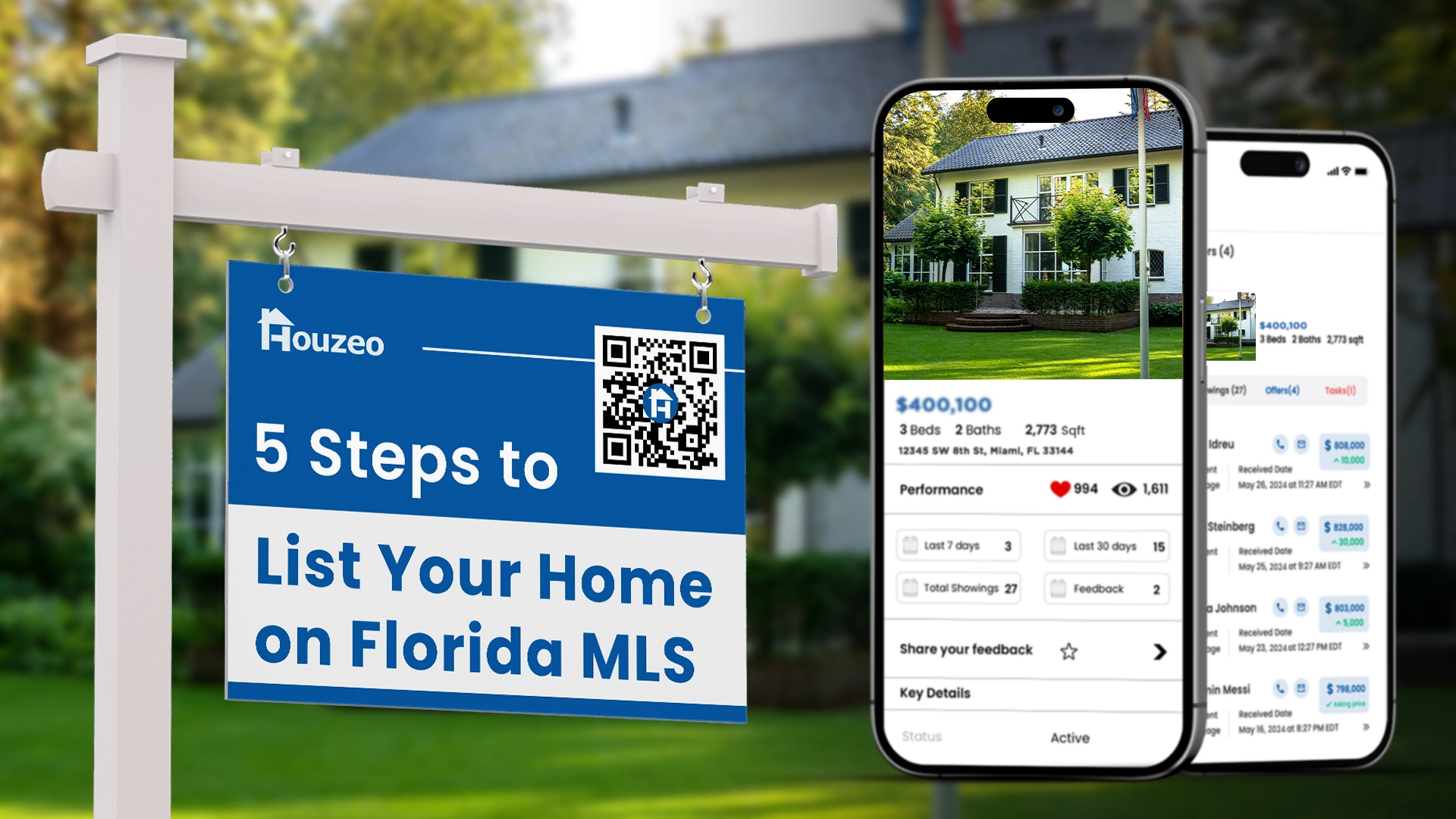
Put a “For Sale” Yard Sign: Buyers are always looking for homes in the best places to live in Florida. Whether you’re in Miami or the Keys, a well-placed yard sign can grab attention. Houzeo’s Gold plan gives you a customizable sign with a QR code. Just one scan will send buyers directly to your listing!
Step 6: Manage Property Tours
Listing your home on the MLS gets attention, but showings and open houses seal the deal. Buyers can’t picture life in the Sunshine State without seeing the lanai or feeling the poolside breeze. Here’s how to highlight your home’s best features:
- Host Open Houses: Almost 50% of all buyers attend open houses. In fact, open houses can double your home’s visibility! Plan them on sunny weekends to highlight outdoor spaces, pools, or ocean views. Create a relaxed atmosphere for buyers to explore, ask questions, and envision living there.
- Set up a Showings Calendar: Many buyers browsing homes for sale in Florida prefer to schedule private showings online. Simplify this process with an online booking system like Houzeo Showings. Offer flexible times and virtual tours or live video showings for out-of-state buyers.
After a showing, reach out to the buyer within 24 to 48 hours. You can answer questions, gauge interest, and remind them about upcoming offer deadlines. You can also ask buyers for their honest opinions and make repairs or adjust the pricing as needed.
Yes! A virtual tour can help attract attention from out-of-state buyers who may not be able to attend your open house. In fact, 95% buyers show greater interest in listings with a virtual tour. You can have:
- Live Video Tours: Use Zoom, FaceTime, or other video platforms to conduct live home tours and answer questions in real-time.
- Recorded Walkthroughs: Post high-quality walkthrough videos or 3D virtual tours on listings and social media. This way, prospective buyers can view your home at their convenience. Matterport and Zillow 3D Home.
To make these tours truly compelling, sellers should use high-definition video and stabilizing equipment to provide a smooth, professional walkthrough. Pairing these visuals with interactive storytelling helps build the emotional connection necessary to close a sale.
Step 7: Review, Compare, and Negotiate Offers
Florida’s competitive real estate market means buyers may come with different types of offers. Since you are selling a house without a Realtor, you must keep these questions in mind during negotiations:
- Are cash offers worth it? Ensure the buyer is legitimate and verify their proof of funds. It’s also important to assess whether the offer reflects the fair market value of the property to avoid underselling.
- Can the buyer finance the purchase? Verify the buyer’s pre-approval status with their lender. Also, ensure the buyer’s loan type, whether it’s a VA or FHA loan, aligns with the conditions of the sale. Confirm the buyer’s ability to deposit the earnest money, typically 1% to 3% of the sale price in Florida.
- How will contingencies impact the sale? In Florida, waterfront properties may include additional contingencies, like a flood zone or seawall inspections. Assess how they affect your sale timeline and negotiate to streamline the process. Typically, offers with fewer or waived contingencies are stronger.
- Who will cover closing costs? Sellers usually cover their own closing costs in Florida, like escrow fees, HOA, etc. However, buyers may negotiate for them to contribute more. You must calculate your final proceeds and negotiate accordingly.
When reviewing an offer, ensure that you focus on inspection periods, appraisal requirements, financing contingencies, and timelines that could affect closing. Ambiguous or long deadlines are red flags that increase the risk of the deal falling through.
Additionally, check the earnest money deposit amount. Larger deposits signal committed buyers who are less likely to back out.


Step 8: Finalize the Sale
You now need professional legal help for this crucial step:
1. Select Your Closing Agent
In Florida, a title company, closing attorney, or licensed escrow agent typically handles the closing. Most FSBO sellers opt for a title company to manage the paperwork, handle funds, and file documents with the relevant government agencies.
The title company will also perform a title search to ensure the house has a clear title. They will identify and work with you to clear any outstanding issues, such as open permits, contractor liens, HOA/condo association debts, etc.
Pro Tip: For added legal protection, especially in complex sales, consider using a title company that is also attorney-owned.
2. Get All Documents Required for Selling a Home By Owner in Florida
Gather all necessary paperwork for selling a house by owner ahead of time to prevent delays. You will need these standard documents:
- The fully executed Purchase Agreement and any amendments.
- Completed Seller’s Disclosure forms.
- A valid photo ID (Driver’s License or Passport) for everyone on the title.
- Deed preparation details or mortgage payoff information if the property is financed.
- The final HUD-1/Settlement Statement to review all financial details of the transaction.
- Home inspection report
- Home appraisal report
- Receipts for any agreed-upon repairs and warranty documents for appliances.
- Keys, garage door openers, and any access codes for the property.
- Your most recent property tax bill and any required tax documents, like an IRS Form 1099-S.
- Information to transfer or disconnect utilities after closing.
At the closing table, you will need to sign the following key documents:
- The Deed (Warranty or Quit Claim) to transfer ownership.
- The Closing Disclosure or HUD-1 Settlement Statement.
- A No-Lien Affidavit.
- A Bill of Sale for any personal property included in the sale.
- An Association Estoppel letter, if you are in a condo or HOA, confirming all dues are paid.
🖊️ Remember to double-check all names, figures, and terms for accuracy before signing. It is customary to sign legal documents with a blue ink pen.
3. Transfer Possession and Hand Over the Keys
At closing, you will hand over all keys, remotes, and access codes to the new owner. The title company will record the new deed with the county clerk. It will then disburse the funds, pay off any liens, and provide you with your net proceeds via wire transfer or a check.
Congratulations, you’ve sold your home by owner and saved thousands in commissions 🎉!
📌 Free FSBO Checklist for Selling Your Florida Home
Keep the Commission, Take the Checklist
Smart sellers use checklists. Savvy sellers use ours.
Download Your FSBO ChecklistHow Much Do You Save By Selling Your House By Owner?
Over $9,000!
When you sell your house with a Realtor, you may have to pay as much as $11,550 on a median home of $385,000, in agent commissions.
However, with Houzeo, you can list your home for just $249—that’s less than a day at a theme park. You can save around $9,300 on the listing agent fee and go for a luxury cruise to the Bahamas, buy a car, or upgrade your backyard.
👉 Ready to Sell Your Home By Owner in Florida? List on the MLS Now!
What Are the Legal Requirements for Selling Your Florida Home By Owner?
When selling your home by owner, disclose all known issues and use state-approved contracts that meet legal standards. A pre-listing inspection and real estate attorney can help ensure transparency, proper documentation, and a smooth closing with a valid deed transfer.
- Complete Required Seller Disclosures: Florida law mandates sellers to disclose any known issues affecting the property. This includes past repairs, environmental hazards, structural problems, and lien information.
- Use State-Specific Contracts: Use Florida-specific real estate contracts, such as those provided by the Florida Realtors Association. The forms should comply with state law and outline essential terms and contingencies.
- Consider a Pre-Listing Home Inspection: Although optional, a pre-listing inspection reveals property conditions upfront, helping you disclose issues and negotiate with informed buyers.
- Engage a Real Estate Attorney: While not mandatory, a Florida real estate attorney can help you review contracts, prepare closing documents, and ensure legal compliance throughout the selling process.
- Understand Deed Requirements: Florida recognizes several deed types, including statutory warranty deeds and special warranty deeds, which transfer ownership. Deeds must be properly signed, notarized, and include a legal property description to be valid.
Effective Negotiation Strategies When Selling a Home By Owner
When reviewing and negotiating offers, verify buyers’ financial readiness through proof of funds or pre-approval letters. Evaluate contingencies, pricing flexibility, and closing terms carefully to choose the most reliable and favorable offer and not just the highest one.
- Verify Cash Offers: Always request recent proof of funds (bank or investment statements) to confirm that a cash buyer can actually finance the sale.
- Confirm Buyer Financing: Ask for pre-approval letters from lenders to ensure buyers are fully qualified. Understand how different loan types (conventional, VHA, or FHA loan) affect sale terms.
- Handle Contingencies Smartly: Buyers may request contingencies like home inspection or financing. Evaluate how these impact your timeline and negotiate which contingencies are reasonable versus those that could delay or derail the sale.
- Be Firm Yet Flexible: Stand your ground on pricing based on your market analysis but stay open to reasonable negotiation requests. Consider who will pay closing costs and the timing to make your offer more attractive.
- Look Beyond Price: Assess offers holistically, factoring in buyer qualifications, contingencies, and closing flexibility, not just the offer amount.
What Are Some Pros and Cons of Selling a House Without a Realtor?
The benefits of selling your home yourself include keeping the agent’s commission and controlling the whole process: pricing, showings, and negotiation. You move on your schedule, not an agent’s.
But you’re responsible for all marketing and legal work, and if you don’t use a trusted service for exposure, you risk attracting scammers or facing hidden fees.
✅ Pros
- Save Thousands in Agent Fees: You typically have to pay 2.5% to 3% to a listing agent. If you sell your home yourself, you get to keep a larger portion of the sale price.
- Sell Faster: You can list your house yourself whenever you are ready, no need to search for a Realtor or wait for their availability. You market and sell on your own schedule.
- Retain Control: You have complete control to price, market, and negotiate the sale. You can work at your own pace and decide what offers to accept based on your needs.
❌ Cons
- Limited Assistance: To sell a home by owner, you need to conduct showings, negotiate with buyers, and handle the legalities yourself. The time and effort required can often overwhelm first-time sellers.
- Potential Hidden Costs: If you list with a low-cost FSBO service, you may incur high hidden fees at closing.
- Increased Risk of Scams: Platforms like Craigslist and Facebook Marketplace attract fraudsters and scammers, which may bring unnecessary risks.
What Are Some Common Mistakes to Avoid While Selling a House By Owner in Florida?
When you sell your home by owner, ensure that you navigate these hurdles with a professional strategy:
- Don’t Forget the MLS: If you try selling your home without the MLS, it’s like fishing in a lake without a rod. Avoid limited exposure by opting for a Flat Fee MLS listing in Florida with Houzeo. This ensures your home appears on 100+ major platforms like Zillow, Trulia, and Realtor.com.
- Don’t Misprice Your Home: You need to know your property’s true value. Price it too high and buyers won’t bite. Price it low and you leave money on the table. Avoid wasting your time and use a home worth calculator and a CMA report to find the right price.
- Don’t Ignore Marketing: A home on sale without strong marketing is like a theme park without rides – boring! Avoid low interest by investing in professional photography and a compelling description. You can also add a free yard sign to reach drive-by traffic.
- Don’t Neglect Seller Disclosures: Skip any of the legal forms or the Florida seller disclosure form, and you’ll be in a legal pickle. Ensure you complete all required disclosures and hire a Florida real estate attorney to help with the process.
- Don’t Fail to Negotiate Smartly: When a buyer extends a low offer, don’t fold. Stand firm on your asking price and terms. Buyers will test you—respond with the resolve of a Miami Heat player in crunch time.
How to Sell a House By Owner in Neighboring States
| Alabama | Sell a House By Owner in Alabama |
| Georgia | Sell a House By Owner in Georgia |
| Mississippi | Sell a House By Owner in Mississippi |
| South Carolina | Sell a House By Owner in South Carolina |
Are There Any Alternatives to Selling Your Home By Owner in Florida?
Yes. If selling your home on your own is too daunting, here are some alternatives:
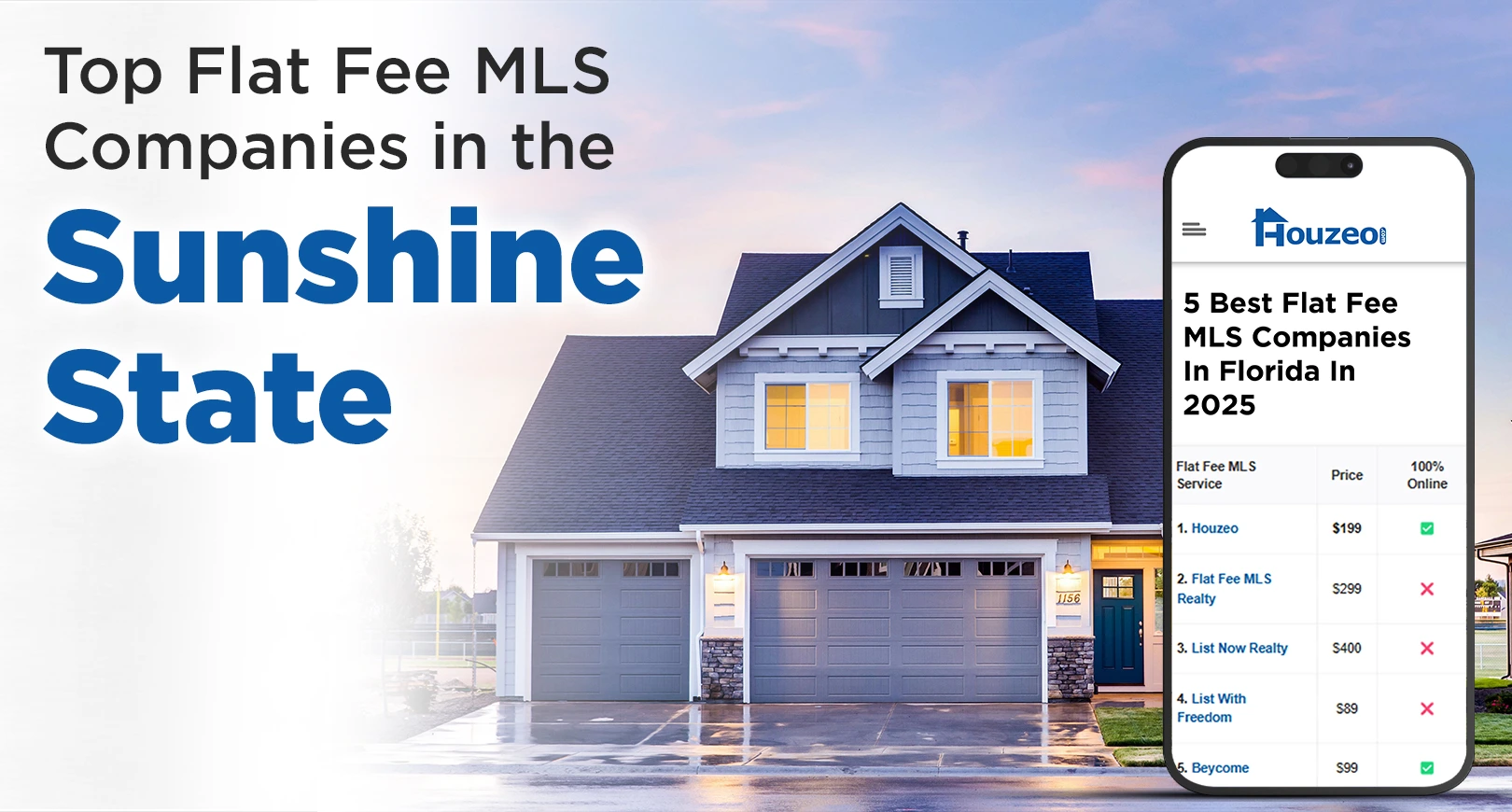
- Flat Fee MLS Services: You pay a fixed fee to list your home on the MLS and gain increased exposure. You stay in control of the sale and avoid high commissions.
- Discount Real Estate Agents: They offer services such as contract review at a lower fee than traditional agents. Discount brokers in Florida charge between 0.5% and 2.5% as commission.
- Full Service Agents: They provide various services from listing to closing, but charge a hefty 5% to 6% commission.
- Cash Buyers: You can sell your house fast for cash in Florida to cash buyers and iBuyers looking for homes to flip and sell for a profit.
Should I Sell My House By Owner in Florida?
Yes, selling your house by owner in Florida is a smart move if you want to save on commissions. The key is to choose the best FSBO website in Florida that lists your home on the MLS and gets you in front of serious buyers.
» Houzeo Reviews: Find out what customers have to say about Houzeo – Florida’s best home-selling website.